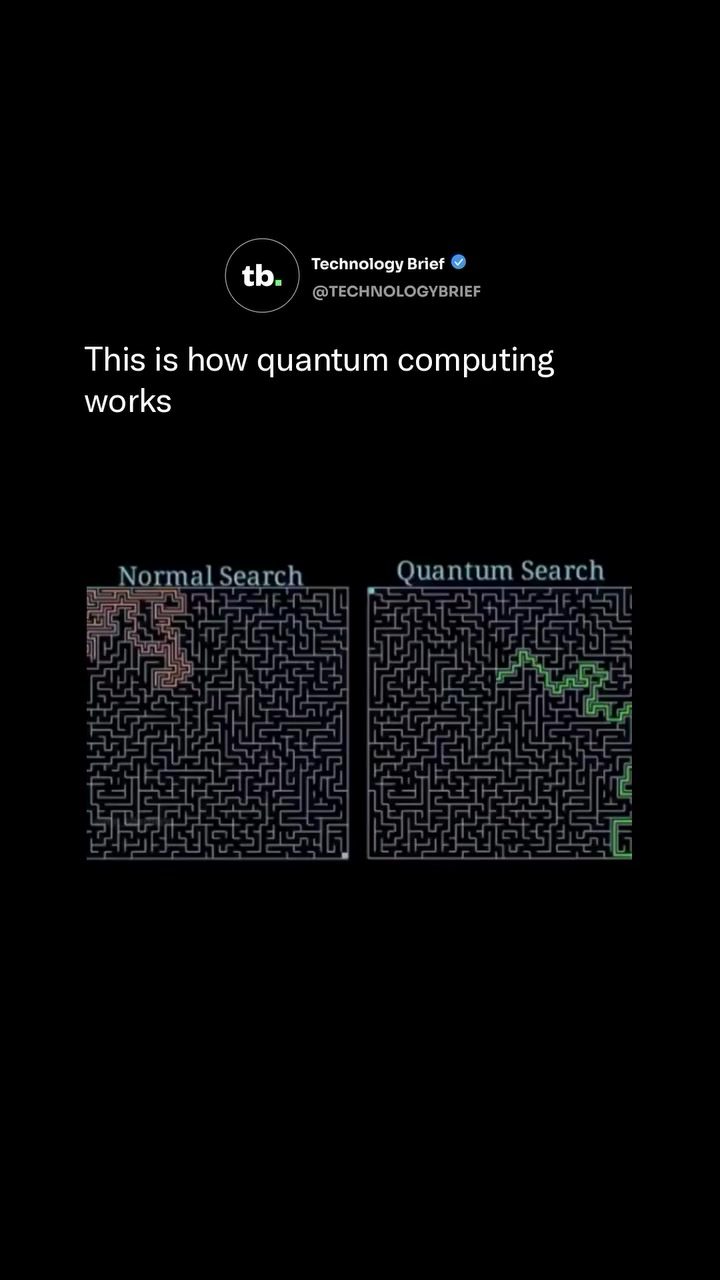
Quantum Computing: An Introduction to Quantum Search
Quantum computing is a revolutionary field that promises to transform how we process information. At the heart of this technology lies the concept of superposition, which allows quantum computers to explore multiple paths simultaneously. This is a significant departure from classical computing, where each path must be explored one at a time.
Why This Matters
Classical computers, which rely on binary digits (bits) to perform operations, have been the backbone of modern technology. However, they face limitations when dealing with complex problems that require extensive calculations. Quantum computers, on the other hand, use quantum bits (qubits) that can exist in multiple states at once, thanks to the principle of superposition. This allows quantum computers to process a vast number of possibilities simultaneously, making them far more efficient for certain types of problems.
The Concept of Superposition
Superposition is a fundamental principle in quantum mechanics that allows a particle to exist in multiple states at the same time. In the context of quantum computing, this means that a single qubit can represent both 0 and 1 simultaneously. When applied to search algorithms, superposition enables a quantum computer to explore multiple paths at once, dramatically reducing the time needed to find a solution.
Normal vs. Quantum Search
In a normal search, an agent (or algorithm) systematically explores every possible path to reach a destination. This method is exhaustive and time-consuming, especially for large databases or complex problems. The agent must visit every possible route before confirming the shortest or optimal path. This is analogous to how a classical computer processes information: one step at a time.
Quantum search, however, takes a different approach. Instead of exploring one path at a time, a quantum search algorithm starts with a single agent but sends multiple agents down different paths whenever a fork is encountered. This parallel exploration is made possible by superposition, where the agent effectively exists in multiple places simultaneously. When a solution is found, all other agents "disappear," and the real existence of the agent is confirmed at the destination.
Grover's Algorithm
Grover's Algorithm, proposed by Lov Grover in 1996, is a real-world example of how quantum search can outperform classical search methods. While a classical search through a large database takes time proportional to the number of items, Grover's Algorithm finds the answer in time proportional to the square root of that number. This represents a significant speedup, especially for large datasets.
Main Discussion
How Quantum Search Works
Let's delve deeper into the mechanics of quantum search. The process involves two key steps: superposition and quantum interference.
Superposition
As mentioned earlier, superposition allows a qubit to exist in multiple states at once. In the context of a search algorithm, this means that the algorithm can explore multiple paths simultaneously. Imagine a maze with multiple paths leading to different destinations. A classical algorithm would explore each path one by one, while a quantum algorithm would explore all paths at the same time, thanks to superposition.
Quantum Interference
While superposition spreads the search across all possibilities, quantum interference is the mechanism that amplifies the correct answer and cancels out the wrong ones. This is achieved through a process known as quantum amplitude amplification. Essentially, the algorithm reinforces the paths leading to the correct answer and diminishes the paths leading to incorrect answers. This results in a more efficient and faster search process.
Complexity of Quantum Search
The complexity of a problem significantly impacts the efficiency of both classical and quantum search methods. For a classical computer, the complexity of the problem grows exponentially with the number of items in the dataset. In contrast, a quantum computer's complexity grows linearly with the problem size, thanks to the principles of superposition and quantum interference.
Visualizing Quantum Search
To better understand quantum search, imagine a maze where the walls change color as the search progresses. In a normal search, the agent moves through the maze one path at a time, changing the color of the walls as it goes. This process is slow and methodical. In a quantum search, however, the agent can change the color of multiple walls simultaneously, effectively exploring multiple paths at once. This visual representation helps to illustrate the power of superposition in quantum computing.
Practical Tips
Understanding Quantum Computers
To gain a practical understanding of quantum computers, it's helpful to think of them as specialized tools designed for specific tasks. While classical computers excel at a wide range of general-purpose computations, quantum computers are optimized for tasks that involve complex calculations and large datasets. Examples include:
- Cryptography: Quantum computers can potentially break classical encryption methods, making them a crucial tool for developing new, more secure encryption protocols.
- Optimization Problems: Quantum computers can solve complex optimization problems, such as route planning and resource allocation, much more efficiently than classical computers.
- Simulation of Quantum Systems: Quantum computers can simulate quantum systems, which is essential for advancing fields like material science and drug discovery.
Preparing for Quantum Computing
As quantum computing technology advances, it's essential to stay informed and prepared. Here are some practical tips for individuals and organizations:
- Stay Updated: Keep track of the latest developments in quantum computing research and applications. Websites, forums, and publications dedicated to quantum computing can provide valuable insights.
- Learn the Basics: Familiarize yourself with key concepts such as qubits, superposition, entanglement, and quantum gates. Online courses and tutorials can be a great starting point.
- Explore Quantum Algorithms: Understand the principles behind quantum algorithms like Grover's Algorithm and Shor's Algorithm. These algorithms showcase the potential of quantum computing in solving complex problems.
Important Takeaways
Quantum computing represents a paradigm shift in how we approach complex problems. By leveraging the principles of superposition and quantum interference, quantum computers can significantly outperform classical computers in specific tasks. Key points to remember include:
- Superposition: Allows quantum computers to explore multiple paths simultaneously.
- Quantum Interference: Amplifies the correct answer and cancels out wrong ones.
- Grover's Algorithm: Demonstrates the speedup potential of quantum search.
- Complexity: Quantum search complexity grows linearly with problem size, unlike classical search.
Conclusion
Quantum computing is a groundbreaking field with the potential to revolutionize various industries. By understanding the principles of superposition and quantum interference, we can begin to grasp the power of quantum search algorithms. As the technology continues to evolve, staying informed and prepared will be crucial for harnessing its full potential.
Questions readers ask
How does quantum search differ from classical search methods?
Quantum search leverages the principle of superposition, allowing qubits to explore multiple possibilities simultaneously. In contrast, classical search methods process information sequentially, one step at a time.
What is Grover's algorithm and how does it relate to quantum search?
Grover's algorithm is a well-known quantum search algorithm that provides a quadratic speedup over classical search algorithms for unstructured search problems. It exemplifies how quantum search can outperform classical methods in specific scenarios.
Why is quantum search more efficient for complex problems?
Quantum search is more efficient for complex problems because it can explore numerous solutions at once, thanks to the superposition of qubits. This parallelism significantly reduces the time required to find a solution compared to classical search methods.
Can quantum search agents replace classical search methods entirely?
While quantum search agents offer advantages for certain types of problems, they are not expected to replace classical search methods entirely. Instead, they will likely complement classical methods, providing solutions where quantum computing excels.
How does the time complexity of quantum search compare to classical search?
Quantum search algorithms like Grover's algorithm have a time complexity of O(√N) for unstructured search problems, where N is the number of possibilities. This is a significant improvement over classical search, which has a time complexity of O(N).
What role does quantum superposition play in quantum search?
Quantum superposition is fundamental to quantum search as it enables qubits to exist in multiple states simultaneously. This allows quantum search algorithms to evaluate many potential solutions at once, enhancing their problem-solving capabilities.
What are some practical applications of quantum search over classical search?
Quantum search can be particularly beneficial in areas like database searching, optimization problems, and cryptography. These applications involve large datasets or complex calculations where the ability to explore multiple solutions concurrently provides a significant advantage.
Related deep dives
Similar reads based on topic and creator.




Recent articles
Fresh deep dives from the latest Reels we unpacked.




Comments
Be the first to comment.