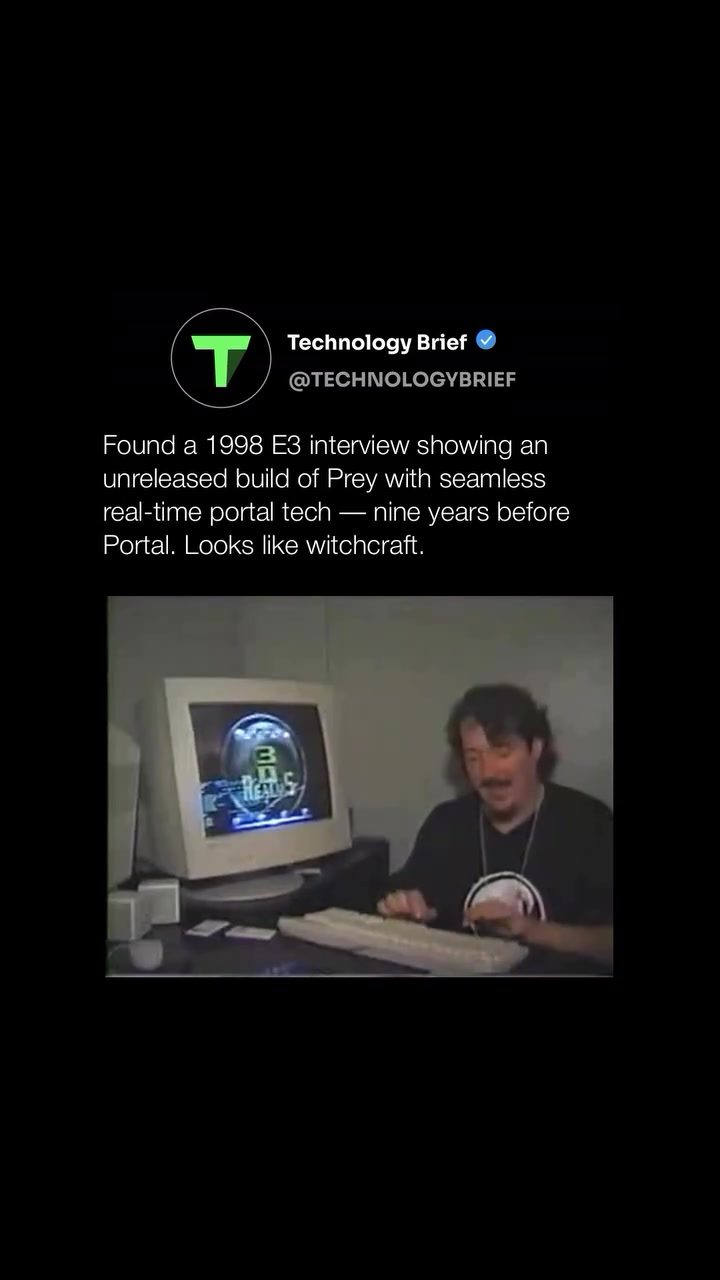
Real-Time, Moveable Portals in the 1998 Prey Demo
In 1998, 3D Realms unveiled a groundbreaking feature in video games: real-time, moveable portals. During a private Electronic Entertainment Expo (E3) demo, the team showcased their custom engine for a sci-fi shooter called Prey. This demo highlighted portals that could be created, moved, and reshaped dynamically, connecting different areas of the game world in real time. The technology was so innovative that jaws were literally dropping in the room. This demo featured a character named Talon Brave, who navigated through these portals with ease, demonstrating the potential for dynamic and immersive gameplay.
Why This Technology Matters
The significance of this early build of Prey lies in its pioneering use of real-time portal technology. Portals, as explained, are essentially "holes in space" that connect different geometric areas. This concept was not only visually stunning but also opened up a world of possibilities for gameplay mechanics. The ability to move and reshape these portals on the fly allowed for a level of interactivity and environmental manipulation that was unheard of at the time.
The demo showcased Talon Brave in various scenarios, including a memorable moment where the developer placed two portal devices on the ground, activated them, and shot a bullet through one portal, splattering blood on a wall in a different location. This standout moment highlighted the potential for complex and strategic gameplay, where players could use portals to their advantage in creative and unexpected ways.
Real-Time Portal Technology
One of the most impressive aspects of the 1998 Prey demo was the real-time nature of the portal technology. The portals could be handled dynamically, meaning they could be moved and reshaped in real time to connect different areas of the game world. This dynamic handling allowed for a high degree of interactivity and immersion, as players could see the portals change and adapt to their actions instantly.
The technology was so advanced that it predated the Portal series by nine years. Valve’s Portal, which would become a cult classic, wouldn't arrive until 2007. The real-time portal technology in Prey was a glimpse into the future of gaming, showcasing what was possible with the right combination of creativity and technical prowess.
Gameplay Ramifications
The gameplay ramifications of having rips in space that could be moved around were immense. The ability to create dynamic portals added a new layer of strategy to the game. Players could use portals to bypass obstacles, create shortcuts, or even trap enemies in unexpected ways. The dynamic nature of the portals also allowed for a high degree of customization, as players could reshape and reposition them to suit their needs.
The demo also hinted at the potential for multiplayer gameplay. The ability to create and manipulate portals in real time opened up possibilities for competitive and cooperative multiplayer experiences. Whether it was working together to navigate a complex environment or competing to outmaneuver opponents, the dynamic portals added a new dimension to multiplayer gaming.
The Future of Prey
Despite the groundbreaking tech, this version of Prey never made it to store shelves. Development was repeatedly derailed, partly because 3D Realms shifted focus to Duke Nukem Forever. The original portal engine was eventually scrapped, and a completely rebuilt version of Prey finally released in 2006. However, according to 3D Realms founder Scott Miller, his biggest regret was that the original portal mechanic never made it into the final game.
Practical Tips
For developers interested in creating similar real-time, moveable portals, there are several key takeaways from the 1998 Prey demo:
-
Dynamic Geometry: Ensure that the game engine can handle dynamic geometry changes in real time. This is crucial for creating portals that can be moved and reshaped smoothly.
-
Interactivity: Focus on creating a high degree of interactivity. Players should be able to manipulate portals easily and see the results of their actions instantly.
-
Strategic Gameplay: Think about the strategic possibilities that portals offer. How can players use them to their advantage? What new gameplay mechanics can be introduced?
-
Multiplayer Potential: Consider the potential for multiplayer gameplay. Dynamic portals can add a whole new layer of strategy and excitement to multiplayer experiences.
Important Takeaways
The 1998 Prey demo was a groundbreaking showcase of real-time, moveable portals in video games. The technology predated the Portal series by nine years and offered a glimpse into the future of gaming. While the original version of Prey never made it to shelves, the legacy of its innovative portal technology lives on, inspiring developers to push the boundaries of what is possible in video games.
Conclusion
The 1998 Prey demo was a testament to the power of innovation and creativity in video game development. The real-time, moveable portals showcased in the demo were not only visually stunning but also opened up a world of new gameplay possibilities. While the original version of Prey never saw the light of day, the impact of its groundbreaking technology can still be felt in the gaming industry today. For developers looking to create immersive and interactive gaming experiences, the lessons learned from the 1998 Prey demo are invaluable.
Questions readers ask
What was unique about the 1998 Prey demo that made it stand out?
The 1998 Prey demo showcased real-time, moveable portals, which allowed players to create, move, and reshape portals that connected different areas of the game world instantaneously. This dynamic feature was a significant innovation in gaming at the time.
What was the name of the character featured in the 1998 Prey demo?
The character featured in the 1998 Prey demo was named Talon Brave. He was used to demonstrate the ease and potential of navigating through the game's real-time, moveable portals.
Who developed the 1998 Prey demo and where was it showcased?
The 1998 Prey demo was developed by 3D Realms. It was first showcased during a private Electronic Entertainment Expo (E3) demo.
What impact did the real-time portals have on the gaming world?
The real-time, moveable portals in the 1998 Prey demo set a new standard for interactivity and immersion in games. This technology paved the way for more innovative and dynamic gameplay experiences in future titles.
How did the audience react to the 1998 Prey demo?
The audience at the private E3 demo was astonished by the real-time, moveable portals. The innovative technology was so impressive that it literally made jaws drop in the room, highlighting its groundbreaking nature.
What type of game was Prey 1998?
Prey 1998 was a sci-fi shooter game. The demo showcased a futuristic setting where players could dynamically connect different areas of the game world using real-time portals.
Related deep dives
Similar reads based on topic and creator.




Recent articles
Fresh deep dives from the latest Reels we unpacked.




Comments
Be the first to comment.