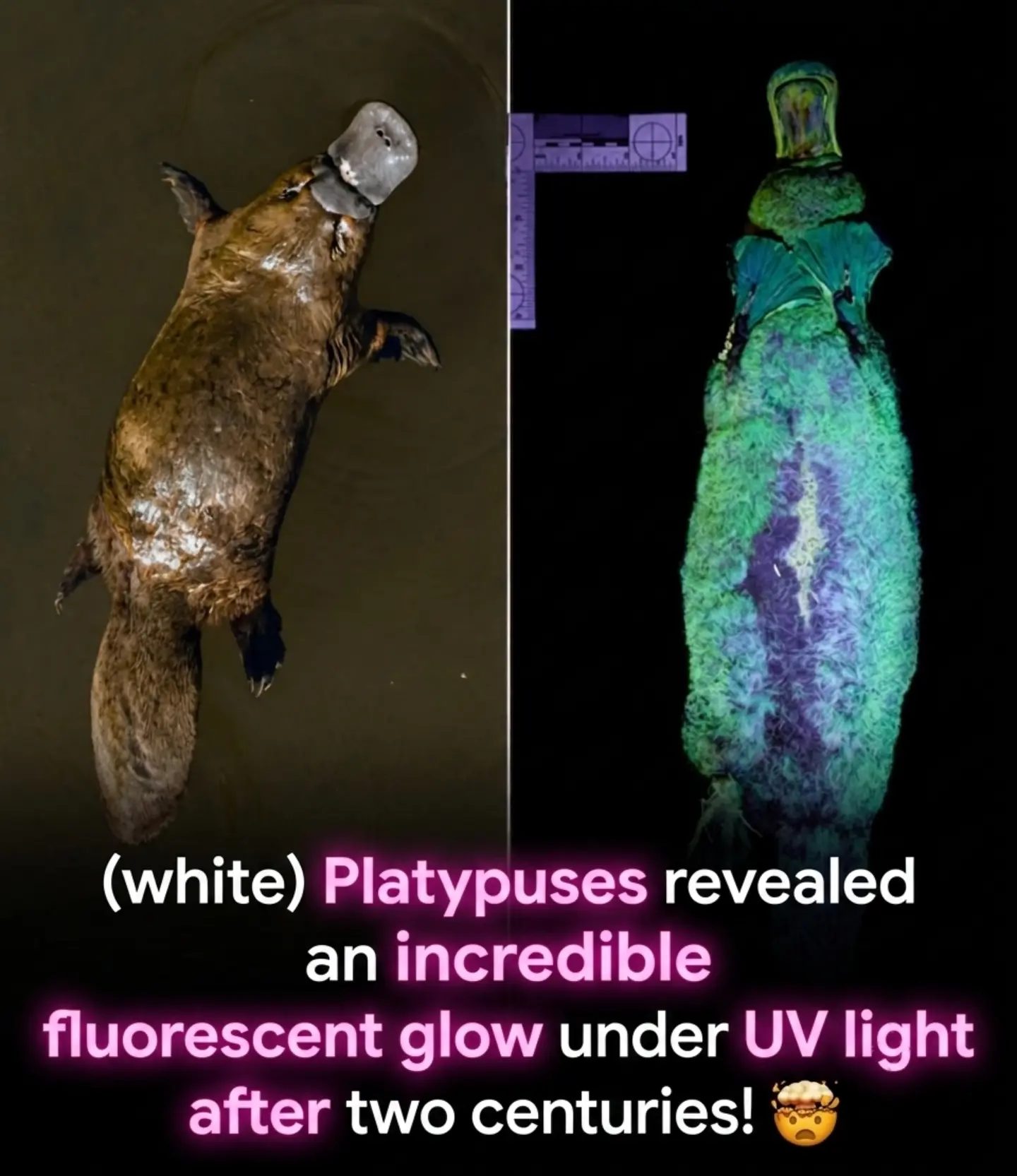
Fluorescent Platypus
Platypuses, with their peculiar duck-billed appearance, have long captivated scientists and nature enthusiasts alike. But beyond their unique features, these semi-aquatic mammals harbor a remarkable secret: they glow in the dark. This biofluorescence, a phenomenon where an organism absorbs light at a certain wavelength and re-emits it at a different wavelength, was only recently discovered in platypuses after more than two centuries of scientific study.
Why This Matters
Biofluorescence is commonly observed in marine creatures like coral and certain species of fish, as well as in insects. However, it is exceptionally rare in mammals. The discovery that platypuses exhibit this trait has sparked significant interest in the scientific community, offering new avenues for research into the mysteries of biofluorescence and its potential functions in mammalian biology.
Biofluorescent Platypuses
The Discovery
The revelation that platypuses fluoresce under ultraviolet (UV) light has been a fascinating addition to the world of wildlife facts. For over 200 years, scientists were unaware of this unique trait until they shone a UV blacklight on a platypus. The fur, which appears ordinary under normal lighting, absorbs UV rays and emits a vibrant neon blue-green glow. This phenomenon has been documented and observed in both captive and wild platypuses, confirming that it is a natural occurrence rather than an anomaly.
Mechanism of Biofluorescence
The fluorescence in platypuses is attributed to the presence of specific molecules within their fur that absorb UV light and re-emit it at a different wavelength, resulting in the visible glow. While the exact chemical composition of these molecules is still being studied, researchers believe they are likely related to other biofluorescent compounds found in nature.
Visualization
To observe this phenomenon, it’s necessary to use a UV blacklight. When exposed to this light, the platypus’s fur transforms from a seemingly ordinary appearance to a vibrant, neon blue-green glow. This striking visual effect is both mesmerizing and intriguing, showcasing the wonders of nature.
The Purpose
The function of this biofluorescence in platypuses remains a subject of ongoing research. Scientists have proposed several theories:
-
Communication: The glow might serve as a form of communication among platypuses, particularly in dark environments where visibility is limited. This could help in signaling to potential mates or offspring, or even in territorial marking.
-
Camouflage: Contrary to intuition, the glow might also act as a form of camouflage. In the murky waters where platypuses often reside, the neon blue-green hue could help them blend into their surroundings, making them less visible to predators or prey.
-
Predation Avoidance: It’s also possible that the fluorescence serves as a warning to potential predators, signaling that the platypus may be toxic or unpalatable.
Biofluorescence in the Animal Kingdom
Biofluorescence is a fascinating phenomenon observed in various species across the animal kingdom. From deep-sea creatures to insects, many organisms have evolved to harness the power of light in unique ways.
Marine Life
In the ocean, biofluorescence is prevalent. Many marine creatures, such as certain species of coral and fish, use this trait for camouflage, communication, and even hunting. The deep sea, where sunlight cannot penetrate, is often home to biofluorescent organisms that use light to navigate and attract mates. The vibrant colors and patterns created by biofluorescence can be breathtaking, and scientists are continually discovering new species that exhibit this trait.
Insects
Insects, particularly beetles and certain species of butterflies, also display biofluorescence. While the exact mechanisms and purposes of this fluorescence can vary, it often plays a role in communication, mate attraction, and even defense mechanisms. Some insects use their fluorescent patterns to warn predators of their toxicity, while others use them to attract mates.
Mammals
While biofluorescence is rare in mammals, platypuses are not the only ones to exhibit this phenomenon. Certain species of flying squirrels and some rodents are also known to have biofluorescent fur. However, the underlying mechanisms and purposes of this trait in mammals are still being investigated.
Practical Tips
If you’re eager to observe biofluorescence in action, here are a few practical tips to get you started:
-
Equipment: A UV blacklight is essential for observing biofluorescence. These lights emit UV rays that can excite the fluorescent compounds in an organism, causing them to glow. UV blacklights can be purchased at many online retailers and specialty stores.
-
Safety: When handling UV lights, be aware of the safety precautions. Prolonged exposure to UV light can be harmful to the skin and eyes, so always wear protective gear and use the light in a well-ventilated area.
-
Wildlife Observation: Observing biofluorescence in wildlife, especially mammals like platypuses, often requires special permits and the guidance of experienced researchers. Be sure to follow all ethical guidelines and regulations to ensure the safety and well-being of the animals.
Important Takeaways
The discovery that platypuses glow under UV light is a testament to the wonders of nature. This rare phenomenon in mammals has opened new avenues for research and highlights the complexity of biofluorescence. Further studies may reveal the specific functions of this trait in platypuses and other mammals, providing deeper insights into the evolution and behavior of these fascinating creatures.
Conclusion
Fluorescent platypuses are a captivating example of the intricacies of nature. From the vibrant neon blue-green glow of their fur to the potential biological functions of biofluorescence, there is still much to explore and understand. Whether it serves as a form of communication, camouflage, or predator avoidance, the discovery of this trait has shed new light on the natural world. As we continue to uncover the mysteries of biofluorescence, we gain a deeper appreciation for the incredible diversity and complexity of life on Earth.
Questions readers ask
Why do platypuses glow under UV light?
Platypuses exhibit biofluorescence, which means they absorb light of a specific wavelength and emit it at a different wavelength. This is why they seem to glow under UV light, creating a vibrant display on their fur.
How was the glowing trait of platypuses discovered?
The biofluorescent trait of platypuses was discovered quite recently, more than 200 years after their initial scientific study. This highlights how there is still much to learn about these fascinating creatures.
What makes the biofluorescence in platypuses so significant?
Biofluorescence is exceptionally rare in mammals. The discovery of this trait in platypuses has opened new avenues for research and understanding of these unique animals, their biology, and their evolution.
Can you see the glow without special equipment?
No, the vibrant glow of the platypus fur is not visible to the naked eye. It requires UV light to be seen, making it a hidden secret that was only recently revealed through scientific study.
What parts of the platypus glow?
The biofluorescence in platypuses is primarily visible in their fur, creating a striking contrast that highlights their unique appearance. The vibrant glow is particularly noticeable under UV light.
Are there other mammals that exhibit biofluorescence?
Biofluorescence is quite rare among mammals, making the platypus a unique and intriguing subject for study. While there are a few other mammals known to exhibit this trait, the platypus remains one of the most remarkable examples.
What is the role of biofluorescence in platypus biology?
The exact purpose of biofluorescence in platypuses is still a mystery. Some hypotheses suggest it could play a role in communication, camouflage, or even protection against microbes, but further research is needed to confirm these ideas.
Related deep dives
Similar reads based on topic and creator.




Recent articles
Fresh deep dives from the latest Reels we unpacked.




Comments
Be the first to comment.