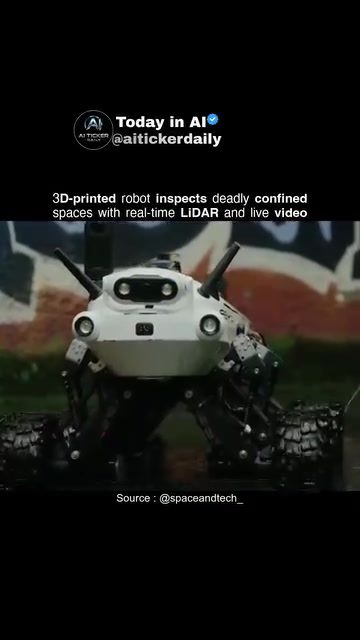
Pipe Eye: The Advanced Robot for Confined Space Inspection
Pioneered by Beca, a New Zealand-based engineering and consulting company, the Pipe Eye robot represents a groundbreaking advancement in the field of confined-space inspection. Designed to navigate and inspect hazardous environments such as manholes, tunnels, and culverts, Pipe Eye is engineered to operate in spaces where human entry is risky or impractical.
Why Confined Space Inspection Matters
Confined spaces pose significant challenges for traditional inspection methods. These environments are often dark, cramped, and potentially hazardous due to the presence of toxic gases, unstable surfaces, or other dangers. Sending humans into these spaces can put lives at risk, making automated inspection solutions like Pipe Eye invaluable. By leveraging advanced technology, Pipe Eye ensures that inspections can be conducted safely and efficiently, minimizing risks to human operators.
The Technology Behind Pipe Eye
3D-Printed Construction
One of the standout features of Pipe Eye is its 3D-printed construction. This manufacturing method offers several advantages, including reduced production time, lower costs, and the ability to create complex geometries that would be difficult or impossible to achieve with traditional manufacturing methods. The 3D-printed components ensure that the robot is lightweight yet durable, making it ideal for navigating the challenging terrain of confined spaces.
LiDAR and Spatial Sensing
Pipe Eye is equipped with LiDAR (Light Detection and Ranging) technology, which allows it to capture detailed spatial survey information. LiDAR works by emitting laser pulses and measuring the time it takes for the light to reflect back, creating a precise 3D map of the surrounding environment. This data is crucial for navigating complex spaces and identifying potential hazards or structural issues.
Real-Time Control and Live Video Feeds
Another key feature of Pipe Eye is its real-time control and live video capabilities. Operators can control the robot via radio in real time, allowing them to navigate the robot through challenging environments with precision. The live video feed from the robot's camera provides operators with a clear view of the inspection site, enabling them to assess conditions and make informed decisions.
Practical Applications
Manholes and Sewer Systems
Manholes and sewer systems are prime examples of confined spaces that require regular inspection. These environments are often dark, damp, and filled with hazards such as falling debris or toxic gases. Pipe Eye's ability to navigate these spaces and provide detailed surveys makes it an ideal solution for inspection tasks that would otherwise be unsafe for humans.
Tunnels and Underground Structures
Tunnels and underground structures present similar challenges to manholes and sewer systems. These environments are often narrow, winding, and difficult to access. Pipe Eye's advanced navigation capabilities and real-time control allow it to inspect these spaces thoroughly, ensuring that any structural issues or safety concerns can be identified and addressed promptly.
Industrial and Commercial Facilities
Industrial and commercial facilities often have confined spaces that require regular inspection for safety and maintenance purposes. Pipe Eye can be used to inspect areas such as ventilation ducts, storage tanks, and other hard-to-reach environments, ensuring that these spaces are safe and operational.
Practical Tips for Using Pipe Eye
Proper Training
Operators should undergo proper training to ensure they can effectively control and navigate the robot. Understanding the robot's capabilities and limitations is crucial for successful inspections.
Regular Maintenance
Like any advanced piece of equipment, Pipe Eye requires regular maintenance to ensure optimal performance. This includes checking the LiDAR sensors, camera, and other components to ensure they are functioning correctly.
Safety Protocols
Even though Pipe Eye reduces the risk to human operators, it's essential to follow safety protocols when using the robot. This includes wearing appropriate safety gear and following safety guidelines for operating in hazardous environments.
Important Takeaways
Enhanced Safety
Pipe Eye significantly enhances safety by allowing inspections to be conducted in hazardous environments without putting human operators at risk. This reduces the potential for accidents and injuries, making it a valuable tool for safety-conscious organizations.
Increased Efficiency
The robot's advanced technology and real-time control capabilities enable more efficient inspections. Operators can quickly and accurately assess conditions, reducing the time and resources required for inspections.
Cost Savings
By eliminating the need for human operators to enter hazardous environments, organizations can save on costs associated with safety equipment, training, and potential worker's compensation claims. Additionally, the reduced downtime for inspections can lead to cost savings and increased productivity.
Conclusion
Pipe Eye, developed by Beca, represents a significant advancement in the field of confined space inspection. Its 3D-printed construction, LiDAR technology, and real-time control capabilities make it an ideal solution for inspecting hazardous environments such as manholes, tunnels, and culverts. By leveraging this advanced technology, organizations can conduct inspections more safely, efficiently, and cost-effectively, ensuring that these critical spaces are maintained and operational.
Questions readers ask
How does the Pipe Eye robot enhance safety during confined space inspections?
The Pipe Eye robot significantly improves safety by allowing inspectors to assess hazardous environments without requiring human entry. This reduces the risk of exposure to toxic gases, unstable surfaces, and other dangers associated with confined spaces.
What technologies does the Pipe Eye robot use for its inspections?
The Pipe Eye robot utilizes LiDAR technology for precise spatial data collection, enabling accurate 3D mapping of inspected areas. Additionally, it employs 3D printing for its robust and lightweight construction, making it well-suited for navigating tight, complex spaces.
What types of environments can the Pipe Eye robot inspect?
The Pipe Eye robot is specifically designed to inspect confined spaces such as manholes, tunnels, and culverts. Its compact size and advanced sensors make it ideal for environments where traditional inspection methods are challenging or unsafe.
Who developed the Pipe Eye robot, and where is it based?
The Pipe Eye robot was engineered by Beca, a leading engineering and consulting company based in New Zealand. Beca specializes in innovative solutions for complex engineering challenges, including the development of advanced inspection technologies.
Can the Pipe Eye robot perform live inspections, and how does it do so?
The Pipe Eye robot can perform real-time inspections, providing live data and visuals to inspectors. By using LiDAR and other sensors, it captures detailed information about the inspected environment, allowing inspectors to make informed decisions and take necessary actions promptly.
What are the benefits of using an infrared inspection robot like Pipe Eye for confined space inspections?
Infrared technology in the Pipe Eye robot allows for detecting heat signatures, which can help identify issues such as leaks, overheating equipment, or other anomalies that may not be visible to the naked eye. This capability further enhances the thoroughness and accuracy of inspections.
Related deep dives
Similar reads based on topic and creator.




Recent articles
Fresh deep dives from the latest Reels we unpacked.




Comments
Be the first to comment.