AI and Performance Marketing: The Future of Ads and Creative Intelligence
AI's growing role in marketing has sparked a conversation about the future of performance marketing. Let's dive into the strategies and systems that can give you an edge in this evolving landscape, focusing on creative intelligence and structured testing.
Why This Matters
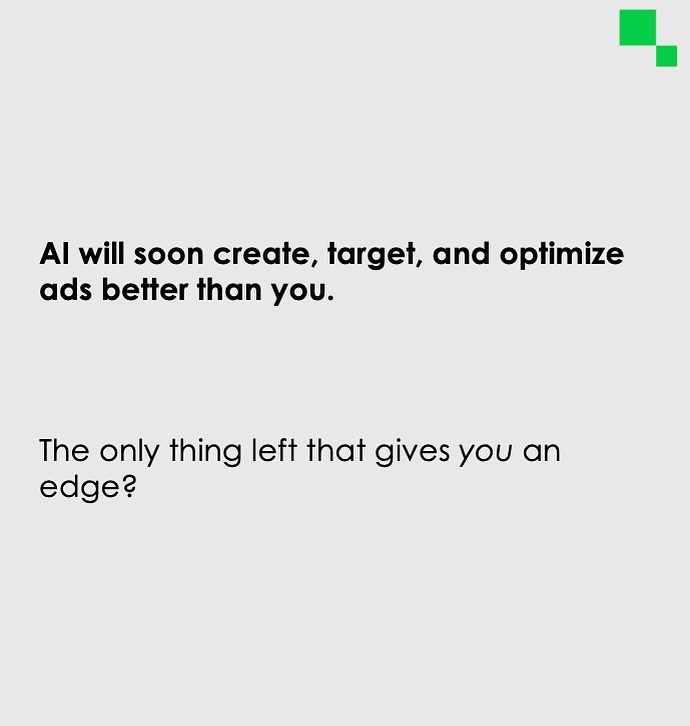
Performance marketers are increasingly aware that AI is transforming the field. AI can create, target, and optimize ads more efficiently than manual processes. This shift means that marketers need to adapt their strategies to stay competitive. The key to success lies in creative intelligence—building systems that help you understand what stories, angles, and formats actually sell.
Main Discussion
Creative Intelligence: The New Edge
Creative intelligence is about more than just making visually appealing ads. It's about creating a system that tells you which creative elements resonate with your audience. This involves building an archetype library, testing angles in a structured grid, and tracking ad fatigue to maintain high return on ad spend (ROAS).
Building an Archetype Library
An archetype library is a collection of different creative angles and story structures that you can use to test various ad campaigns. By organizing your creatives into archetypes, you can systematically test which ones perform best. This approach allows you to move beyond random creative testing and focus on data-driven decisions.
Structured Testing: The Grid Method
Instead of throwing random creatives into ad sets and hoping the algorithm picks a winner, use a testing grid. This method involves organizing your tests by product, archetype, and format. For example, if you're testing a moisturizer, you might compare a "Problem-Solution" archetype in a reel format versus a static image. Each test should provide valuable insights into what works and what doesn't.
Tracking Ad Fatigue
Ad fatigue occurs when your audience becomes tired of seeing the same ads, leading to a drop in performance. By tracking ad fatigue, you can proactively refresh your creatives before they lose effectiveness. This involves setting fatigue flags and monitoring the performance of each ad set over time. When you see a decline, it's time to introduce new creatives or adjust your strategy.
Performance Marketing Systems
Implementing a performance marketing system involves tracking key metrics like product, archetype, format, and fatigue. This system helps you understand the performance of each ad campaign and make data-driven decisions. For example, you might have a campaign for sunscreen using an "Authority/Proof" archetype in a reel format. Tracking these metrics allows you to optimize your campaigns for better results.
Utilizing Different Archetypes and Formats
Different products and audiences respond to different archetypes and formats. By testing various combinations, you can identify what works best for your specific market. For instance, a "Founder POV" archetype in a static format might work well for a cleanser, while a "UGC Testimonial" in a static format could be more effective for a night cream.
Practical Tips
Start with a Grid
Begin by organizing your creative tests in a grid. This involves listing all possible combinations of product, archetype, and format. For example, you might have a grid for a moisturizer that includes "Problem-Solution" in a reel format, "Serum" in a static format, and "Price/Offer Anchor" in a static format. By testing these combinations, you can identify which ones perform best.
Monitor Fatigue
Set up a system to monitor ad fatigue. This involves tracking the performance of each ad set over time and setting fatigue flags when performance starts to decline. By proactively addressing fatigue, you can maintain high ROAS and avoid the pitfalls of over-saturated ad campaigns.
Build a Playbook
Over time, build a playbook of what works and what doesn't. This playbook should include your archetype library, testing grids, and performance metrics. By documenting your findings, you can create a systematic approach to creative testing that improves over time.
Creative Testing vs. Creative Generation
Focus on creative testing rather than just generating more creatives. The goal is to understand which creative elements resonate with your audience, not just to produce more content. By testing systematically, you can make data-driven decisions that improve your ad performance.
Important Takeaways
Use Data-Driven Decisions
Creative intelligence is about making data-driven decisions. By building a system that tells you which stories, angles, and formats actually sell, you can stay ahead of the curve. This involves testing creatives in a structured grid, tracking ad fatigue, and building a playbook over time.
Systemize Your Approach
A systematic approach to creative testing is key. This means organizing your tests in a grid, monitoring performance metrics, and documenting your findings. By systemizing your approach, you can make more informed decisions and improve your ad performance.
Embrace Creative Intelligence
Creative intelligence is the future of performance marketing. By building a system that tells you which creative elements resonate with your audience, you can stay competitive in an AI-driven market. This involves understanding the role of AI in ad creation, targeting, and optimization, and using that knowledge to build a more effective marketing strategy.
Track Key Metrics
Tracking key metrics like product, archetype, format, and fatigue is essential. This helps you understand the performance of each ad campaign and make data-driven decisions. By implementing a performance marketing system, you can optimize your campaigns for better results.
Utilize Different Archetypes and Formats
Different products and audiences respond to different archetypes and formats. By testing various combinations, you can identify what works best for your specific market. This involves experimenting with different creative angles and story structures to see which ones perform best.
Conclusion
AI is already transforming the field of performance marketing, and those who adapt will thrive. By focusing on creative intelligence and building a systematic approach to creative testing, you can stay ahead of the curve. This involves creating an archetype library, testing angles in a grid, tracking ad fatigue, and building a playbook over time. By embracing these strategies, you can make data-driven decisions that improve your ad performance and stay competitive in an AI-driven market.
Questions readers ask
What is creative intelligence in the context of AI performance marketing?
Creative intelligence in AI performance marketing refers to the use of AI to understand and optimize the creative aspects of advertising, such as the storytelling, angles, and formats that resonate most with audiences. It involves building systems that can analyze and adapt to what truly engages users, ensuring ads remain effective and engaging over time.
How can AI help in preventing ad fatigue?
AI can help prevent ad fatigue by continuously analyzing user engagement data and dynamically adjusting ad creatives to maintain user interest. By understanding when and why users might be losing interest, AI can introduce fresh content or tweak existing ads to keep them performing well over time. This ensures that your audience stays engaged and your ads remain effective.
What are some key AI marketing systems that performance marketers should consider?
Performance marketers should consider implementing AI systems that focus on content personalization, predictive analytics, and automated A/B testing. These systems can help in understanding audience behavior, forecasting trends, and optimizing ad performance in real-time, making the marketing process more efficient and effective.
How does AI enhance the role of performance marketers?
AI enhances the role of performance marketers by automating repetitive tasks, providing deeper insights, and enabling more personalized and effective advertising. By leveraging AI, marketers can focus on strategic tasks, such as developing creative strategies and interpreting data insights. This allows for more informed decision-making and better overall campaign performance.
What are dynamic ad creatives and how can they benefit performance marketing?
Dynamic ad creatives are ads that can change their content, design, or messaging based on user behavior, preferences, or other variables. They benefit performance marketing by ensuring that the ad presented to each user is uniquely tailored to their interests, increasing the likelihood of engagement and conversion. This personalization can significantly enhance the effectiveness of ad campaigns.
What are the latest performance marketing trends driven by AI?
The latest performance marketing trends driven by AI include the use of predictive analytics to forecast campaign performance, AI-driven content generation, and the integration of AI tools for real-time optimization of ad creatives. These trends are shaping the future of marketing by making it more data-driven, personalized, and efficient.
What are some AI tools that can assist in performance marketing?
There are several AI tools available to assist in performance marketing, such as Google Analytics 360, Adobe Analytics, and specialized AI platforms like Albert.ai, Jasper.ai and Phrasee. These tools offer features like automated bidding, real-time analytics, and AI-driven ad creation, making it easier to optimize campaigns and achieve better results.
Related deep dives
Similar reads based on topic and creator.




Recent articles
Fresh deep dives from the latest Reels we unpacked.




Comments
Be the first to comment.