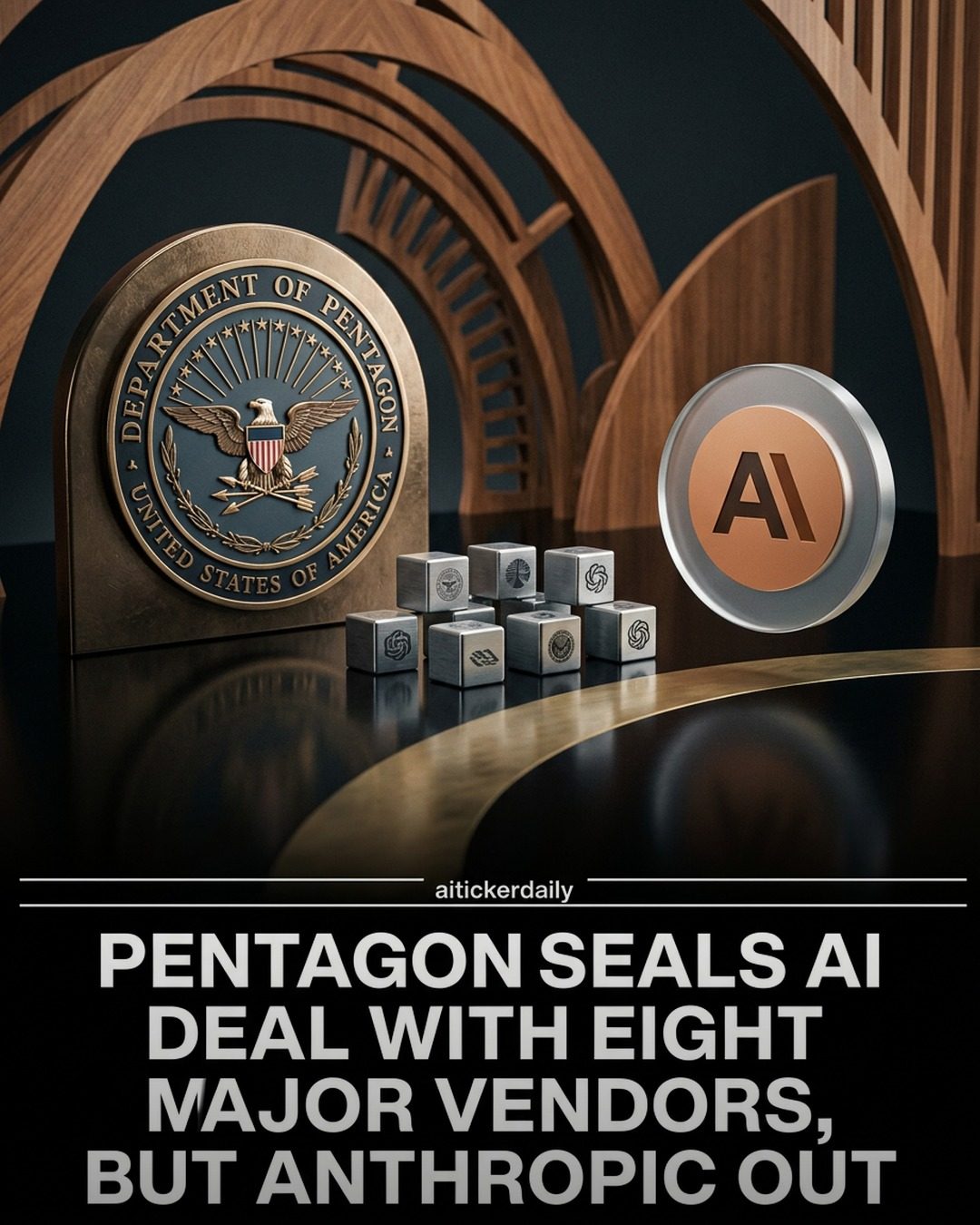
Pentagon AI Deal: Vendor List, Impact on Defense, and Exclusion of Anthropic
The Pentagon has recently secured an agreement with eight major tech vendors to integrate their AI tools on classified networks, a significant step in transforming the U.S. military into an AI-first fighting force. This move underscores the growing importance of artificial intelligence in defense strategies and its potential to reshape military operations.
Why This Matters
The integration of AI tools into the Pentagon's defense infrastructure is a major development in national security. By leveraging AI, the military can enhance its capabilities in data analysis, threat detection, and operational efficiency. The deal also highlights the strategic partnerships between the government and leading tech companies, reflecting a broader trend in defense technology.
The Deal: Vendors and Exclusions
The eight vendors selected for this AI initiative are SpaceX, OpenAI, Google, Nvidia, Reflection, Microsoft, AWS, and Oracle. These companies were chosen for their advanced AI capabilities and potential to contribute to the military's goals. Notably, Anthropic, a prominent AI company, is absent from the list. This exclusion raises questions about the criteria used for vendor selection and the potential impact on the military's AI capabilities.
SpaceX and OpenAI
SpaceX, known for its groundbreaking work in aerospace and satellite technology, brings a unique perspective to the table. Their expertise in satellite communications and launch systems can significantly enhance the military's AI-driven operations. OpenAI, on the other hand, is renowned for its cutting-edge AI research and development, particularly in natural language processing and generative models.
Google, Nvidia, and Reflection
Google's vast experience in data management and cloud computing makes it a valuable partner for the Pentagon. With Google’s AI capabilities, the military can process and analyze vast amounts of data more efficiently. Nvidia, a leader in GPU technology, provides the hardware necessary for high-performance computing, essential for running complex AI algorithms. Reflection, a company specializing in AI-driven data analytics, offers tools to analyze and visualize data, enabling better decision-making.
Microsoft, AWS, and Oracle
Microsoft, with its comprehensive suite of AI tools and cloud services, offers robust solutions for data management and AI integration. AWS, the leading cloud service provider, provides scalable infrastructure for AI applications, ensuring that the military’s AI tools can handle large-scale data processing. Oracle, with its enterprise-grade database and AI solutions, supports the military's need for secure and efficient data management.
Exclusion of Anthropic
Anthropic's absence from the list raises several questions. The company is known for its innovative AI models and contributions to ethical AI development. The exclusion may be driven by policy considerations, such as security concerns or compliance with federal regulations. It is also possible that the specific AI tools offered by Anthropic were not aligned with the military's immediate needs.
Policy and Ethical Considerations
The exclusion of a company like Anthropic highlights the complex interplay between policy and technology in defense. The Pentagon must balance the need for advanced AI capabilities with the importance of adhering to ethical guidelines and security protocols. This decision underscores the ongoing tensions between technological innovation and regulatory compliance.
Impact on Military Operations
The integration of AI tools from these vendors will significantly impact military operations. These tools can enhance situational awareness, improve predictive analytics, and accelerate decision-making processes. Moreover, the AI-driven solutions can automate routine tasks, freeing up human resources for more critical missions. However, the success of this initiative will depend on how well the Pentagon can integrate these diverse AI tools into a cohesive and secure infrastructure.
Practical Tips
For those interested in the intersection of AI and defense, the following tips can provide valuable insights:
Stay Informed
Keep up with the latest developments in AI and defense by following reliable sources like AI Business. These resources offer in-depth analysis and updates on the latest trends and technologies in the AI and defense sectors.
Engage with Experts
Follow key figures and organizations in the AI and defense communities, such as @curatedaidotnet, to stay updated on the latest news and discussions. Engaging with experts can provide a deeper understanding of the issues and challenges in this field.
Understand the Ethical Implications
While AI offers numerous benefits, it also raises ethical questions. Stay informed about the ethical implications of AI in defense and contribute to the ongoing dialogue about how to ensure that AI is used responsibly and ethically.
Important Takeaways
- The Pentagon's AI deal with eight major vendors is a significant step in enhancing the military's capabilities in AI-driven defense.
- The selection of vendors reflects the Pentagon's strategic partnerships with leading tech companies and the importance of AI in national security.
- The exclusion of Anthropic raises questions about the criteria for vendor selection and the potential impact on the military's AI capabilities.
- The integration of AI tools will have a profound impact on military operations, from situational awareness to decision-making processes.
- Ethical and policy considerations are crucial in the development and deployment of AI in defense.
Conclusion
The Pentagon's AI deal with eight major vendors is a pivotal moment in the evolution of defense technology. By leveraging the advanced AI capabilities of leading tech companies, the military can enhance its operational efficiency and strategic capabilities. The exclusion of Anthropic highlights the complexities of integrating AI into defense, particularly the balance between innovation and regulatory compliance. This deal underscores the growing importance of AI in national security and sets the stage for further advancements in AI-driven defense strategies. Stay informed and engaged to navigate this dynamic and rapidly evolving field.
Questions readers ask
Which companies are the eight major tech vendors in the Pentagon's AI deal?
The eight vendors are SpaceX, OpenAI, Google, and five other companies. The specific names of these other companies are not provided in the article, but they are all major tech players in the AI field.
What is the expected impact of AI on the US military’s defense capabilities?
The integration of AI is expected to significantly improve the US military's data analysis, threat detection, and operational efficiency. This will enable the military to make better-informed decisions and respond more quickly to potential threats.
Why is the absence of Anthropic from the vendor list significant?
Anthropic's absence raises questions about the selection criteria used by the Pentagon. It also prompts considerations about how this exclusion might affect the scope and diversity of AI capabilities integrated into military operations.
How will this AI deal influence the Pentagon's defense strategy?
This AI deal marks a pivotal shift in the Pentagon's defense strategy, transitioning the US military into an AI-first fighting force. This means that AI will play a central role in future military operations and decision-making processes.
What does the Pentagon’s AI deal signify about the role of AI in national security?
The Pentagon’s AI deal signifies that AI is becoming a crucial component of national security. By integrating AI tools, the military aims to enhance its capabilities in areas that are vital for defense. This move also underscores the importance of strategic partnerships between the government and leading tech companies.
What are some potential benefits of integrating AI into the Pentagon’s infrastructure?
Benefits include improved data processing, enhanced threat detection capabilities, and increased operational efficiency. These improvements can lead to more effective military strategies, better decision-making, and faster response times to potential threats.
How does this AI deal reflect the Pentagon's broader AI policy?
This AI deal reflects the Pentagon’s broader AI policy of embracing cutting-edge technology to bolster defense capabilities. By partnering with leading tech vendors, the Pentagon aims to stay at the forefront of AI advancements and ensure that the US military remains competitive in an increasingly tech-driven world.
Related deep dives
Similar reads based on topic and creator.




Recent articles
Fresh deep dives from the latest Reels we unpacked.




Comments
Be the first to comment.