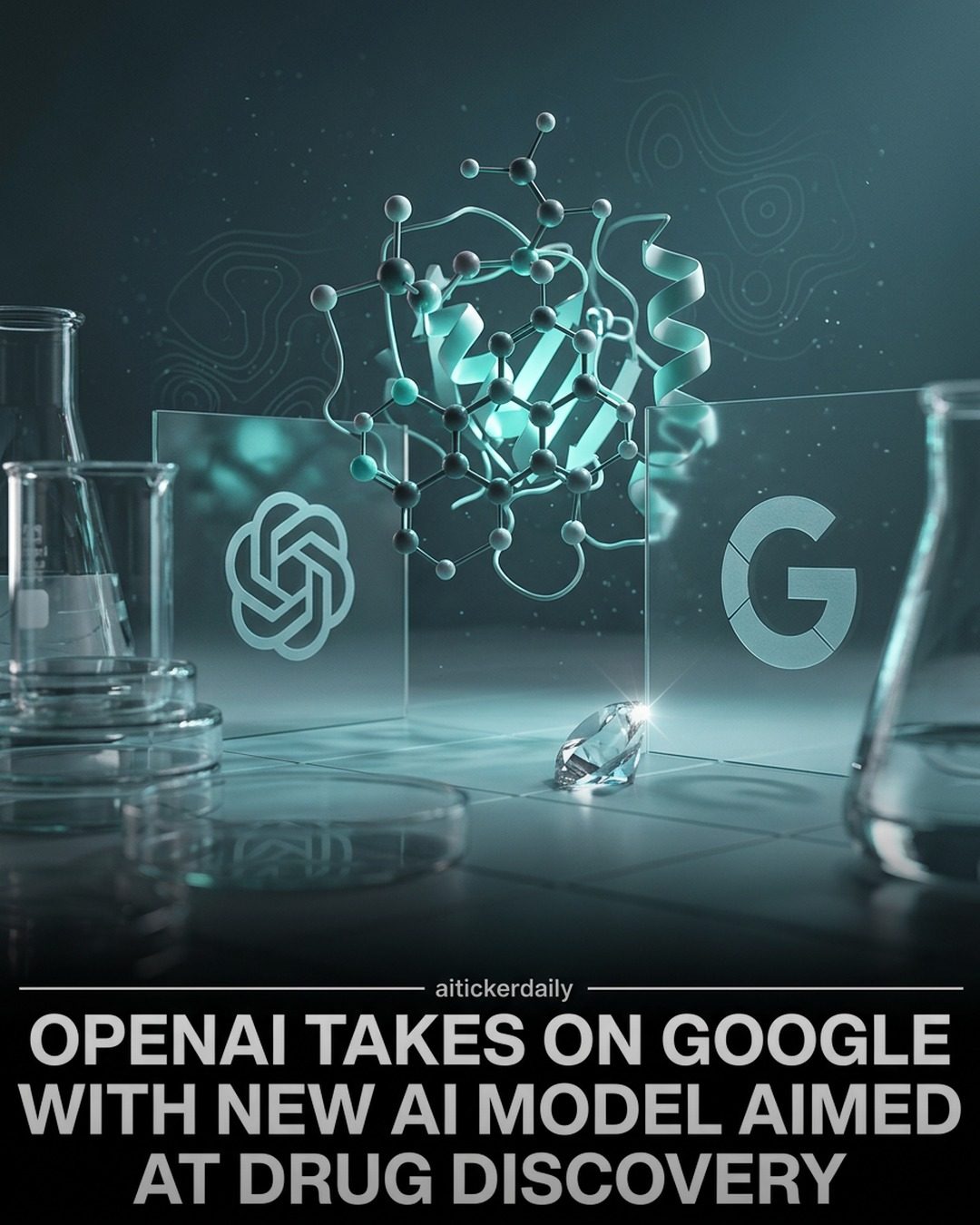
AI and Drug Discovery
The competition between OpenAI and Google has taken an exciting turn with both tech giants focusing on the field of drug discovery. The rivalry extends beyond headline models and into the realm of scientific breakthroughs. OpenAI's new AI model will speed up drug trials and shorten iteration loops, tackling the intricate process of discovering new drugs.
Context / Why this matters
The drug discovery process is long, costly, and complex. Traditional methods involve extensive lab work and clinical trials, which can take years. The introduction of AI models could revolutionize this process by accelerating the identification of potential drug candidates and optimizing trials.
AI models are being tested for reproducibility, data rights, and integration with regulated workflows. Pharma and biotech buyers prioritize these factors over demo flair, indicating a need for robust, reliable solutions. Both companies are vying to earn trust in regulated R&D, not just in flashy headlines.
The implications of this competition are significant. R&D leads, biotech investors, and platform teams are closely watching as these AI models could transform drug discovery. Partnerships, published results, and the capabilities behind API gates will be critical factors in determining the success of these models.
Main discussion
OpenAI's AI Model
OpenAI is rolling out an early version of an AI model specifically aimed at drug discovery. The model is designed to speed up the process of identifying potential drug candidates and optimizing clinical trials. This is a significant step for a field where time and resources are critical.
The model focuses on reproducibility and data rights, addressing key concerns for pharma and biotech buyers. These factors are crucial for integrating AI models into regulated workflows, ensuring that the outputs are reliable and compliant with industry standards.
Google's Science Stack
Google, on the other hand, is pushing its own science stack, which includes a range of AI models and tools aimed at drug discovery. The rivalry between OpenAI and Google is partly narrative, with both companies seeking to prove scientific advancements rather than just dominating the search and advertising markets.
Google's approach includes a focus on partnerships and published results. The company aims to demonstrate that its AI models can deliver concrete scientific outcomes, earning trust in the regulated R&D space.
The Race for Trust
The competition between OpenAI and Google is not just about who can build the most advanced AI model. It's also about who can earn the trust of the scientific community and regulatory bodies. Trust is crucial for the successful integration of AI models into the drug discovery process.
Both companies are focusing on partnerships, published results, and the capabilities behind API gates. These factors will be critical in determining the success of their AI models in the drug discovery field.
Practical tips
For R&D leads, biotech investors, and platform teams, there are several practical tips to navigate this evolving landscape:
-
Stay Informed: Keep up with the latest developments and published results from both OpenAI and Google. This will help you understand the capabilities and limitations of their AI models.
-
Assess Partnerships: Pay close attention to the partnerships that both companies form. These partnerships can provide valuable insights into the real-world applications and reliability of their models.
-
Evaluate API Capabilities: Understand the capabilities behind the API gates. This will give you a better sense of the potential and limitations of these AI models in your specific context.
-
Focus on Governance and Data Contracts: Ensure that any AI model you consider integrates well with your existing workflows and complies with regulatory requirements. Reproducibility and data rights are crucial factors to consider.
Important takeaways
Drug discovery is a complex and highly regulated field, and the introduction of AI models could significantly accelerate this process. Both OpenAI and Google are making strides in this area, with a focus on reproducibility, data rights, and regulatory compliance.
For those in the pharma and biotech sectors, it's essential to stay informed, assess partnerships, evaluate API capabilities, and focus on governance and data contracts. The competition between OpenAI and Google is intense, but the potential benefits for drug discovery are substantial. Watch for published results, partnerships, and the capabilities behind API gates to make informed decisions.
Conclusion
The competition between OpenAI and Google in the field of drug discovery is not just about who can build the best AI model. It's about earning trust in the regulated R&D space and delivering concrete scientific advancements. As both companies push the boundaries of AI in drug discovery, the potential benefits for the pharmaceutical and biotech industries are immense. By staying informed and making strategic decisions, stakeholders can leverage these advancements to accelerate the drug discovery process and bring new therapies to market more efficiently.
Questions readers ask
How does AI contribute to the acceleration of drug discovery?
AI accelerates drug discovery by automating the analysis of vast datasets, identifying patterns, and predicting potential drug candidates more quickly than traditional methods. This speeds up the initial stages of drug development and reduces the time needed for early trials.
What specific advancements is OpenAI making in drug discovery?
OpenAI is developing AI models designed to streamline drug trials and reduce the number of iterations required in the drug discovery process. This involves using AI to predict how different compounds will behave, allowing researchers to focus on the most promising candidates.
How is Google leveraging AI in the drug discovery process?
Google is using AI to optimize various stages of drug discovery, including the identification of potential drug candidates and the design of clinical trials. Google's AI models are being tested for their ability to handle real-world data, ensuring that the insights gained are both accurate and applicable in practical settings.
What are the main challenges in integrating AI into drug development?
The primary challenges include ensuring the reproducibility of AI-generated results, managing data rights and privacy, and effectively integrating AI models with existing pharmaceutical processes and regulatory frameworks.
What are the potential benefits of using AI models in drug trials?
AI models can optimize drug trials by predicting the efficacy and safety of potential drugs more accurately. This leads to more targeted and efficient trials, reducing the overall time and cost of bringing a new drug to market.
How do OpenAI and Google's approaches to AI in drug discovery differ?
While both companies aim to accelerate drug discovery, their approaches may differ in the specific algorithms and data integration methods used. OpenAI focuses on speeding up the trial process, while Google emphasizes optimizing the entire drug discovery pipeline, from candidate identification to trial design.
What role does data play in AI's involvement in drug development?
Data is crucial for training AI models in drug discovery. AI models rely on vast amounts of data to learn patterns and make accurate predictions. The quality and diversity of the data used can significantly impact the effectiveness of AI in identifying new drug candidates and optimizing trials.
Related deep dives
Similar reads based on topic and creator.




Recent articles
Fresh deep dives from the latest Reels we unpacked.




Comments
Be the first to comment.