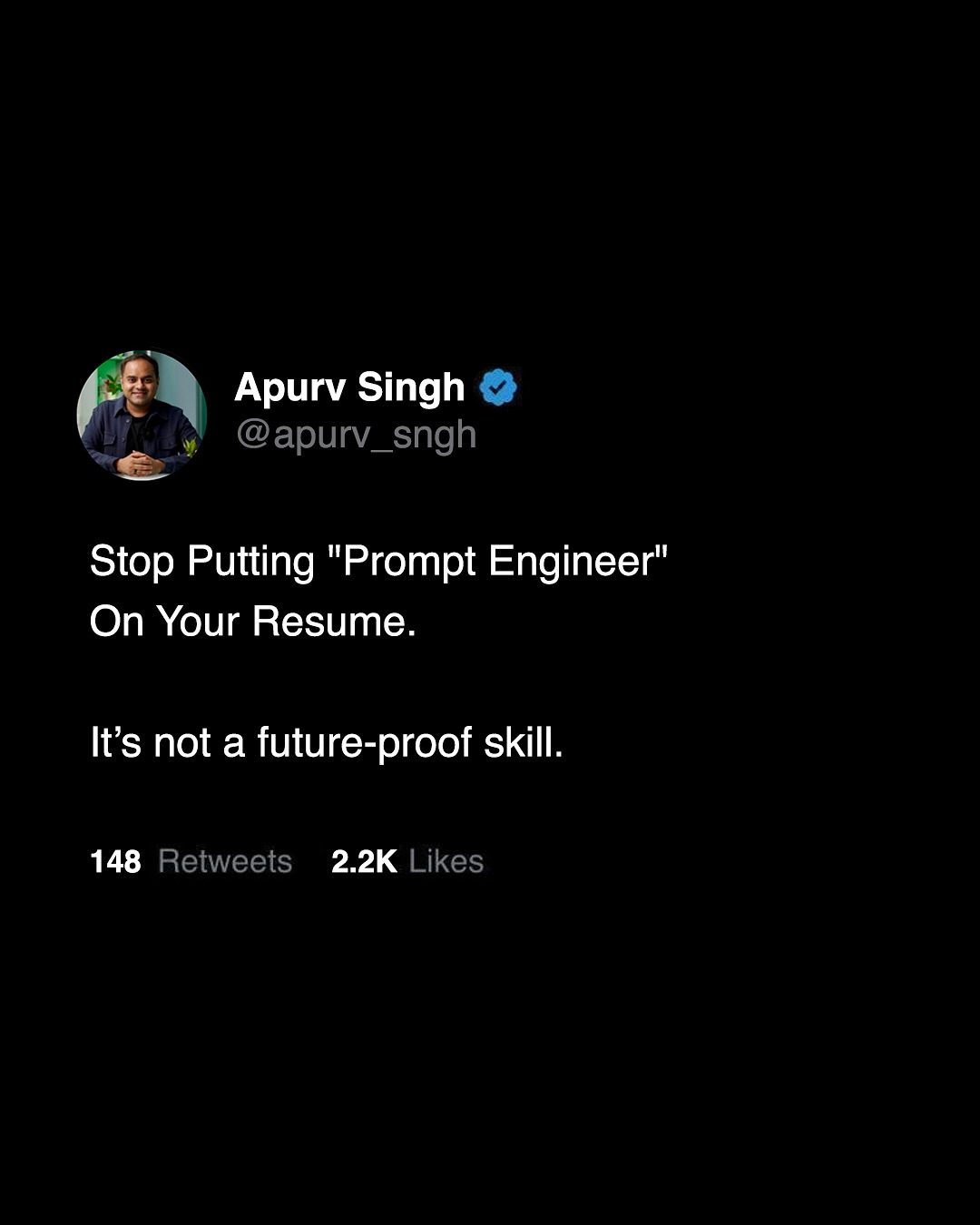
Prompt Engineering and the Evolving Landscape of AI
The role of a prompt engineer is becoming increasingly questionable. While prompt engineering was a valuable skill when AI models needed meticulous instructions, it is becoming less crucial as AI becomes more sophisticated.
Why this Matters
There are several reasons why understanding the shifting landscape of AI and the future of prompt engineering is important. AI is evolving rapidly, and the skills that are in demand will change accordingly. For professionals, it is crucial to stay ahead of these trends to avoid being left behind. This shift also opens up new opportunities for those who can adapt to the changing landscape.
The Declining Value of Prompt Engineering
AI's Growing Capabilities
AI models are becoming more capable, reducing the need for constant 'babying' or intricate instructions. As AI improves in its ability to understand and execute tasks, the specific details of how to do something become less critical. If you can effectively communicate the 'what' of a task, the AI can typically figure out the 'how' on its own. This shift means that the role of a prompt engineer, who traditionally focuses on crafting the perfect instructions, is becoming less relevant.
Execution Costs and the Technician Era
The cost of execution is dropping to almost zero. This is a significant change from the past when executing tasks required significant resources and expertise. As execution becomes cheaper and more automated, the value shifts from the act of execution to the design and strategy behind it. The 'Technician Era,' where the value lay in pushing buttons and executing tasks, is coming to an end. The focus is now on designing the machines and systems that will perform these tasks.
Optimizing for Outcomes
Stop optimizing for the tool and start optimizing for the outcome. The key to success in this new era is to focus on the end goal rather than the specific tools or methods used to achieve it. This shift requires a new set of skills, including strategic thinking, problem-solving, and machine design. Those who can master these skills will be in high demand, while those who continue to focus on execution will find themselves replaced by more capable and cost-effective AI systems.
The Future of Work in the AI Age
The Shift from Technicians to Architects
The role of the 'button-pusher' is becoming obsolete. Instead, the value lies in the 'architects' who design the systems and strategies that leverage AI. These architects are the ones who will get rich in the future, as they are the ones who can create value by designing the machines and systems that will drive innovation and efficiency. This shift highlights the importance of developing strategic and design skills in the age of AI.
Strategic Thinking and Design
Optimizing for design and strategy requires a different mindset. It is no longer about executing tasks efficiently; it is about designing systems that can adapt and improve over time. This requires a deep understanding of the underlying technologies, as well as the ability to think strategically about how these technologies can be applied to solve real-world problems. Those who can master this skill set will be in high demand in the future.
Practical Tips for Navigating the AI Landscape
Focus on Strategic and Design Skills
Given the diminishing role of the prompt engineer, it's crucial to shift your focus towards developing strategic and design skills. This includes learning how to design AI systems, create strategic plans for their implementation, and think critically about how these technologies can be used to solve complex problems.
Stay Updated on AI Developments
AI is evolving rapidly, and staying updated on the latest developments is essential. This includes not just the technical aspects, but also the strategic and design considerations. Keep an eye on industry trends, attend conferences, and engage with experts in the field to stay ahead of the curve.
Think Strategically
Always think about the outcome rather than the tool. When designing or implementing AI systems, focus on the end goal and how you can achieve it, rather than getting bogged down in the specifics of the tool or method. This strategic mindset will help you create more effective and efficient solutions.
Important Takeaways
The role of a prompt engineer is becoming less relevant as AI models become more capable and execution costs drop. The value is shifting from execution to design and strategy. Those who can adapt to this new landscape by focusing on strategic and design skills will be in high demand in the future. Think about the outcome, not just the tool, and stay updated on the latest developments in AI to navigate this changing landscape successfully.
Conclusion
The future of work in the AI age is about design, strategy, and innovation. As AI models become more capable, the role of the prompt engineer is diminishing. The key to success in this new era is to focus on the end goal, develop strategic and design skills, and stay updated on the latest developments in AI. By doing so, you can position yourself to thrive in the rapidly evolving landscape of AI and technology.
Questions readers ask
What is prompt engineering and why is it becoming obsolete?
Prompt engineering involves crafting specific instructions to guide AI models. It is becoming obsolete due to advancements in AI, which now require less manual guidance and can understand and execute tasks more autonomously. As AI models grow more capable, the need for detailed prompts decreases, reducing the relevance of prompt engineering.
How are AI models evolving to make prompt engineering less necessary?
AI models are evolving by incorporating advanced algorithms that allow them to understand context, learn from data, and make decisions with less human intervention. This increased autonomy reduces the need for precise, manually crafted prompts, making the role of a prompt engineer less critical.
What skills should professionals develop to stay relevant in the AI industry?
Professionals should focus on developing skills that complement AI's growing capabilities, such as AI strategy execution, data analysis, and understanding AI's ethical implications. Additionally, staying updated with the latest AI trends and tools will help professionals adapt and remain relevant in the evolving AI landscape.
What new opportunities are arising as prompt engineering declines?
As prompt engineering declines, new opportunities are emerging in areas like AI ethics, data governance, and AI-driven innovation. Professionals who can navigate these areas and understand how to optimize AI for value creation will be in high demand.
How can professionals adapt to the changing landscape of AI?
Professionals can adapt by regularly updating their skills, staying informed about the latest AI developments, and being open to learning new tools and methodologies. Engaging in continuous learning and networking with industry experts can also help professionals stay ahead of the curve and identify new opportunities in AI.
What are some key AI trends to watch for in the coming years?
Key AI trends to watch for include the increased autonomy of AI models, the integration of AI in various industries, and the focus on ethical AI development. Additionally, the evolution of AI-driven decision-making processes and the rise of AI-powered innovation will shape the future of AI and require new skill sets from professionals.
How can companies optimize AI for value creation as prompt engineering becomes less relevant?
Companies can optimize AI for value creation by investing in advanced AI models that require minimal manual guidance and focusing on integrating AI into their core operations. Additionally, fostering a culture of continuous learning and encouraging employees to develop new AI-related skills can help companies leverage AI more effectively.
Related deep dives
Similar reads based on topic and creator.




Recent articles
Fresh deep dives from the latest Reels we unpacked.




Comments
Be the first to comment.