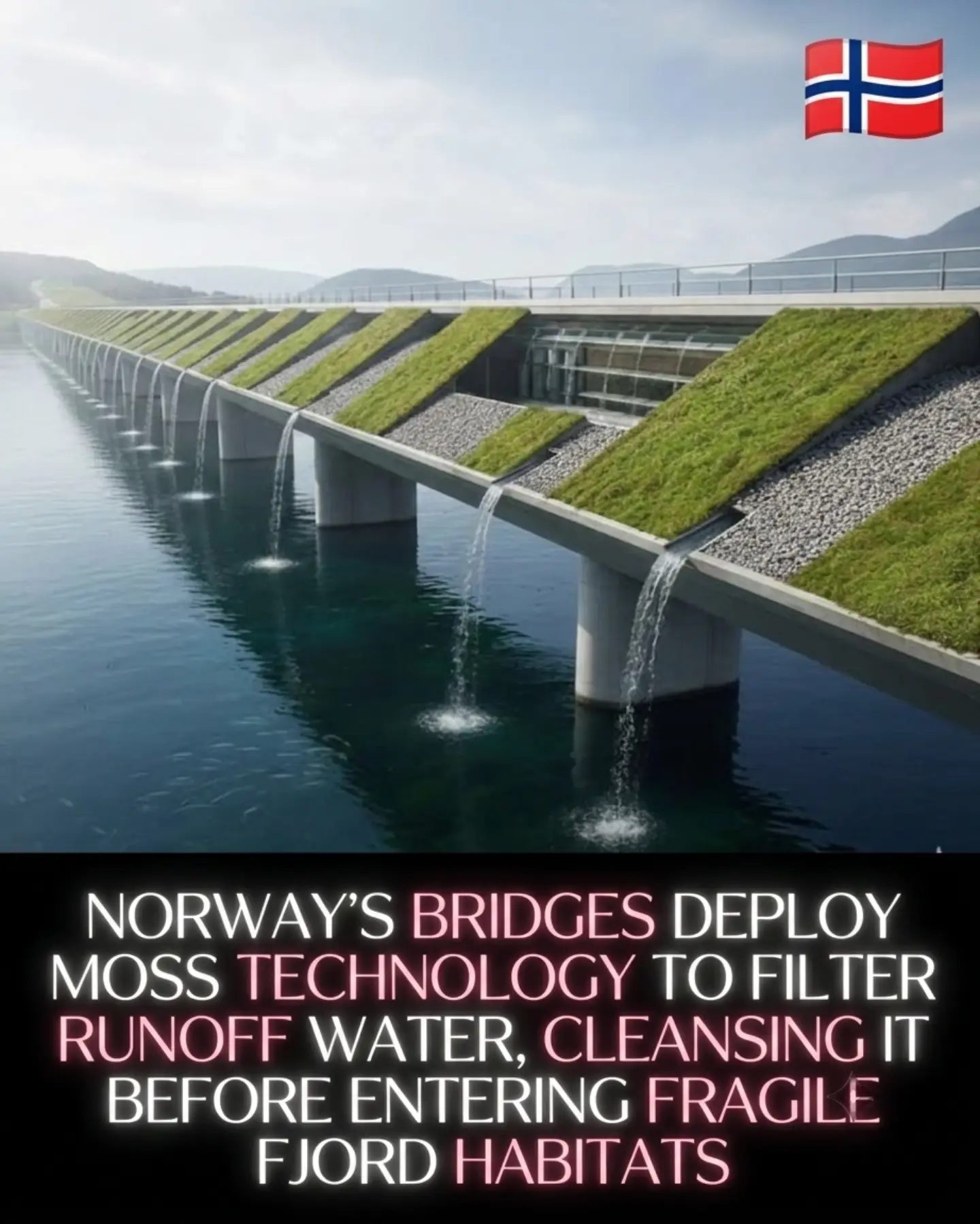
Moss Water Filtration: Norway's Innovative Approach to Protecting Fjord Habitats
Norway has pioneered an innovative water filtration system by integrating moss technology into its bridges. This unique approach filters runoff water, ensuring it is cleansed before entering the fragile fjord habitats. The system not only showcases an eco-friendly solution but also highlights Norway's commitment to environmental conservation.
Why This Matters
Urbanization and industrial activities often lead to excessive runoff water, which can be contaminated with pollutants. These pollutants, if left unchecked, can severely impact freshwater ecosystems, including fjords. Norway's implementation of moss water filtration on bridges addresses this issue head-on. By filtering runoff water before it enters the fjords, the system helps maintain the ecological balance of these delicate habitats.
Moss Water Filtration: The Science Behind It
How Moss Filters Water
Moss is a natural filter that can absorb and retain pollutants from water. When integrated into bridge structures, moss acts as a living filter. As water flows over the moss, it captures and breaks down contaminants, releasing cleaner water into the fjords. This process is both efficient and sustainable, making it an ideal solution for environmental protection.
Benefits of Moss Filtration
- Natural and Sustainable: Moss is a renewable resource that requires minimal maintenance. Unlike synthetic filters, moss does not produce waste and can thrive in various environmental conditions.
- Effective Pollutant Removal: Moss can remove a wide range of pollutants, including heavy metals, fertilizers, and organic compounds. This makes it a versatile solution for different types of water contamination.
- Enhances Biodiversity: The moss layers on bridges create a microhabitat for various species, enhancing biodiversity in the area. This ecological benefit complements the water filtration function, making it a holistic environmental solution.
Practical Tips for Implementing Moss Filtration
If you are considering implementing a moss water filtration system, here are some practical tips to get you started:
- Site Selection: Choose bridges and structures that are strategically located to intercept runoff water before it enters sensitive ecosystems.
- Moss Selection: Select moss species that are well-suited to the local climate and can effectively filter the specific pollutants in the runoff water.
- Maintenance: Regularly monitor the moss beds to ensure they remain healthy and effective. Remove any debris that may accumulate and replace the moss if it becomes damaged or less effective over time.
- Community Involvement: Engage the local community in the project. Public awareness and participation can enhance the success and sustainability of the filtration system.
Important Takeaways
Moss water filtration systems offer a natural, eco-friendly solution to water pollution. By integrating moss into bridge structures, Norway has demonstrated a practical and effective way to protect fragile ecosystems. Key takeaways include:
- Efficiency: Moss filtration systems are efficient in removing a wide range of pollutants from runoff water.
- Sustainability: Moss is a renewable resource that requires minimal maintenance, making it a sustainable solution for long-term use.
- Biodiversity: Moss layers on bridges create microhabitats that enhance local biodiversity, providing additional ecological benefits.
- Community Engagement: Involving the local community in the implementation and maintenance of moss filtration systems can increase their effectiveness and longevity.
Conclusion
Norway's innovative use of moss technology in its bridges to filter runoff water sets a benchmark for environmental conservation. The system not only protects fragile fjord habitats but also offers a sustainable and effective solution to water pollution. By adopting similar methods, other regions can enhance their environmental stewardship and protect their natural ecosystems. The combination of natural filtration and community engagement makes moss water filtration a powerful tool in the fight against water pollution.
Questions readers ask
What are Norway’s moss bridges and how do they work?
Norway’s moss bridges are structures designed to integrate moss into their architecture, using the plant's natural ability to absorb and filter out pollutants from runoff water. As rainwater flows over the moss-covered surfaces, the moss traps and breaks down contaminants, ensuring cleaner water reaches the fjords.
Why is moss used for water filtration in Norway?
Moss is used because it is highly effective at absorbing water and trapping pollutants. It is also a sustainable resource and integrates naturally with the environment. This makes it an ideal choice for cleaning urban and industrial runoff before it enters delicate fjord ecosystems.
How do moss bridges contribute to fjord protection?
Moss bridges act as a natural barrier, filtering harmful substances from runoff water. By cleaning the water before it enters the fjords, these bridges help maintain the water quality and protect the delicate marine life that calls these habitats home.
What are the benefits of using moss for runoff water treatment?
Moss is cost-effective, eco-friendly, and requires minimal maintenance. It also efficiently removes various pollutants, such as heavy metals and nutrients, from runoff water. Additionally, moss can help reduce the risk of flooding and soil erosion by absorbing and slowing down water.
Are there other countries using similar moss filtration systems?
While Norway has been a pioneer in using moss bridges for water filtration, the concept of using moss for environmental purposes is gaining traction globally. Other countries are exploring similar sustainable solutions to address water pollution and protect natural habitats.
How does the moss bridge design facilitate natural water filtration?
The design of moss bridges incorporates surfaces that are optimized for moss growth. These surfaces are typically sloped to allow water to flow evenly over the moss, maximizing the filtration process. The moss is secured in place to ensure it remains effective even in harsh weather conditions.
Can these moss bridge systems be implemented in other urban environments?
Yes. Moss bridge systems can be adapted for use in other urban environments, particularly in areas with significant rainfall and runoff. Cities looking to implement sustainable water management strategies can consider integrating moss-based filtration systems into their infrastructure to reduce pollution and protect local waterways.
Related deep dives
Similar reads based on topic and creator.




Recent articles
Fresh deep dives from the latest Reels we unpacked.




Comments
Be the first to comment.