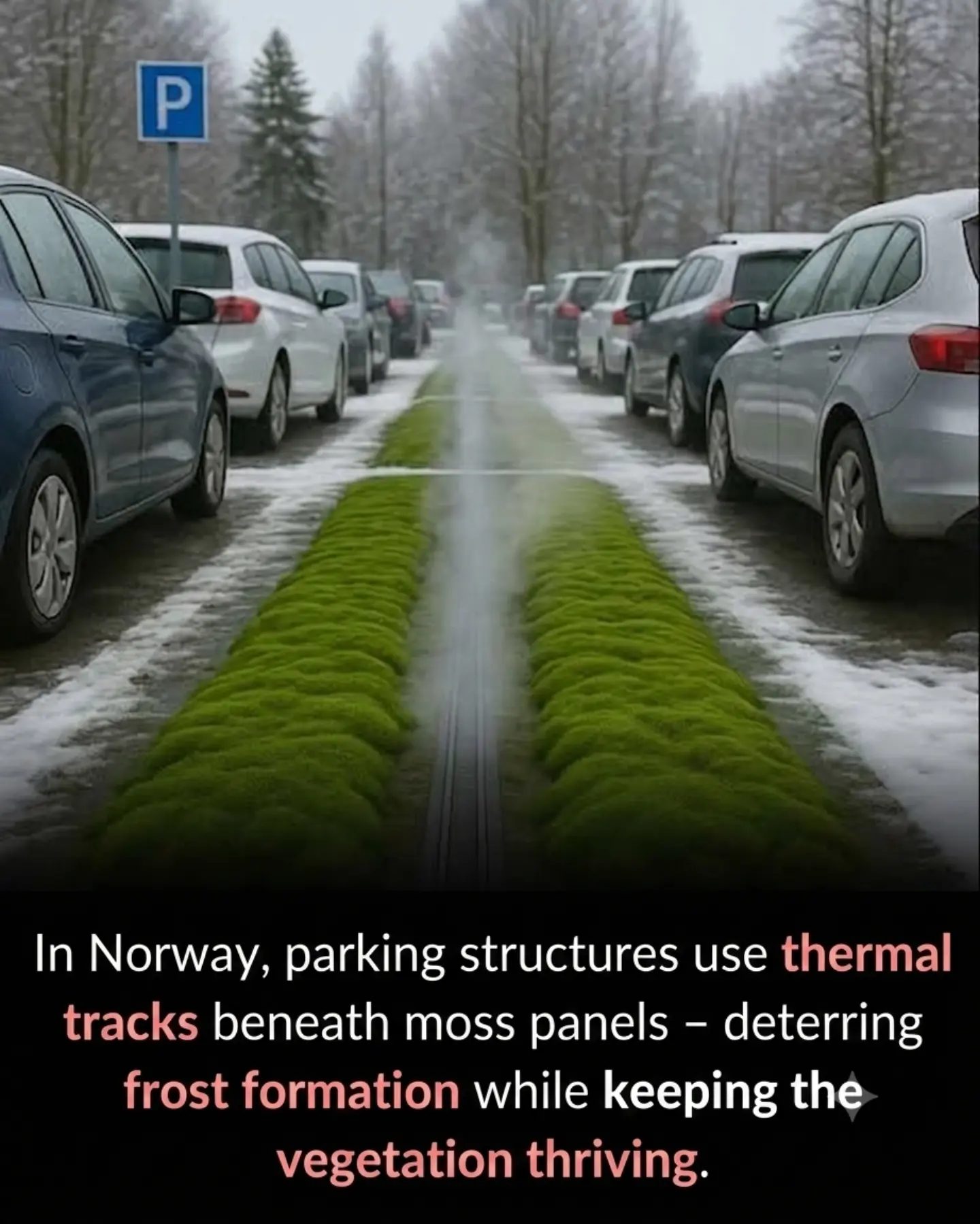
Innovative Parking Solution: Thermal Tracks and Moss Panels in Norway
Parking structures are a necessity in urban and suburban areas, but they often come with environmental challenges, particularly in cold climates. In Norway, a unique solution has been implemented to address these issues. Parking structures in the region utilize a clever design that integrates thermal tracks beneath moss panels. This innovative approach not only deters frost formation but also allows vegetation to thrive, creating a more sustainable and aesthetically pleasing environment.
Context: Why This Matters
In many parts of the world, especially in colder regions, parking structures face significant challenges due to frost and ice formation. Traditional solutions often involve extensive use of de-icing chemicals or manual labor, which can be costly and environmentally harmful. The unique design in Norway offers a more sustainable and efficient approach to managing these issues.
Main Discussion
Thermal Tracks: The Science Behind the Solution
The thermal tracks embedded beneath the moss panels are a key component of this innovative parking solution. These tracks generate heat, which prevents frost from forming on the surface. This is particularly beneficial in regions with harsh winters, where frost can cause significant damage to infrastructure and create hazardous conditions for drivers.
Thermal tracks work by circulating warm water or electrically heated fluids through a network of pipes. This heat is then distributed evenly across the surface, ensuring that the moss panels remain frost-free. The system is designed to be energy-efficient, reducing the overall environmental impact while maintaining its effectiveness.
Moss Panels: Aesthetic and Environmental Benefits
The use of moss panels in parking structures adds an aesthetic element that is both visually appealing and environmentally beneficial. Moss is a hardy plant that can thrive in a variety of conditions, making it an excellent choice for this application. The green strip of moss running down the center of the parking area not only looks pleasing but also helps to absorb rainwater and reduce runoff, contributing to better drainage and water management.
In addition to these benefits, moss panels also help to improve air quality. Mosses act as natural air filters, removing pollutants from the air and releasing oxygen. This makes the parking area a more pleasant and healthier environment for both drivers and pedestrians.
Integration of Technology and Nature
The combination of thermal tracks and moss panels represents a harmonious integration of technology and nature. By leveraging modern engineering solutions, this parking structure design ensures that the environment remains functional and safe while also promoting sustainability and aesthetic appeal.
The thermal tracks provide a practical solution to a common problem in cold climates, while the moss panels enhance the overall look and feel of the area. This integration demonstrates how innovative design can address practical challenges while also contributing to environmental sustainability.
Practical Tips
If you’re considering implementing a similar solution in your area, here are some practical tips to keep in mind:
- Assess Local Climate: Determine the specific challenges posed by your local climate. If frost and ice are significant issues, thermal tracks can be a valuable addition.
- Choose the Right Moss: Select a type of moss that is hardy and can thrive in your specific conditions. Various types of moss are suited for different climates and environmental conditions.
- Consult with Experts: Work with engineers and environmental experts to design and install the thermal tracks and moss panels. Proper installation is crucial for the system's effectiveness and longevity.
- Maintenance Planning: Develop a maintenance plan to ensure the system remains functional. Regular inspections and maintenance can help prevent issues and extend the lifespan of the thermal tracks and moss panels.
- Community Involvement: Engage with the local community to gather input and support. Highlighting the environmental and aesthetic benefits can help build enthusiasm and support for the project.
Important Takeaways
- Sustainability: This innovative design offers a sustainable solution for managing frost in parking structures, reducing the need for harmful de-icing chemicals.
- Environmental Benefits: The use of moss panels improves air quality and contributes to better water management.
- Aesthetic Appeal: The green strip of moss adds a pleasing visual element, making the parking area more attractive and inviting.
- Integration of Technology and Nature: This design showcases how modern technology can be combined with natural elements to create a functional and environmentally friendly solution.
Conclusion
Parking structures in Norway have set a new standard for sustainable and efficient design with their use of thermal tracks beneath moss panels. This innovative solution not only addresses practical challenges but also contributes to a more environmentally friendly and aesthetically pleasing environment. Whether you’re a city planner, an architect, or simply someone interested in sustainable design, this Norwegian approach offers valuable insights and practical solutions for managing frost and ice in parking structures.
Questions readers ask
What are thermal tracks and how do they help in Norway's parking structures?
Thermal tracks are heating elements integrated into the design of parking structures. In Norway, they are used to prevent frost and ice formation by keeping the surface temperature above freezing point, ensuring safe and convenient parking even in harsh winter conditions.
How do moss panels contribute to the sustainability of parking structures in Norway?
Moss panels on parking structures in Norway promote vegetation growth, which helps absorb rainwater, reduces the urban heat island effect, and improves air quality. Additionally, moss panels enhance the aesthetic appeal of parking areas, making them more visually appealing and environmentally friendly.
What are the benefits of using moss and thermal tracks in parking structures?
This combination offers several benefits, including enhanced safety by preventing frost and ice, promoting vegetation growth for a greener urban environment, and reducing the need for harsh de-icing chemicals, which can be harmful to the environment.
Are there any maintenance requirements for thermal tracks and moss panels?
Thermal tracks require periodic maintenance to ensure they function properly and efficiently. Moss panels, on the other hand, are generally low-maintenance. They need occasional watering and trimming to keep the vegetation healthy and ensure the panels remain effective.
How do these innovative parking solutions in Norway impact the local environment?
The innovative parking solutions in Norway significantly benefit the local environment by reducing the use of de-icing chemicals, promoting vegetation, and improving air quality. These changes contribute to a healthier and more sustainable urban ecosystem.
Can other countries adopt these parking structure innovations from Norway?
Yes, other countries, especially those with cold climates, can adopt these innovations. However, the feasibility and implementation will depend on local climate conditions, regulations, and infrastructure. The key is to adapt the technology to the specific needs and conditions of each region.
How do Norway's sustainable parking designs help with urban planning?
Norway's sustainable parking designs address urban environmental challenges, enhance the aesthetic appeal of parking areas, and contribute to a greener, more livable urban environment. By integrating vegetation and reducing the need for harsh chemicals, these designs promote a more sustainable and visually pleasing urban landscape.
Related deep dives
Similar reads based on topic and creator.



Recent articles
Fresh deep dives from the latest Reels we unpacked.




Comments
Be the first to comment.