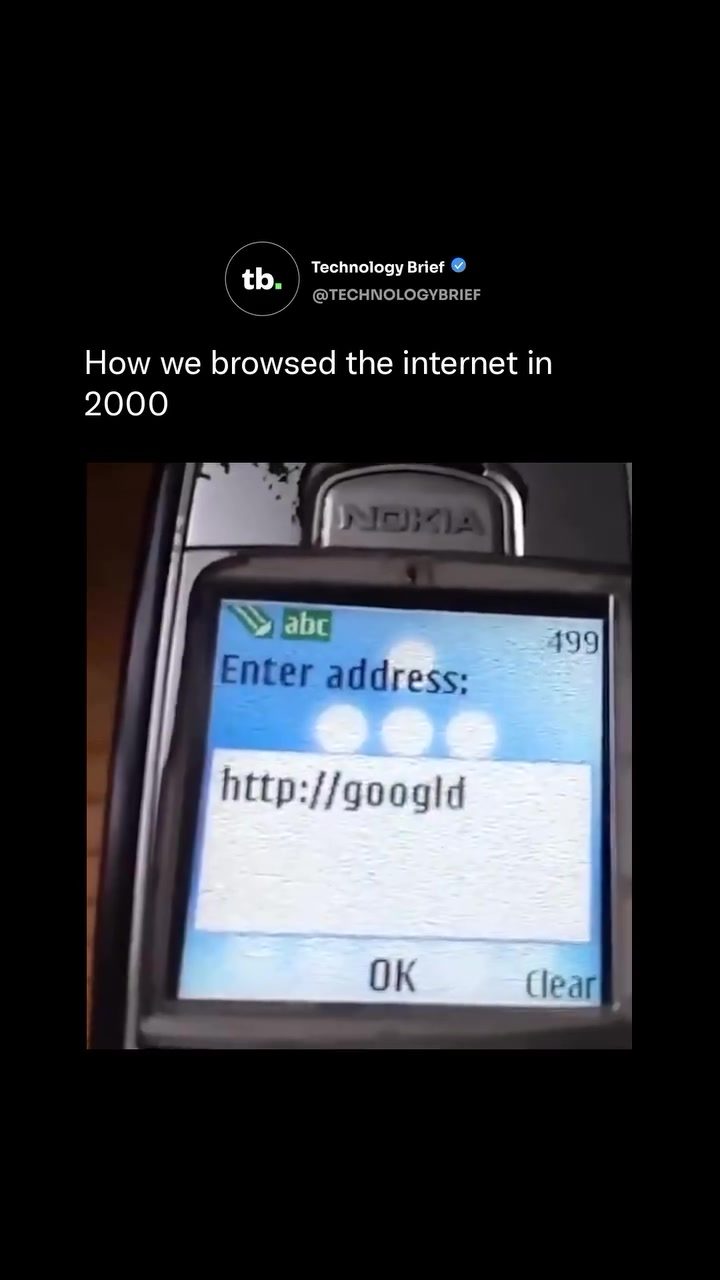
Internet Browsing in 2000: The Early Days of Mobile Internet
The early 2000s marked a significant shift in how people accessed the internet, particularly through mobile devices. Before the advent of smartphones, browsing the web on a phone involved using the Wireless Application Protocol (WAP), a technology that allowed basic web content to be displayed on small screens. Nokia, a pioneer in this field, played a crucial role in this evolution.
Context / Why This Matters
The emergence of mobile internet browsing laid the foundation for the modern smartphones we use today. Understanding the challenges and limitations of early mobile browsers provides insight into the technological advancements that have since been made. This journey from clunky, slow WAP browsers to the sleek, fast interfaces of modern smartphones is a testament to how far technology has come in just a few decades.
The Birth of WAP
WAP was developed by a consortium that included major players like Nokia, Ericsson, and Motorola. It was designed to enable mobile devices to access the internet, albeit in a very rudimentary form. The Nokia 7110, released in 1999, was the first mainstream phone to come with a built-in WAP browser. This phone set the stage for a wave of Nokia models that could load web pages over cellular connections, albeit at incredibly slow speeds.
The Nokia 7110 and Its Impact
The Nokia 7110 was a groundbreaking device for its time. It featured a numeric keypad, which users had to manually enter full URLs like "http://google.com" character by character. This tedious process was just the beginning of the mobile browsing experience. Once the URL was entered, users had to wait through a loading screen that seemed to take an eternity. Despite these limitations, millions of people used these phones to check news, weather, and stock prices long before anyone imagined carrying a pocket-sized computer.
WAP: A Stripped-Down System
WAP was essentially a stripped-down version of the internet designed to work on the limited capabilities of mobile devices at the time. Websites had to be rebuilt in a simplified format just to display on these small, low-resolution screens. Pages were heavily compressed to fit into the limited bandwidth available, resulting in a very basic browsing experience. This fundamental technology dominated mobile internet access from around 1999 until the iPhone arrived in 2007. It was during this era that Nokia’s in-house browser accounted for roughly 40% of the mobile browser market.
The Evolution from WAP to Modern Mobile Browsing
The transition from WAP to modern mobile browsing was not an overnight process. Over the years, advancements in technology led to faster connection speeds and more sophisticated mobile browsers. The introduction of 3G and later 4G networks significantly improved internet speeds compared to the dial-up-like experience of WAP. This, combined with larger screens and more powerful processors, allowed for a richer and more seamless browsing experience.
Practical Tips for Understanding Early Mobile Browsing
While today’s mobile browsing experience is vastly different, understanding the early days of mobile internet can provide valuable insights into the evolution of technology. Here are some practical tips to help you appreciate the journey:
1. Imagine the Limitations
Try to imagine browsing the internet on a device with a tiny screen and a numeric keypad. Entire web pages had to be simplified to fit into this limited display, and typing out URLs was a laborious process. This can help you appreciate the advancements made in just a few decades.
2. Understand the Speed Limitations
Early mobile internet connections were painfully slow. Loading a simple webpage could take minutes, and the experience was far from smooth. Understanding this can help you value the speed and efficiency of modern mobile browsers.
3. Explore the History of Mobile Technology
Look up older models of mobile phones like the Nokia 7110 and see how they compared to today’s smartphones. This can provide a tangible example of how far we’ve come in terms of design, functionality, and user experience.
4. Compare Early Websites to Modern Ones
Visit archived versions of websites from the early 2000s and compare them to their modern counterparts. This can give you a sense of how web design has evolved to accommodate mobile browsing and faster internet speeds.
Important Takeaways
Understanding the early days of mobile internet browsing provides a valuable perspective on the technological advancements that have occurred in the past few decades. Here are some key takeaways:
- WAP and Nokia 7110: These technologies laid the groundwork for modern mobile browsers and paved the way for the smartphones we use today.
- Limitations of Early Browsing: Early mobile browsers had significant limitations, including slow speeds and simplified web content, which were necessary to fit the technology of the time.
- Evolution of Technology: The transition from WAP to modern mobile browsing has been marked by significant improvements in speed, design, and user experience.
Conclusion
From the early days of WAP and the Nokia 7110 to the sleek, fast modern smartphones, the evolution of mobile internet browsing has been remarkable. The journey from clunky, slow WAP browsers to the sophisticated interfaces of today underscores the rapid advancements in technology. By understanding the challenges and limitations of early mobile browsing, we can better appreciate the conveniences and capabilities of modern mobile technology.
Questions readers ask
What is the Wireless Application Protocol (WAP)?
The Wireless Application Protocol (WAP) was a technology standard for accessing web content on mobile devices in the early days of mobile internet. It allowed basic web content to be displayed on small screens, making it possible to browse the internet from devices like the Nokia 7110.
What was the significance of the Nokia 7110 in mobile internet history?
The Nokia 7110 is notable as the first mainstream phone to feature a built-in WAP browser. Released in 1999, this device played a pivotal role in the development of mobile internet technology by providing users with a way to access basic web content on their mobile phones.
How did early mobile browsers like WAP differ from modern mobile browsers?
Early mobile browsers like WAP were designed to handle basic web content and function on the limited hardware and small screens of early mobile devices. In contrast, modern mobile browsers are capable of supporting rich, dynamic content and offer a much more seamless and fast browsing experience.
What were some of the limitations of WAP browsing?
WAP browsing had several limitations, including slow connection speeds, simplified content due to limited screen size, lack of support for many modern web technologies, and the requirement for web developers to create separate versions of their websites for mobile users.
How did Nokia contribute to the development of mobile internet technology?
Nokia contributed to the development of mobile internet technology by introducing the Nokia 7110, the first mainstream phone with a built-in WAP browser. This device helped popularize mobile internet access and laid the groundwork for future advancements in mobile browsing technology.
What changes did the introduction of the Nokia 7110 bring to the mobile internet landscape?
The introduction of the Nokia 7110 marked a significant shift in the mobile internet landscape by making mobile web browsing more accessible to the mainstream public. Its built-in WAP browser allowed users to access web content on their phones, setting the stage for future developments in mobile internet technology.
Why is understanding the history of mobile internet browsing important?
Understanding the history of mobile internet browsing helps us appreciate the technological advancements that have led to the modern smartphones and fast, intuitive web experiences we enjoy today. It provides context for the challenges overcome and the innovations that shaped the evolution of mobile browsing.
Related deep dives
Similar reads based on topic and creator.




Recent articles
Fresh deep dives from the latest Reels we unpacked.




Comments
Be the first to comment.