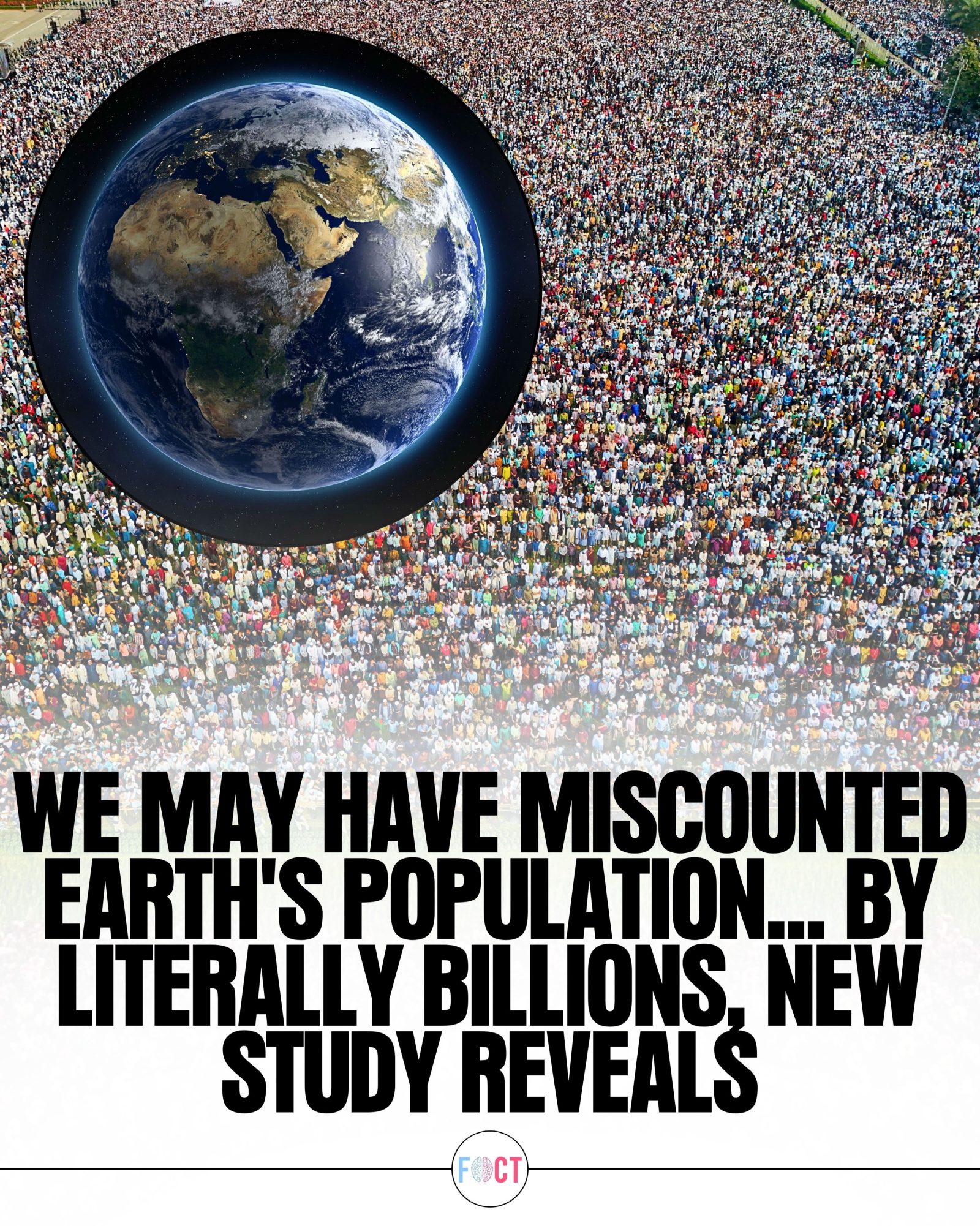
Earth's Population Miscalculation: The Billions Missed in Census and Satellite Data
The Earth's population might be significantly higher than previously estimated, according to a recent study published in Nature Communications. The research suggests that mainstream global datasets may severely undercount rural populations in developing countries, potentially miscalculating the global population by billions. This revelation has significant implications for global planning, resource allocation, and policy-making.
Why This Matters
Understanding the true extent of the world's population is crucial for various sectors, including healthcare, urban planning, and environmental management. An accurate population count is essential for effectively distributing resources, predicting future needs, and addressing global challenges. The discrepancy highlighted by this study underscores the need for more precise methods in population estimation.
Understanding the Discrepancy
Rural Populations in Developing Countries
The study, conducted by researchers at Aalto University, reveals that traditional methods of population estimation—such as satellite models and census data—may fail to accurately capture rural populations in developing countries. These methods often undercount these populations by up to 84%, leading to a significant miscalculation of the global population.
The Role of Rural Infrastructure Projects
The researchers found that precise records from rural infrastructure projects provide a more accurate representation of rural populations. These projects, which often involve detailed data collection at a local level, can offer insights that traditional methods miss. By comparing these records with traditional estimates, the study highlights the limitations of current population counting methods.
Traditional Methods vs. New Findings
Traditional population estimation methods, including satellite imagery and census data, have been the backbone of global population studies. However, the study suggests that these methods may not be as comprehensive as previously thought. Satellite imagery, for instance, can be limited by factors such as cloud cover, vegetation, and the resolution of the images. Census data, while more detailed, may also miss rural populations due to access and resources.
The Impact of the Miscalculation
Global Planning and Resource Allocation
An accurate population count is essential for effective global planning. Miscalculations can lead to inadequate resource allocation, particularly in areas that are already underserved. For example, if rural populations are underestimated, there may be insufficient resources allocated to healthcare, education, and infrastructure in these regions. This can exacerbate existing disparities and hinder development efforts.
Environmental Management
Population estimates are also crucial for environmental management. An accurate count can help in predicting future demands on natural resources, such as water and food, and in planning sustainable development. Miscalculations can lead to overuse of resources and environmental degradation, particularly in vulnerable ecosystems.
Policy-Making and Decision-Making
Policy-makers rely on accurate population data to make informed decisions. Miscalculations can lead to policies that are not well-aligned with the actual needs of the population, potentially leading to inefficiencies and misdirected efforts. For instance, policies aimed at urban areas may not address the needs of rural populations if they are underestimated.
Practical Tips for Improving Population Estimation
Enhancing Traditional Methods
To improve the accuracy of traditional methods, it is essential to integrate more detailed and local data. For example, combining satellite imagery with ground-level surveys and infrastructure project data can provide a more comprehensive picture. Additionally, advancements in technology, such as high-resolution imaging and AI, can enhance the accuracy of satellite data.
Leveraging Local Knowledge
Local communities often have a wealth of knowledge about their population and resources. Engaging local communities in data collection and validation can help ensure that population estimates are more accurate. This can involve training local residents to collect and verify data, as well as incorporating their insights into the estimation process.
Using Multi-Source Data
Relying on a single source of data can lead to inaccuracies. A multi-source approach, which combines satellite imagery, census data, and local infrastructure project records, can provide a more reliable estimate. This approach can help in cross-validating data and identifying discrepancies, leading to more accurate population counts.
Important Takeaways
- Traditional methods of population estimation, such as satellite imagery and census data, may undercount rural populations in developing countries by up to 84%.
- Precise records from rural infrastructure projects offer a more accurate representation of rural populations.
- Accurate population estimates are crucial for global planning, resource allocation, environmental management, and policy-making.
- Enhancing traditional methods, leveraging local knowledge, and using a multi-source data approach can improve the accuracy of population estimates.
- The study highlights the need for more comprehensive and accurate population estimation methods to address global challenges effectively.
Conclusion
The recent study published in Nature Communications sheds light on a significant gap in our understanding of the Earth's population. By revealing that rural populations in developing countries may be underestimated by billions, the study underscores the need for more accurate and comprehensive population estimation methods. Enhancing traditional methods, leveraging local knowledge, and using a multi-source data approach can help address this discrepancy and ensure that global planning, resource allocation, and policy-making are more effective. Understanding the true extent of the world’s population is not just a numerical exercise; it is a vital step toward creating a more equitable and sustainable future.
Questions readers ask
How was the undercount of rural populations in developing countries discovered?
The undercount was revealed through a new study that utilized precise rural infrastructure data. This data provided insights that mainstream global datasets had missed, leading to the discovery that billions may have been overlooked in population estimates.
What are the implications of this population miscalculation for global resource planning?
The miscalculation could significantly impact global resource planning by affecting how resources are distributed. For example, if the actual population is much higher, there may be shortages in essential resources such as food, water, and healthcare services. Additionally, urban planning and environmental management strategies may need to be revised to accommodate more people than previously thought.
How does this study affect our understanding of developing countries' population?
This study suggests that the populations of developing countries, particularly in rural areas, have been severely underestimated. This means that the actual number of people living in these regions is significantly higher than what current census data and satellite imagery indicate. This new understanding could lead to more accurate policies and initiatives tailored to these populations' needs.
Why is accurate population data important for environmental management?
Accurate population data is crucial for environmental management because it helps in predicting the demand for resources and the impact of human activities on the environment. Overestimating or underestimating the population can lead to misguided policies that either overburden ecosystems or fail to protect them adequately. Understanding the true population size allows for better planning and conservation efforts.
What methods were used in the global population estimation that may have contributed to the undercount?
Mainstream global datasets, including census data and satellite imagery, may have contributed to the undercount by not fully capturing rural populations in developing countries. These datasets might not account for the nuances of rural living, such as dispersed settlements and informal housing, leading to significant population miscounts.
How can global policies be adjusted to account for this new understanding of Earth's population?
Global policies can be adjusted by re-evaluating current data and assumptions about population sizes. This could involve conducting more detailed surveys in rural areas, improving data collection methods, and integrating rural infrastructure data into population estimates. Additionally, policymakers should consider the new findings when allocating resources and developing strategies to address the needs of the undercounted populations.
Related deep dives
Similar reads based on topic and creator.




Recent articles
Fresh deep dives from the latest Reels we unpacked.




Comments
Be the first to comment.