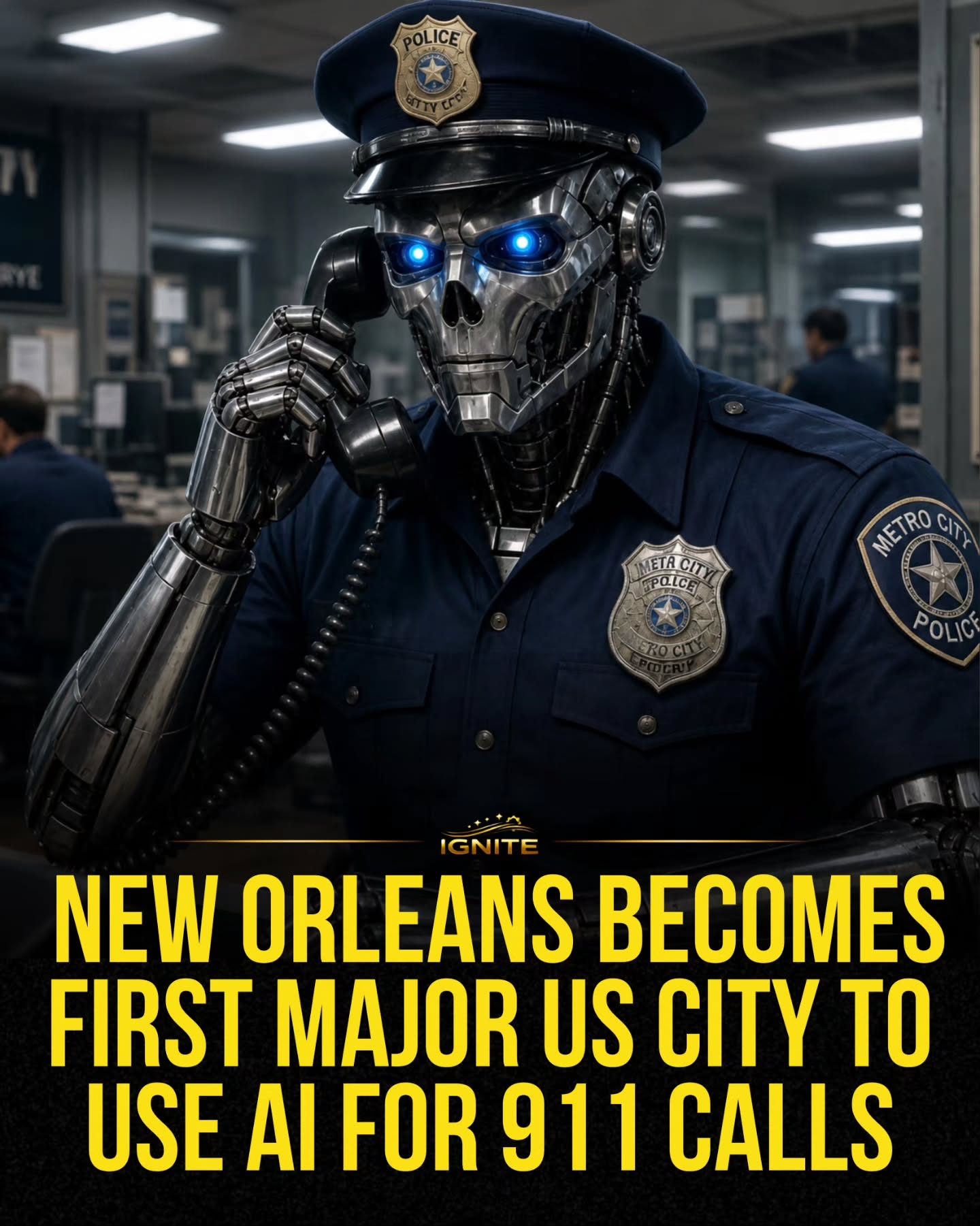
AI in 911 Response: A New Era of Public Safety in New Orleans
Artificial Intelligence (AI) is making its way into public safety systems, with New Orleans leading the charge as the first major US city to integrate AI into its 911 dispatch process. This innovative approach, branded under "Metro City Police" aims to enhance the efficiency and effectiveness of emergency response services.
AI’s Role in 911 Dispatch
The Orleans Parish Communication District in New Orleans handles over 1,000 emergency calls daily. To manage this high volume, the district has introduced an AI system designed to assist in sorting and prioritizing these calls. The AI system helps determine which calls require immediate human intervention, potentially reducing response times and ensuring that critical cases are addressed promptly.
The Technology Behind the System
The AI system employed by the Metro City Police is a sophisticated blend of natural language processing and machine learning. This technology is capable of analyzing the content of 911 calls, identifying key information, and categorizing the urgency of the situation. The system can recognize specific keywords, tones, and even background noises to assess the severity of the emergency.
For example, if a caller reports a fire, the AI can quickly identify the key information and flag the call for immediate human intervention. Conversely, if the call is a non-urgent inquiry, the AI can route it to an appropriate department, freeing up human dispatchers to handle more critical situations.
Human Oversight and AI Collaboration
While the AI system plays a crucial role in managing the influx of calls, it does not operate in isolation. Human dispatchers remain an integral part of the process, providing oversight and intervening when necessary. This collaborative approach ensures that the system's decisions are accurate and that any potential errors are promptly corrected.
Critics, including a former dispatcher, have expressed concerns about the reliability of AI in emergency situations. The fear is that the system could misinterpret the context of a call, leading to dangerous delays or misallocations of resources. However, officials emphasize that the AI system is designed to work in tandem with human operators, ensuring that critical decisions are always reviewed by trained professionals.
Addressing Concerns and Ensuring Reliability
The implementation of AI in 911 dispatch systems is not without its challenges. One of the primary concerns is the potential for the AI to misunderstand the nuances of human language, especially in high-stress situations. To mitigate this risk, the system is continually being updated and refined based on real-world data.
Additionally, the AI system is designed to learn from its interactions, improving its accuracy and reliability over time. This iterative process ensures that the system becomes more effective at distinguishing between genuine emergencies and non-urgent calls, further enhancing its usefulness.
Enhancing Public Safety Through AI
The use of AI in 911 dispatch systems represents a significant step forward in public safety. By leveraging advanced technology, emergency response teams can handle a higher volume of calls more efficiently. This not only improves response times but also ensures that resources are allocated more effectively, potentially saving lives.
Moreover, the integration of AI in this sector could pave the way for similar advancements in other areas of public safety. For instance, AI could be used to predict crime patterns, optimize resource allocation, and even provide real-time assistance to first responders in the field.
Practical Tips for Public Safety Agencies Considering AI
For public safety agencies considering the implementation of AI systems, there are several key factors to keep in mind:
- Data Quality: Ensure that the AI system is trained on high-quality, diverse data that accurately reflects the types of calls it will handle.
- Human Oversight: Maintain a robust human oversight system to review and verify the AI’s decisions, ensuring that critical information is not missed.
- Continuous Improvement: Implement a system for continuous learning and improvement, allowing the AI to adapt and evolve based on real-world data.
- Public Trust: Engage with the public to address concerns and build trust in the new technology, ensuring that the community understands the benefits and limitations of the system.
Important Takeaways
The integration of AI into 911 dispatch systems marks a significant advancement in public safety. New Orleans' pioneering use of this technology showcases the potential for AI to enhance emergency response services, improve efficiency, and potentially save lives. However, it is crucial to address concerns about reliability and ensure that human oversight remains a key component of the system.
Conclusion
As AI continues to transform various sectors, its application in public safety is particularly noteworthy. New Orleans' initiative to use AI for 911 calls demonstrates a commitment to leveraging cutting-edge technology for the betterment of the community. While challenges remain, the collaborative approach between AI and human dispatchers ensures that the system can adapt and improve, ultimately enhancing public safety.
Questions readers ask
How does AI improve 911 dispatch efficiency in New Orleans?
In New Orleans, AI enhances 911 dispatch efficiency by assisting in call sorting and prioritization. The AI system can handle the high volume of daily calls and quickly identify which ones require immediate human intervention, thereby streamlining the process and reducing response times.
What is the role of natural language processing in the New Orleans 911 AI integration?
Natural language processing (NLP) is crucial in the New Orleans 911 AI integration as it allows the system to understand and interpret human language. This enables the AI to sort and categorize incoming calls accurately, ensuring that urgent cases are identified and prioritized effectively.
How does the AI system in New Orleans collaborate with human dispatchers?
New Orleans' AI system works in tandem with human dispatchers to enhance emergency response. The AI handles initial call triage, identifying and prioritizing urgent cases, while human dispatchers focus on critical tasks, ensuring a faster and more effective response to emergencies.
What are the benefits of AI integration in 911 dispatch for public safety?
AI integration in 911 dispatch offers several benefits for public safety. It improves response times, ensures that critical cases are prioritized, and allows human dispatchers to focus on more complex tasks, ultimately enhancing the overall effectiveness of emergency response services.
What is the 'Metro City Police' initiative?
'Metro City Police' is the branding for New Orleans' innovative approach to integrating AI into its 911 dispatch system. This initiative aims to leverage advanced technologies, such as natural language processing and machine learning, to improve emergency response services and public safety in the city.
How much of the New Orleans 911 emergency calls are handled by AI?
AI handles the initial sorting and prioritization of a large number of the over 1,000 daily emergency calls in New Orleans. It determines which calls need immediate human intervention, reducing the workload on human dispatchers and speeding up the response to urgent situations.
Can other cities implement a similar AI integration system as New Orleans?
Yes, other cities can implement a similar AI integration system. New Orleans' success serves as a model, showcasing how AI can be used to enhance emergency response services. Other cities can adapt and implement this approach based on their specific needs and infrastructure, utilizing natural language processing and machine learning to improve their 911 dispatch systems.
Related deep dives
Similar reads based on topic and creator.




Recent articles
Fresh deep dives from the latest Reels we unpacked.




Comments
Be the first to comment.