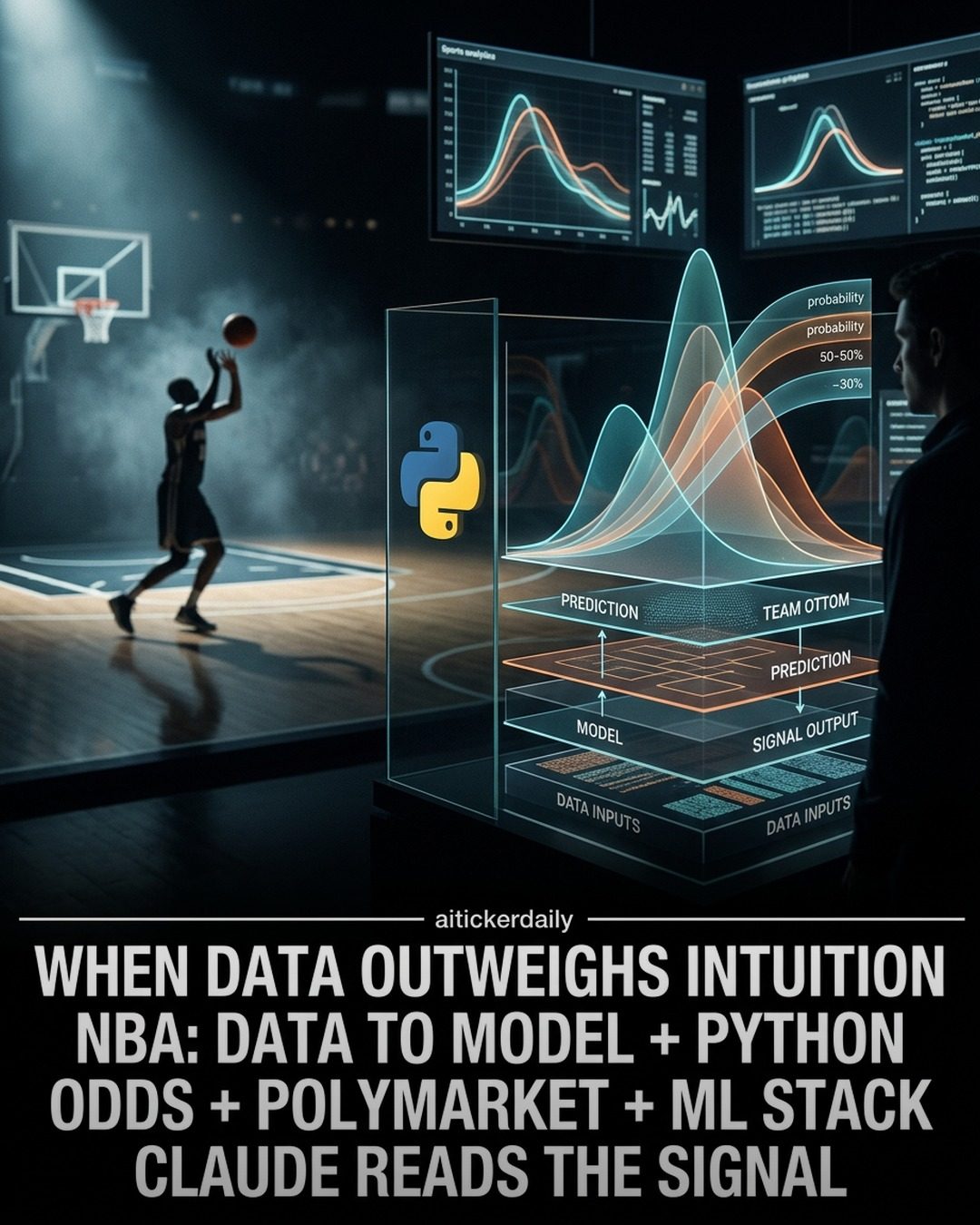
NBA Data Analysis with Python
The convergence of data analysis and sports has opened new avenues for understanding and predicting outcomes in professional basketball. The NBA, with its wealth of structured data, offers a rich playground for data enthusiasts and analysts. By leveraging Python and advanced machine learning models, fans and professionals can delve deeper into the data to uncover insights that go beyond mere intuition.
Context: Why This Matters
Basketball is a dynamic and fast-paced sport, generating an enormous amount of data with each game. Every possession, shot, and player movement contributes to a complex web of information. Traditional analysis often relies on intuition and subjective judgment, but data-driven approaches can provide a more objective and nuanced understanding of the game. By utilizing Python and machine learning, analysts can process vast amounts of data to identify patterns, predict outcomes, and uncover potential discrepancies that might otherwise go unnoticed.
Data analysis in the NBA is not just for statisticians and quants; it's for anyone who wants to gain a deeper understanding of the game. From serious fans to professional analysts, the ability to predict outcomes and identify potential discrepancies can provide a competitive edge. Whether you're looking to make more informed bets, develop better strategies, or simply appreciate the game more deeply, data-driven insights can enhance your experience.
The Path from Data to Model
Data Collection and Feature Engineering
The foundation of any data-driven analysis is the data itself. The NBA provides a wealth of structured data through its API, which includes game statistics, player performance, and more. This data is the raw material that analysts use to build their models. The key to effective data analysis is feature engineering—a process of selecting and transforming the most relevant variables from the raw data. By focusing on key metrics such as possessions, shot quality, pace, and rest, analysts can build a robust dataset that captures the essence of the game.
Ensemble Models and Machine Learning
Once the data is collected and engineered, the next step is to build machine learning models. Ensemble models, which combine multiple algorithms, are particularly effective in sports analytics. These models can capture complex patterns in the data that individual algorithms might miss. By layering rolling team stats, Four Factors, ELO ratings, and fatigue metrics, analysts can create a comprehensive model that predicts game outcomes with a high degree of accuracy. The use of machine learning models can identify where the market and model scores agree or diverge, providing valuable insights into potential discrepancies.
Integrating Sportsbook and Polymarket Data
Sports betting is a significant part of the NBA ecosystem, and sportsbook odds provide a rich source of data. By comparing sportsbook-implied probabilities with those generated by machine learning models, analysts can identify discrepancies that might indicate mispriced uncertainty or injury noise. Polymarket, a platform for prediction markets, adds another layer of data by incorporating crowd wisdom and bookmaker insights. This integration allows for a more nuanced understanding of market sentiment and potential discrepancies.
The Role of Claude
Claude, an AI-powered tool, acts as an interpreter in this data-driven approach. By analyzing where the layers of data agree and diverge, Claude can provide actionable insights before tipoff. This includes identifying potential injury noise, liquidity gaps, and mispriced uncertainty. By stress-testing where the market prices and model scores disagree, analysts can gain a deeper understanding of the game and make more informed decisions.
Walk-Forward Validation and Probability Calibration
One of the key challenges in sports analytics is avoiding data leakage, where future data influences the training of the model. Walk-forward validation and probability calibration are essential techniques to ensure that backtests do not include future games in the training data. This approach ensures that the models are robust and reliable, providing accurate predictions for future games.
Practical Tips for Data-Driven NBA Analysis
1. Utilize the NBA API
The NBA API provides a comprehensive dataset that includes game statistics, player performance, and more. By leveraging this API, analysts can access a wealth of structured data that can be used to build predictive models. Familiarize yourself with the API and understand how to extract the most relevant data for your analysis.
2. Focus on Key Metrics
Not all data is equally important. Focus on key metrics such as possessions, shot quality, pace, and rest. These metrics capture the essence of the game and provide valuable insights into player and team performance.
3. Build Ensemble Models
Ensemble models, which combine multiple algorithms, are particularly effective in sports analytics. By layering different models and data sources, you can capture complex patterns in the data that individual algorithms might miss.
4. Integrate Sportsbook and Polymarket Data
Sportsbook odds and Polymarket data provide valuable insights into market sentiment and potential discrepancies. By comparing these data sources with your model scores, you can identify areas of disagreement that might indicate mispriced uncertainty or injury noise.
5. Use Walk-Forward Validation
Walk-forward validation is an essential technique for ensuring that your models are robust and reliable. By avoiding data leakage, you can ensure that your backtests do not include future games in the training data, providing more accurate predictions for future games.
Important Takeaways
The integration of data analysis and machine learning in the NBA offers a powerful tool for understanding and predicting game outcomes. By leveraging Python and advanced machine learning models, analysts can process vast amounts of data to uncover insights that go beyond mere intuition. Whether you're a serious fan, a professional analyst, or a sports bettor, data-driven insights can provide a competitive edge. By focusing on key metrics, building ensemble models, and integrating sportsbook and Polymarket data, you can gain a deeper understanding of the game and make more informed decisions. Walk-forward validation and probability calibration ensure that your models are robust and reliable, providing accurate predictions for future games.
Conclusion
The intersection of data analysis and sports offers a rich playground for enthusiasts and professionals alike. By leveraging Python and advanced machine learning models, analysts can process vast amounts of data to uncover insights that go beyond mere intuition. Whether you're looking to make more informed bets, develop better strategies, or simply appreciate the game more deeply, data-driven insights can enhance your experience. The NBA, with its wealth of structured data, provides a unique opportunity to explore the complex dynamics of the game and uncover valuable insights. By following the path from data to model, integrating sportsbook and Polymarket data, and utilizing advanced machine learning techniques, you can gain a deeper understanding of the game and make more informed decisions.
Questions readers ask
What types of data can be analyzed using Python in NBA analysis?
Using Python, you can analyze a wide range of NBA data, including player statistics, team performance metrics, game outcomes, and even real-time data during games. This includes shot charts, player tracking, and advanced metrics like PER (Player Efficiency Rating) and True Shooting Percentage.
How can machine learning models help in predicting NBA game outcomes?
Machine learning models can analyze historical data, player performance, team dynamics, and other factors to predict game outcomes. By training models on vast datasets, you can identify patterns and trends that are not immediately apparent, making more accurate predictions than traditional methods.
What are some useful Python libraries for NBA data analysis?
Several Python libraries are particularly useful for NBA data analysis. These include pandas for data manipulation, NumPy for numerical computations, and scikit-learn for machine learning. Additionally, libraries like matplotlib and seaborn can be used for data visualization, while pybaseball and nba-api can be used to access NBA data.
How can I get NBA data for analysis using Python?
You can obtain NBA data for analysis using Python through various APIs and datasets. The NBA's official API (nba_api) provides access to a comprehensive set of NBA data, including game statistics, player information, and team performance. Additionally, other sources like Basketball-Reference and Kaggle offer datasets that can be used for analysis.
What are some common techniques for visualizing NBA data?
Common techniques for visualizing NBA data include shot charts, heatmaps, and line graphs. Shot charts can show the distribution of shots taken by players, while heatmaps can visualize player movements and positions. Line graphs are useful for tracking performance metrics over time, such as points per game or assists.
How can I build a predictive model for NBA games using Python?
Building a predictive model for NBA games involves several steps. First, you need to collect and preprocess the data. Then, you can split the data into training and testing sets. Next, choose a machine learning algorithm (e.g., logistic regression, decision trees, or neural networks) and train the model. Finally, evaluate the model's performance using metrics like accuracy and ROC-AUC score.
Related deep dives
Similar reads based on topic and creator.




Recent articles
Fresh deep dives from the latest Reels we unpacked.




Comments
Be the first to comment.