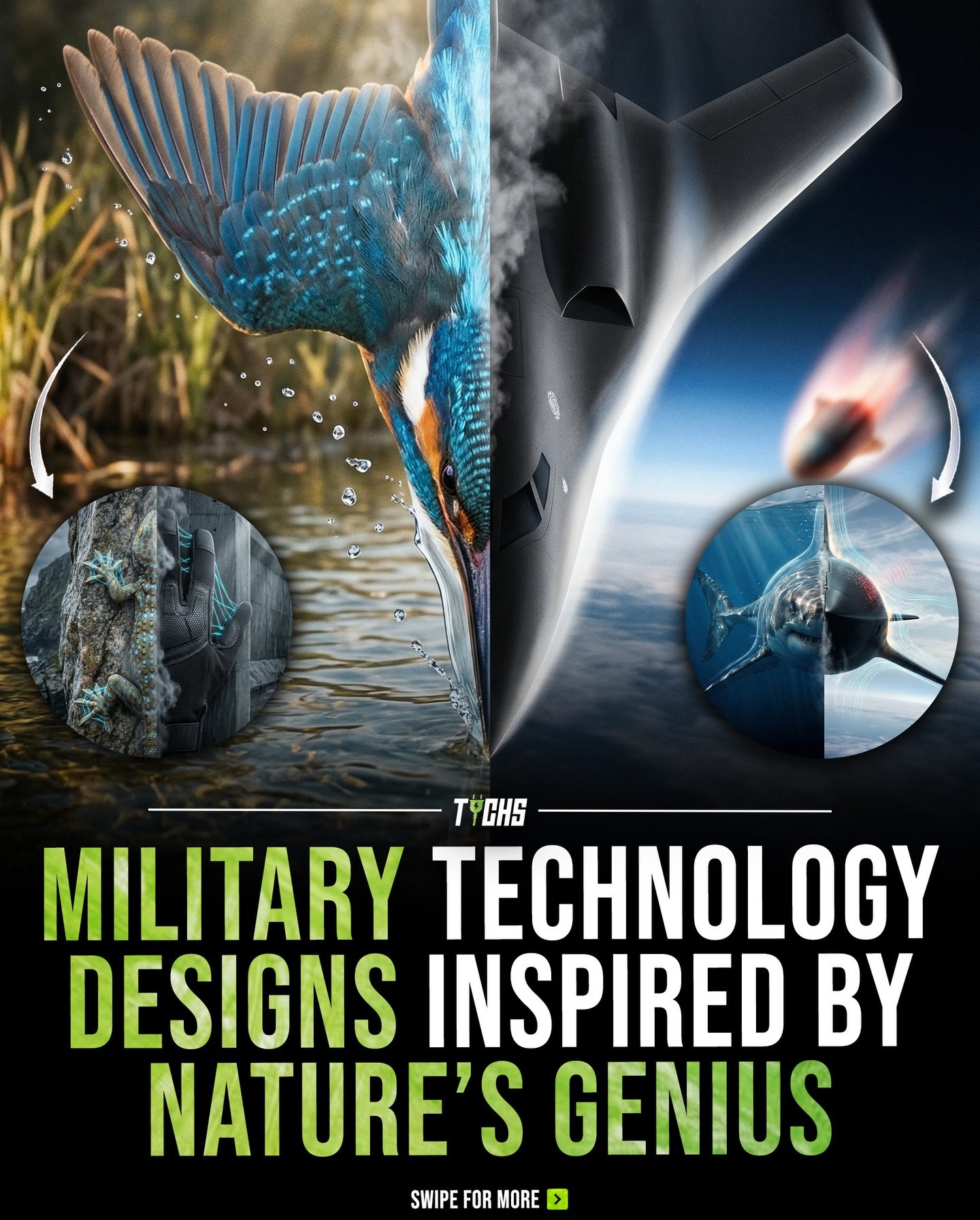
Biomimicry in Military Technology
Military technology has long been at the forefront of innovation, pushing the boundaries of what is possible. Increasingly, engineers are turning to nature for inspiration, a practice known as biomimicry. This approach draws on the wisdom of natural evolution to enhance military capabilities, from drones and stealth technologies to advanced materials. TYCHS, a company at the cutting edge of this field, is leading the way in integrating biomimicry into military technology.
Why Biomimicry Matters
Biomimicry offers several key advantages. By emulating nature, engineers can develop more efficient, durable, and effective technologies. This approach often yields solutions that are not only innovative but also sustainable. Nature has had billions of years to refine its designs, making it an invaluable resource for military innovation.
Nature's Ingenious Designs
Biomimicry is not just a buzzword; it is a proven method for creating advanced military technologies. Here are some of the most notable examples:
Stealth and Silence
One of the most impressive applications of biomimicry in military technology is the development of stealth features. Owls, for instance, have evolved to fly silently, allowing them to hunt effectively. Engineers have studied owl wings and feathers to create drones and other aerial vehicles that can operate with minimal noise. These "owl stealth" designs reduce the risk of detection, making them ideal for covert operations.
Precision and Penetration
The mosquito, with its ability to penetrate skin with precision, has inspired similar technologies in the military. Mosquito-inspired systems can create ultra-fine entry points, making them useful for applications ranging from medical delivery systems to advanced weaponry. This precision allows for more effective and minimally invasive solutions.
Durability and Strength
The Boxfish, known for its robust and compact structure, has influenced the design of military vehicles. By mimicking the Boxfish's exoskeleton, engineers have developed vehicles that are both strong and lightweight, enhancing their maneuverability and durability. This biomimicry not only improves performance but also reduces the overall weight and fuel consumption of military vehicles.
Shock Absorption and Protection
The Woodpecker's unique ability to peck at trees without damaging its brain has inspired shock-absorbing technologies. Military helmets and other protective gear now benefit from Woodpecker-inspired designs, providing better protection against impact and reducing the risk of injury.
Advanced Climbing Technologies
Geckos are famous for their ability to climb smooth surfaces with ease. This unique trait has led to the development of advanced grip and climbing technologies. Military personnel can now use gecko-inspired adhesives and grips, allowing them to scale walls and other challenging terrains more effectively.
Wave Reduction
The Kingfisher, a bird known for its ability to dive into water with minimal splash, has inspired designs that reduce shockwaves. This biomimicry has been applied to the design of military drones and other aircraft, making them more aerodynamic and efficient. The reduction in drag and turbulence improves fuel efficiency and overall performance.
Minimizing Detection
Shark skin, with its unique texture, has inspired coatings that minimize detection. This biomimicry has been applied to military vehicles and equipment, reducing radar and sonic signatures. By mimicking the shark's surface texture, these coatings make military assets harder to detect, enhancing their stealth capabilities.
Practical Tips for Biomimicry in Technology
For engineers and designers looking to integrate biomimicry into their work, there are several practical tips to consider:
Study Nature's Designs
Start by studying the natural world. Identify animals, plants, and other organisms that have evolved unique adaptations. Understand how these adaptations work and how they can be applied to military technology.
Collaborate with Biologists
Work closely with biologists and other scientists who specialize in natural systems. Their expertise can provide valuable insights into how nature's designs function and how they can be replicated.
Use Advanced Simulation Tools
Leverage advanced simulation tools to test and refine biomimicry-inspired designs. These tools can help identify potential issues and optimize performance.
Iterate and Refine
Biomimicry is an iterative process. Be prepared to test, refine, and iterate your designs based on real-world feedback and new discoveries in the natural world.
Important Takeaways
Biomimicry is a powerful approach to military technology innovation. By studying and replicating nature's designs, engineers can create more efficient, durable, and effective solutions. This approach not only enhances military capabilities but also promotes sustainability and efficiency.
The Future of Biomimicry in Military Technology
As TYCHS and other companies continue to explore the potential of biomimicry, the future of military technology looks increasingly inspired by nature. From stealth drones to advanced protective gear, the possibilities are endless. By drawing on the genius of nature, military technology is poised to reach new heights of innovation and effectiveness.
Conclusion
Biomimicry offers a wealth of opportunities for military technology. By studying and replicating nature's designs, engineers can create more efficient, durable, and effective solutions. This approach not only enhances military capabilities but also promotes sustainability and innovation. As companies like TYCHS continue to push the boundaries of biomimicry, the future of military technology looks brighter than ever.
Questions readers ask
What is biomimicry and how does it apply to military technology?
Biomimicry is a process where engineers study natural organisms and their adaptations to develop advanced technologies. In the military realm, this involves creating drones, stealth tech, and materials that mimic features found in nature, enhancing performance, durability, and sustainability. For example, TYCHS has developed drones that mimic the flight patterns of birds and insects.
How does biomimicry contribute to stealth technology in the military?
Biomimicry in military stealth technology involves replicating natural designs that allow organisms to blend into their environment or avoid detection. This results in advancements like advanced coating materials that reduce radar signatures and silent propulsion systems that mimic the subtle movements of marine animals. TYCHS has pioneered some of these innovations.
Can you give examples of nature-inspired drones developed by TYCHS?
TYCHS has developed drones that mimic the flight mechanics of birds and insects, allowing for more agile and efficient movement. These drones often incorporate lightweight materials and energy-efficient propulsion systems, mimicking the natural flight mechanisms of animals like hummingbirds and bees.
What are penetration reduction systems and how do they relate to biomimicry?
Penetration reduction systems in military contexts are designed to protect against various threats, such as ballistics, by mimicking natural structures with high resistance, like the tough exoskeletons of certain insects. TYCHS has explored these designs to create durable materials that can withstand intense impacts.
How does nature inspire sustainable military technologies?
Nature-inspired technologies often lead to more sustainable solutions because they are based on efficient, long-lasting processes found in the natural world. For instance, TYCHS has developed materials and systems that mimic natural self-repair mechanisms, extending the lifespan and reducing the need for frequent replacements, thus lowering the environmental impact of military operations.
What kind of innovations has TYCHS made in silent military technology?
TYCHS has created silent military technologies by studying the way marine animals move and communicate with minimal noise. For instance, technologies that mimic the silent gliding of whales or the subtle movements of eels have been used to develop quiet propulsion systems for military vehicles, reducing their acoustic signatures and enhancing their stealth capabilities.
How does nature influence the design of advanced military materials?
Nature's influence on the design of advanced military materials can be seen in the development of durable, lightweight, and adaptable materials. For example, TYCHS has explored the structures of spider silk and diatom shells to create robust, lightweight materials that can withstand extreme conditions and enhance the performance of military equipment.
Related deep dives
Similar reads based on topic and creator.




Recent articles
Fresh deep dives from the latest Reels we unpacked.




Comments
Be the first to comment.