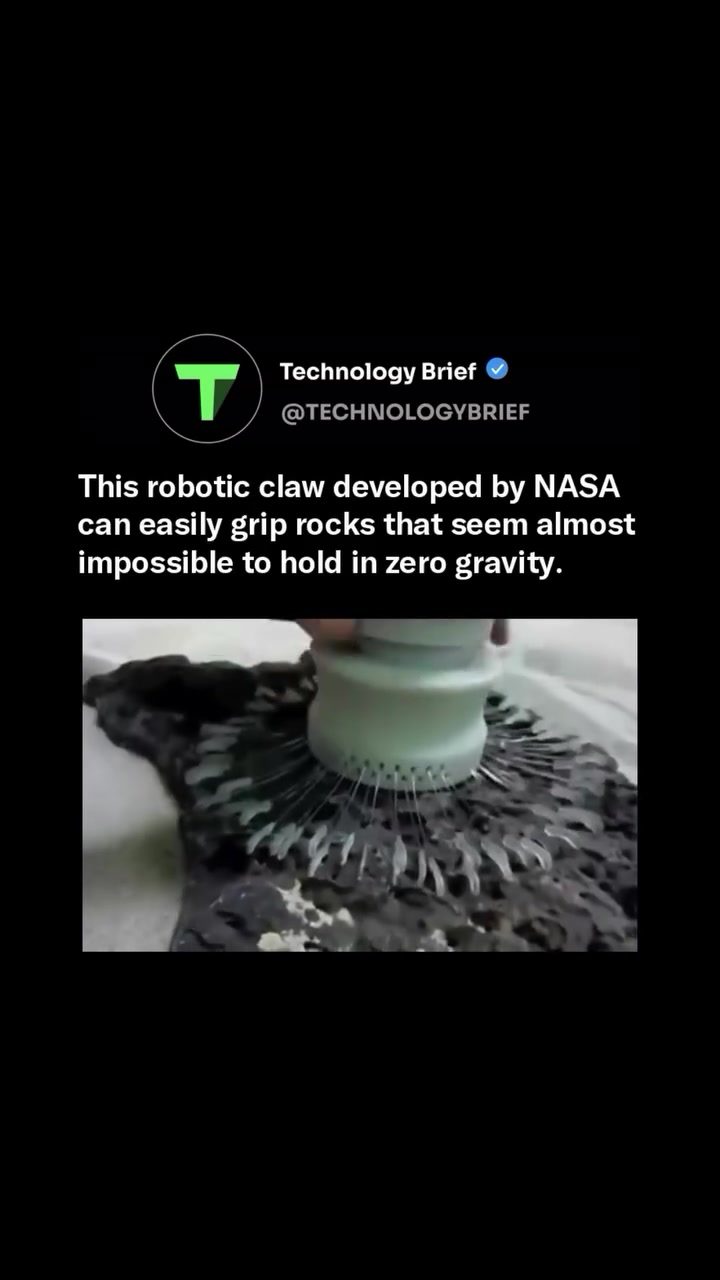
NASA's Robotic Claw: Revolutionizing Object Handling in Space
NASA's Jet Propulsion Laboratory has developed a groundbreaking robotic gripper, inspired by the natural climbing abilities of geckos and other animals. This innovative device, equipped with hundreds of tiny metal hooks called microspines, is designed to grip and hold onto jagged, uneven surfaces, even in the challenging environment of zero gravity. This technology holds significant promise for future space missions.
Why This Matters
The robotic claw represents a major advancement in space exploration and robotics. Its ability to function effectively in zero gravity opens new possibilities for handling objects in space, which is crucial for missions to asteroids, comets, and moons. Conventional tools—such as those relying on weight or suction—are ineffective in zero gravity, making NASA's robotic claw a game-changer.
Main Discussion
Inspiration from Nature
The design of the robotic claw is heavily inspired by nature, specifically the way geckos and other climbing animals adhere to surfaces. These animals use tiny hair-like structures on their feet to create a strong bond with surfaces, allowing them to climb even the smoothest walls. Similarly, the robotic claw uses microspines that flex and rotate to latch onto rugged surfaces without relying on gravity.
Microspines: The Key to Zero Gravity Grip
The microspines are the core of the claw's effectiveness. These tiny metal hooks are flexible and can rotate, allowing the claw to grip onto surfaces that would be difficult for traditional grippers. This design ensures that the claw can maintain a firm hold on rocks, asteroids, and other uneven surfaces, even in the absence of gravity.
Design and Functionality
The current prototype of the robotic claw is roughly the size of an adult human hand and can hold up to 10 kilograms in Earth's gravity. In space, where the absence of gravity makes object handling a unique challenge, the claw is expected to perform even better. The claw is meticulously designed to make first contact with an object without pushing it away, ensuring precise and stable handling.
Future Applications
The robotic claw's primary use is intended for future missions to asteroids, comets, and moons. These missions require tools that can handle objects in environments where traditional tools fall short. The claw can also be used to help free-floating robots anchor themselves inside space stations or collect surface samples for return to Earth.
Handling Objects in Zero Gravity
One of the biggest challenges in space is handling objects in zero gravity. Simply touching an object can send it drifting away, making it difficult to grasp. The robotic claw addresses this issue by making contact without applying force that could push the object off course. This careful design ensures that objects can be manipulated precisely, even in the absence of gravity.
Size and Strength
The current prototype of the robotic claw is designed to be roughly the size of an adult human hand, making it compact and easy to use in confined spaces. Despite its small size, the claw is incredibly strong, capable of holding up to 10 kilograms in Earth's gravity. This strength, combined with its ability to grip uneven surfaces, makes it a versatile tool for various applications in space.
Practical Tips
If you are involved in robotics or space exploration, consider the following practical tips:
- Understand the Environment: Always consider the unique challenges of the environment, whether it's zero gravity or extreme temperatures. Tools designed for one environment may not work in another.
- Inspire with Nature: Look to nature for inspiration. Many mechanical solutions can be found in the natural world, where animals and plants have adapted to survive in various conditions.
- Precision Matters: When dealing with delicate or valuable objects, precision is key. Ensure that your tools are designed to handle objects with care, minimizing the risk of damage.
- Modular Design: Opt for modular designs that can be easily modified or adapted for different tasks. This flexibility can save time and resources in the long run.
Important Takeaways
NASA's robotic claw showcases how technology can mimic natural processes to solve complex problems. Inspired by geckos' ability to climb, this device uses microspines to grip uneven surfaces, making it invaluable for space missions. Its effective design ensures that objects can be handled precisely in zero gravity, opening new possibilities for exploration and research.
Conclusion
NASA's robotic claw is a testament to the power of innovation and the potential of biomimicry—designing technology inspired by nature. With its ability to grip and handle objects in zero gravity, this device is poised to revolutionize space missions, making it easier to explore asteroids, comets, and moons. The implications for future space exploration are vast, and the robotic claw stands as a beacon of what can be achieved through cutting-edge research and design.
Questions readers ask
How does NASA's robotic claw mimic natural climbers like geckos?
NASA's robotic claw uses microspines, which are tiny metal hooks, to grip and hold onto uneven surfaces. This design is inspired by the natural climbing abilities of geckos, which use similar mechanisms to adhere to surfaces.
What are the key benefits of using a robotic claw with microspines in space?
The robotic claw's microspines allow it to grasp jagged, uneven surfaces effectively in zero gravity. This makes it ideal for handling objects on asteroids, comets, and moons, where conventional tools may struggle.
Can the robotic claw function in zero gravity?
Yes, the robotic claw is specifically designed to function in the challenging environment of zero gravity. Its microspines ensure a strong grip even in the absence of gravity, making it a valuable tool for space missions.
What are the potential applications of this technology in space exploration?
The robotic claw technology can aid in asteroid and comet missions, allowing for the handling and manipulation of objects with irregular surfaces. It can also be useful for lunar missions, enhancing the capability to interact with the moon's rocky terrain.
How does the robotic claw enhance NASA's space tool development?
The robotic claw represents a significant advancement in space tool development by providing a reliable method for gripping and holding objects in zero gravity. This innovation can lead to more efficient and effective space missions, particularly those involving asteroid and moon landings.
What are microspines and how do they work?
Microspines are tiny metal hooks that cover the surface of the robotic claw. They work by interlocking with the microscopic irregularities of surfaces, allowing the claw to grip and hold onto uneven objects securely, even in the absence of gravity.
Related deep dives
Similar reads based on topic and creator.



Recent articles
Fresh deep dives from the latest Reels we unpacked.




Comments
Be the first to comment.