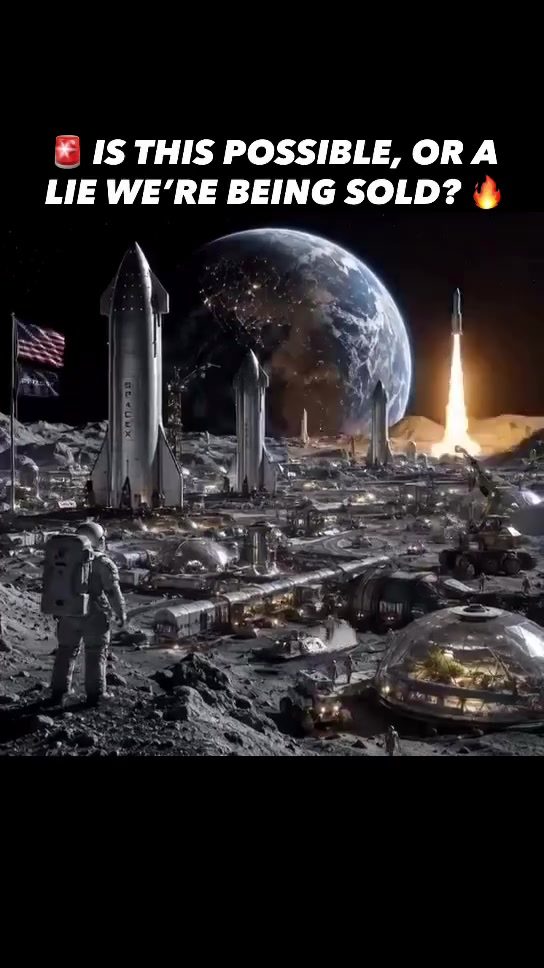
Moon Base: Public Outpost or Sinister Cover-Up?
The discussion around lunar colonization has shifted from a distant dream to a pressing reality. With advanced rocket technology, geodesic dome habitats, and ambitious space missions, the idea of a moon base is more tangible than ever. However, some skeptics question the true purpose behind these endeavors, suggesting that the moon base narrative might be a cover for darker, more secretive projects.
Why This Matters
Understanding the reality of lunar colonization and its implications is crucial. The moon could serve as a stepping stone for deeper space exploration, resource extraction, or even a haven for humanity in case of a global catastrophe. Conversely, if the moon base is a cover, it could indicate a massive, clandestine operation with unknown motivations and far-reaching consequences.
Main Discussion
The Case for a Legitimate Moon Base
Technological Feasibility
The technological feasibility of a moon base is no longer a far-fetched idea. Companies like SpaceX have developed reusable rockets, significantly reducing the cost of space travel. The SpaceX Starship, designed for lunar missions, could potentially transport large numbers of people and cargo to the moon. Geodesic dome structures, as featured in many lunar colony concepts, are also a practical solution for habitats. These domes can provide protection from radiation, meteorites, and the moon's extreme temperature fluctuations.
Scientific and Economic Benefits
A moon base could offer numerous scientific and economic benefits. It could serve as a platform for lunar research, enabling scientists to study the moon's geology, resources, and environment in detail. Additionally, the moon is rich in resources like helium-3, a rare isotope on Earth, which could revolutionize energy production. Establishing a moon base could also foster technological advancements and create new economic opportunities.
The Case for a Cover-Up
Black Budget Programs
The idea that the moon base is a cover-up stems from the notion of black budget programs— highly classified, government-funded projects shrouded in secrecy. These programs operate without oversight, and trillions of dollars can disappear into them. The argument is that the public narrative of lunar colonization could be a smokescreen for more sinister, classified activities occurring beneath the surface.
Secret Launches and Private Space Companies
The involvement of private space companies adds another layer of complexity. These companies, while bringing innovation and competition to the space industry, operate with less public scrutiny. Secret launches and missions could be part of a larger, hidden agenda. This raises questions about the true nature of their activities and the potential for undisclosed, clandestine operations.
Reverse-Engineered Technology
Another aspect of the cover-up theory involves the possibility of reverse-engineered technology. The idea is that extraterrestrial technology could have been acquired through unknown means and is being studied in secret. This could explain the massive funding and the need for secrecy, as governments and private entities work to harness advanced, otherworldly technology.
Practical Tips
Staying Informed
Navigating the complex landscape of lunar colonization and potential cover-ups requires staying informed. Follow credible sources for the latest developments in space exploration. Engage with experts, read white papers, and attend conferences to gain a well-rounded understanding of the subject.
Critical Thinking
Maintain a critical yet open mindset. While it's important to question official narratives, avoid falling into conspiracy theory traps. Instead, focus on evaluating evidence and considering multiple perspectives. Look for patterns, inconsistencies, and verifiable information.
Important Takeaways
The Moon Base Narrative
The moon base narrative is a multifaceted issue with compelling arguments on both sides. While the technological feasibility and potential benefits make a legitimate moon base a plausible scenario, the existence of black budget programs and secretive space operations adds a layer of uncertainty.
The Need for Oversight and Transparency
The lack of oversight in classified space programs underscores the need for greater transparency. Increased scrutiny and accountability can help ensure that public funds are used responsibly and that space exploration aligns with the public interest. The potential existence of reverse-engineered technology and the involvement of private companies further emphasize the importance of transparency and ethical considerations.
The Future of Space Exploration
The future of space exploration, particularly lunar colonization, is at a pivotal juncture. Whether the moon base is a legitimate endeavor or a cover for something more sinister, it is clear that space exploration will continue to evolve and reshape our understanding of the cosmos. Engaging with these developments critically and thoughtfully will be essential in navigating the complexities and opportunities that lie ahead.
Conclusion
The debate around the moon base's authenticity highlights the intricacies of space exploration in the modern era. From technological advancements to clandestine operations, the discussion encompasses a wide range of possibilities and implications. Whether the moon base is a public outpost or a cover for more sinister activities, it underscores the need for transparency, informed discourse, and a critical yet open mindset. As we venture further into the cosmos, staying informed and engaged will be crucial in shaping the future of space exploration.
Questions readers ask
What are some of the main goals for lunar colonization projects?
Lunar colonization projects primarily aim to establish a sustainable human presence on the moon. This includes building habitats, extracting resources like water and helium-3, and conducting scientific research to further our understanding of the lunar surface and the broader solar system.
What is the current status of NASA's moon base missions?
NASA is actively working on several initiatives for lunar exploration, including the Artemis program, which aims to return humans to the moon by 2025. The Artemis program includes plans for a lunar outpost, with NASA collaborating with international partners and private companies to achieve this goal.
What are some of the key technologies being developed for lunar colonization?
Advanced technologies like reusable rockets, geodesic dome habitats, and in-situ resource utilization (ISRU) systems are being developed for lunar colonization. These technologies are crucial for establishing a self-sustaining lunar base, reducing the need for constant resupply from Earth.
What are some of the conspiracy theories surrounding lunar colonization projects?
Some conspiracy theorists suggest that the true purpose of lunar colonization is a cover for more secretive projects, often referred to as 'black projects. These theories propose that moon bases may be used for clandestine activities, such as weapons testing and surveillance, rather than peaceful exploration and research.
How does the public perceive lunar colonization projects, and how does this perception affect media coverage?
Public perception of lunar colonization projects is mixed, with many people supporting the exploration and scientific benefits, while others are skeptical about the true motives. Media coverage often reflects these differing views, with some outlets focusing on the potential benefits and others exploring conspiracy theories and potential hidden agendas.
What are some of the potential benefits of establishing a moon base?
A moon base could serve multiple purposes, including facilitating deeper space exploration, extracting valuable resources, and providing a safe haven for humanity in case of global catastrophes. Additionally, a moon base could inspire technological advancements and international cooperation on a global scale.
What kind of research is planned to be conducted at a lunar base?
Research at a lunar base is expected to cover a wide range of fields, including planetary science, astronomy, and human physiology in low-gravity environments. This research could provide valuable insights into the origins of the solar system, the effects of long-term space travel on the human body, and the potential for life in extreme environments.
Recent articles
Fresh deep dives from the latest Reels we unpacked.




Comments
Be the first to comment.