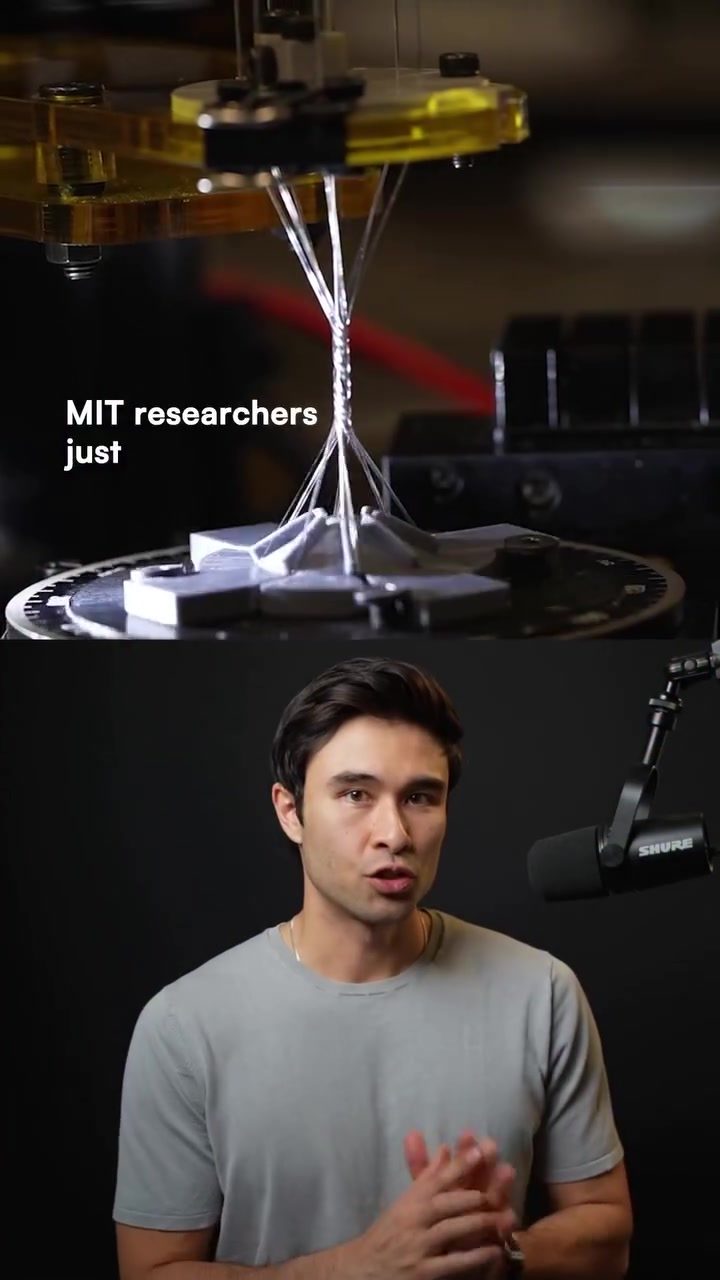
Artificial Muscle Fibers: The Future of Robotics and Prosthetics
Replicating human muscles has long been a goal in the field of robotics, and recent advancements by researchers from MIT and Politecnico di Bari are bringing this dream closer to reality. These innovators have developed electrically driven artificial muscle fibers that mimic the behavior of biological muscles without relying on traditional motors, gears, or external pumps. These fibers have the potential to revolutionize various fields, from prosthetics to industrial robotics.
Context / Why This Matters
The development of artificial muscle fibers represents a significant leap forward in robotic technology. Traditional robotic systems often rely on motors and gears, which can be bulky and inefficient. The new fibers, on the other hand, are thin and flexible, allowing them to be integrated into robotic structures in a way that mirrors natural muscle tissue. This innovation could lead to more efficient, agile, and human-like robotic movements, enhancing the functionality and usability of robotic devices.
Main Discussion
How the Fibers Work
Each artificial muscle fiber contains a sealed fluid circuit and a tiny electric pump. This pump shifts liquid between two actuators, causing one side of the fiber to contract while the other relaxes. This mechanism is similar to how human muscles work, with opposing muscle groups facilitating movement. For example, when you bend your arm, your biceps contract while your triceps relax.
The pump generates pressure by injecting an electrical charge into the fluid, creating ions that drag the liquid along. This process is silent and efficient, making the fibers ideal for applications where noise and bulk are concerns. The fibers can be bundled together to increase their strength and scalability, much like natural muscle fibers.
Applications and Demonstrations
One of the most impressive demonstrations of these fibers involved bending a robotic arm and curling a dumbbell. Despite their strength, the fibers are also gentle enough to simulate a handshake, illustrating their potential for safe human interaction. This dual capability makes them suitable for a wide range of applications, including:
- Prosthetics: These fibers could be used to create prosthetics that move more naturally with the body, providing amputees with greater mobility and functionality.
- Exoskeletons: By amplifying human strength, exoskeletons equipped with these fibers could assist in tasks that require heavy lifting or prolonged physical exertion.
- Industrial Robots: The fibers could enhance the precision and efficiency of industrial robots, making them more versatile and adaptable to complex tasks.
- Humanoid Robots: Artificial muscle fibers could enable humanoid robots to move more naturally, mimicking human movements and interactions more closely.
The Biological Inspiration
The design of these fibers is heavily inspired by biological muscle tissue. By studying how muscles contract and relax, researchers were able to create a system that replicates this behavior using fluid dynamics and electrical charges. This biological inspiration is a key factor in the fibers' efficiency and effectiveness, as it allows them to function in a way that is both natural and intuitive.
Potential Impact on Robotics
The development of these artificial muscle fibers could have a profound impact on the field of robotics. By moving away from traditional motor-driven systems, engineers can create robots that are more agile, efficient, and human-like. This shift could open up new possibilities for robotic applications in various industries, from healthcare to manufacturing. Furthermore, the ability to create soft, flexible robots that can interact safely with humans could lead to advancements in areas like caregiving and service industries.
Practical Tips
For those interested in exploring the potential of artificial muscle fibers, here are some practical tips to consider:
Understanding the Technology
Before diving into the development of artificial muscle fibers, it's essential to have a solid understanding of the underlying technology. This includes familiarity with fluid dynamics, electrical engineering, and materials science. Resources like research papers, online courses, and professional development workshops can provide valuable insights and knowledge.
Collaborating with Experts
Given the multidisciplinary nature of this technology, collaborating with experts from various fields can be highly beneficial. Engineers, biologists, and materials scientists can all contribute to the development and refinement of artificial muscle fibers. Networking with professionals in these fields can provide opportunities for collaboration and knowledge-sharing.
Exploring Potential Applications
While the potential applications of artificial muscle fibers are vast, it's important to identify specific use cases that align with your interests and expertise. Whether it's designing prosthetics, developing exoskeletons, or creating industrial robots, focusing on a particular application can help guide your research and development efforts.
Experimenting with Prototypes
Building and testing prototypes is a crucial step in the development of artificial muscle fibers. This hands-on experience can provide valuable insights into the strengths and limitations of the technology, as well as opportunities for further innovation. Experimenting with different materials, configurations, and applications can help refine the design and functionality of the fibers.
Important Takeaways
The development of electrically driven artificial muscle fibers represents a significant advancement in the field of robotics. These fibers offer a unique combination of strength, flexibility, and efficiency, making them suitable for a wide range of applications. By moving away from traditional motor-driven systems, engineers can create robots that are more agile, natural, and adaptable to human interaction. This innovation has the potential to revolutionize various industries, from healthcare to manufacturing, and pave the way for new possibilities in robotic technology.
Conclusion
The future of robotics is increasingly focused on creating machines that can move and interact with the world in a more natural and intuitive way. The development of artificial muscle fibers by researchers from MIT and Politecnico di Bari is a significant step toward this goal. By replicating the behavior of biological muscles, these fibers offer a unique solution to the challenges of traditional robotic systems. Whether in prosthetics, exoskeletons, or industrial robots, the potential applications of this technology are vast and promising. As research and development continue, the possibilities for artificial muscle fibers are likely to expand, opening up new frontiers in the field of robotics.
Questions readers ask
How do MIT's artificial muscle fibers differ from traditional robotic components?
MIT's artificial muscle fibers are electric-driven and mimic human muscles, unlike traditional components that use bulky motors and gears. This allows for more natural and efficient movements, reducing the overall size and increasing the functionality of robotic systems and prosthetics.
What are the potential applications of these innovative muscle fibers?
The new muscle fibers have numerous potential applications, including prosthetics, industrial robotics, and wearable exoskeletons. Their ability to mimic human muscles can lead to more comfortable and functional prosthetics, as well as more agile and efficient robots.
How do these fibers mimic human muscles?
The fibers replicate the behavior of biological muscles by contracting and extending in response to electrical signals, similar to how human muscles function. This biomimicry allows for more natural, fluid movements in robots and prosthetics.
Can these muscle fibers be used in wearable devices?
Yes, the thin, flexible nature of these fibers makes them ideal for wearable devices such as exoskeletons. They can provide more natural support and movement assistance, improving the user's experience and functionality.
What advancements have been made in prosthetics technology due to these fibers?
These fibers can lead to more advanced prosthetics that move more naturally and efficiently, reducing reliance on external motors and pumps. This can result in lighter, more comfortable prosthetics with improved functionality for users.
How might these fibers impact the future of robotics?
By enabling more natural and efficient movements, these fibers can lead to robots that are more agile, adaptable, and capable of performing complex tasks. This could revolutionize fields like industrial automation and robot-assisted healthcare.
What are the benefits of using electric-driven muscle fibers over traditional motors in robotics?
Electric-driven muscle fibers offer several benefits, including reduced size and weight, increased efficiency, and more natural movement. Traditional motors and gears can be bulky and less efficient, making them less suitable for tasks requiring precise, human-like movements.
Related deep dives
Similar reads based on topic and creator.




Recent articles
Fresh deep dives from the latest Reels we unpacked.




Comments
Be the first to comment.