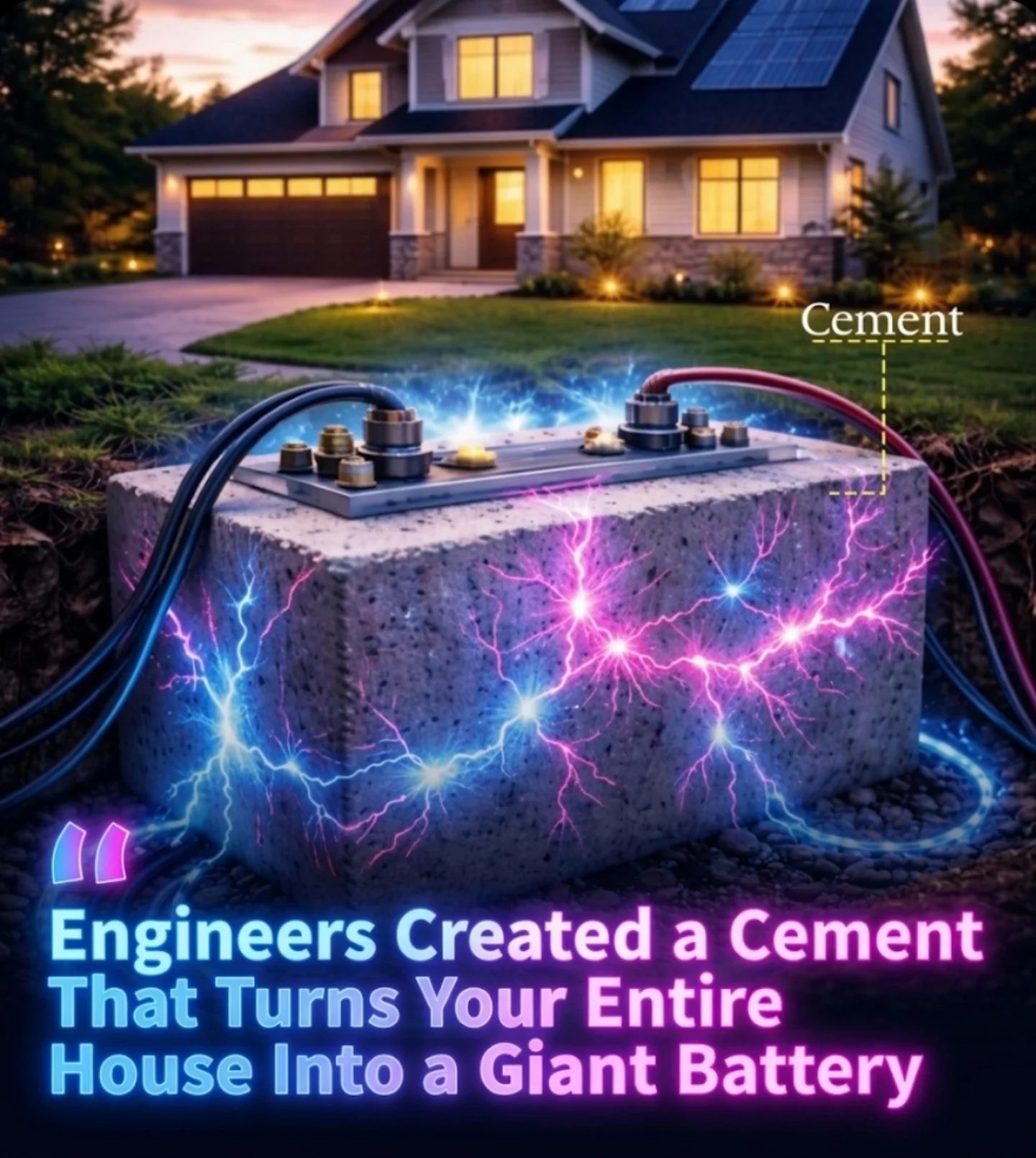
The Breakthrough of Energy-Storing Cement
Imagine your home's foundation powering your entire house. This isn't a sci-fi fantasy, but a revolutionary technology developed by researchers at the Massachusetts Institute of Technology (MIT). The ec³ (electron-conducting carbon concrete) research hub at MIT has created a way to turn concrete into an energy-storing supercapacitor. This innovation has the potential to transform how we think about home energy storage.
Why This Matters
The integration of energy storage into concrete foundations represents a significant leap forward in sustainable and efficient home energy systems. As the world shifts towards renewable energy sources, the need for effective and efficient energy storage becomes increasingly important. Traditional batteries, while useful, have limitations in terms of charge-discharge cycles and lifespan. Supercapacitors, on the other hand, offer faster charging and discharging capabilities, making them an attractive alternative.
How It Works
The Mixture
The breakthrough involves combining three common and inexpensive materials: cement, water, and carbon black. Carbon black is an ultra-fine, highly conductive carbon powder that resembles fine charcoal. It is widely used in various industries, from rubber manufacturing to inks and paints, making it a readily available and cost-effective material.
The Nanoweb
The magic happens during the curing process. As the cement mixes with water, it forms a network of microscopic branching channels. Carbon black, being hydrophobic (water-repelling), is naturally pushed into these channels. This results in a dense, fractal-like network of conductive carbon wires throughout the concrete structure. This network, often referred to as a "nanoweb," is the key to the material's energy-storage capabilities.
The Battery Effect
Once the concrete has cured and the nanoweb is in place, the material is soaked in an electrolyte solution, such as potassium chloride or specialized organic salts. This process turns the concrete into a supercapacitor. Supercapacitors have a higher power density compared to traditional batteries, making them ideal for applications requiring rapid charge and discharge cycles.
The integration of this technology into home foundations, especially when paired with solar panels, could transform residential energy management. The solar panels could generate energy during the day, which would be stored in the concrete supercapacitors. This stored energy could then be used to power the home during the night or on cloudy days, providing a reliable and renewable energy source.
Practical Tips
Integrating the Technology
If you're considering incorporating this technology into your home, it's important to work with professionals who are familiar with the latest developments in energy-storing concrete. Many home builders and contractors might not yet be aware of this breakthrough, so you may need to do some initial research and education.
First, you'll want to consult with an architect or engineer who is knowledgeable about energy storage systems. They can help you design a foundation that incorporates the energy-storing concrete. Solar panels are a natural complement to this system, so you might also want to consider integrating solar panels into your roof design. This integration will ensure a seamless and efficient energy management system.
Maintenance and Sustainability
Maintaining your energy-storing concrete foundation is relatively straightforward. Regular home upkeep will suffice, as the concrete itself does not require any special attention beyond ensuring it remains in good condition. The key to maximizing the system's efficiency is to pair it with a reliable solar panel setup and possibly a backup energy storage system.
Important Takeaways
The development of energy-storing concrete by MIT researchers is a game-changer in the world of home energy management. The technology leverages low-cost, readily available materials to create a sustainable and efficient energy storage solution. By integrating this concrete into your home's foundation, you can turn your entire house into a giant battery, capable of storing and releasing energy as needed.
This innovation is particularly valuable when paired with renewable energy sources like solar panels. The fast-charging and discharging capabilities of supercapacitors make them ideal for storing energy generated during the day and using it when needed. This technology not only enhances the efficiency of renewable energy solutions but also paves the way for more sustainable and resilient home energy management systems.
Conclusion
The future of home energy storage looks bright with the advent of energy-storing concrete. This breakthrough by MIT researchers opens up new possibilities for sustainable and efficient home energy management. By turning your home's foundation into a giant battery, you can harness the power of renewable energy sources more effectively and efficiently. As this technology becomes more widely available, it has the potential to revolutionize the way we think about and use energy in our homes.
Questions readers ask
How exactly does MIT's energy-storing cement work?
MIT's energy-storing cement, developed by the ec³ research hub, utilizes carbon black to transform concrete into a supercapacitor. This means the concrete can store and release energy, effectively turning your home's foundation into a giant battery. The carbon black enhances the concrete's conductivity, allowing it to function as an energy storage medium.
What makes the ec³ cement different from traditional concrete?
The ec³ cement differs from traditional concrete in its ability to conduct electricity. This is achieved by infusing the concrete with carbon black, which enables the material to store and discharge energy. Traditional concrete, on the other hand, is non-conductive and cannot perform this function. This conductive property allows the material to be integrated into electrical systems and energy storage solutions.
Can this technology be retrofitted into existing homes?
As of current developments, the technology is more suited for new construction projects. However, it's is possible that future developments may lead to retrofit applications. For now, integrating this technology into existing homes would require significant structural modifications and further research into its compatibility with older building materials and systems.
What are the potential benefits of using energy-storing cement in homes?
Energy-storing cement can provide a more sustainable and efficient way to manage home energy needs. By storing energy in the very structure of the house, it reduces the need for traditional batteries, thereby decreasing waste and environmental impact. Additionally, it can help stabilize the power grid by allowing homes to store excess energy generated from renewable sources during peak production times and use it later, when needed.
How does the carbon black in the concrete contribute to energy storage?
Carbon black is a highly conductive material that, when mixed with concrete, creates a matrix that can store and conduct electrical charges. This makes the concrete capable of acting as a supercapacitor, allowing it to store a large amount of energy and release it when required. The carbon black particles form a network within the concrete, enabling electrons to move freely and facilitating energy storage and discharge.
Is energy-storing cement safe for residential use?
Yes, the carbon black-infused concrete is designed to be safe for residential use. The materials used are non-toxic and the concrete behaves similarly to traditional concrete in terms of structural integrity. The primary difference is its ability to conduct and store energy, which does not compromise the safety or durability of the structure. Research is ongoing to ensure long-term safety and performance in residential settings.
Related deep dives
Similar reads based on topic and creator.




Recent articles
Fresh deep dives from the latest Reels we unpacked.




Comments
Be the first to comment.