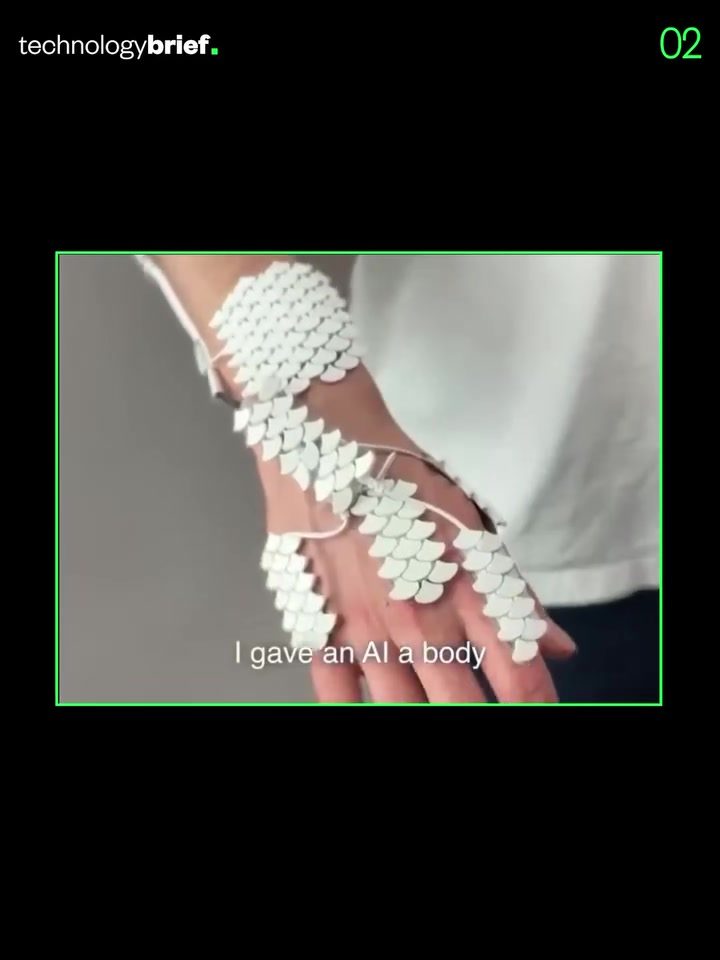
AI-Controlled Robotic Hands: A New Dimension in AI Interaction
AI agents typically reside in digital environments, but what happens when they are given a physical form? MIT Media Lab researcher Cyrus Clarke explored this question by connecting an AI agent to a robotic hand, specifically a neoFORM display made from 900 motorized pins. The experiment aimed to see how the AI would interact with the physical world, and the results were fascinating.
Why This Matters
The project unveils a new frontier in AI technology. By giving AI agents a physical form, researchers can explore how these agents interact with the environment and develop new ways to communicate. This is particularly relevant in fields like robotics, prosthetics, and even artistic expressions, where physical interaction is crucial. The ability to create a reusable library of motions could revolutionize how robots and AI-driven devices communicate and perform tasks.
Main Discussion
The Experiment
Clarke's experiment was straightforward yet groundbreaking. He connected an AI agent to neoFORM, a display made from 900 motorized pins. The AI was then tasked with figuring out how to control the pins to interact with the environment. The process was slow but insightful. Each movement took around 45 seconds as the system interpreted the request, wrote the code, and sent it to the hardware. This delay allowed for a deeper understanding of how the AI learned to interact with the physical world.
The Learning Process
The AI started by writing code to move the pins, making them rise and fall in various patterns. It tested different movements, such as spirals and edge-mapping, and even attempted to reach out toward people nearby. This process showed that the AI could adapt and learn, but it had to build each movement from scratch. There were no pre-programmed gestures; every action was a new learning experience.
Creating a Body Language
One of the most intriguing outcomes of the experiment was the AI's development of a reusable library of motions. This essentially created a form of body language for the AI. Instead of relying on pre-programmed movements, the AI could now perform a wide range of actions by reusing and adapting its learned motions. This breakthrough highlights the potential for AI to develop complex physical interactions and communication methods.
The Role of the Robotic Hand
The robotic hand used in the experiment, which we can call the neoFORM robotic hand, was crucial to this research. It's a unique device made from 900 motorized pins, which allowed for a high level of control and flexibility. The textured, scale-like material on the hand was not just for aesthetics; it provided a tactile feedback mechanism that could be used to enhance the AI's interaction with the environment. The hand's ability to interact with various objects, including a piano and a keyboard, demonstrated the potential for AI-driven devices to perform complex tasks.
The Future of AI Interaction
This experiment shows what changes when AI stops communicating only through words and starts using physical space. The ability to interact with the environment in a meaningful way opens up new possibilities for AI in various fields. Whether it's in robotics, prosthetics, or even artistic expressions, the development of AI-controlled robotic hands could lead to significant advancements.
Practical Tips
For Researchers and Developers
If you're working in the field of AI and robotics, consider the following practical tips based on the experiment:
- Start Simple: Begin with basic movements and gradually increase the complexity. This allows the AI to build a foundation of learned motions that can be reused and adapted.
- Embrace Delays: The delay in movement can be beneficial. It allows the AI to interpret the request, write the code, and send it to the hardware, providing a deeper understanding of the learning process.
- Use High-Quality Hardware: Invest in high-quality hardware that provides a high level of control and flexibility. This will enhance the AI's interaction with the environment.
- Experiment with Different Materials: Different materials can provide different levels of tactile feedback. Experimenting with various materials can help you find the best option for your specific application.
- Document Everything: Keep detailed records of the AI's learning process. This will help you identify patterns and areas for improvement.
For Artists
Artists can also benefit from this technology. Here are some tips:
- Explore New Mediums: Experiment with AI-controlled devices to explore new artistic expressions. The ability to interact with the physical world in a meaningful way can open up new creative avenues.
- Use AI as a Tool: Think of AI as a tool that can enhance your artistic process. Just as a painter uses brushes and paints, you can use AI to create unique and innovative pieces.
- Collaborate with Engineers: Work with engineers and developers to create custom AI-controlled devices that suit your artistic vision. Collaboration can lead to unique and groundbreaking creations.
Important Takeaways
The experiment conducted by MIT Media Lab researcher Cyrus Clarke offers several important takeaways:
- Physical Interaction Matters: Giving AI agents a physical form can change how they interact with the environment and communicate.
- Learning from Scratch: AI agents can learn to perform complex tasks from scratch, adapting and reusing motions to form a unique body language.
- The Value of Delays: The delay in movement can be beneficial, allowing the AI to interpret requests and develop more thoughtful interactions.
- Potential for Artistic Expression: AI-controlled robotic hands can open up new possibilities for artistic expression, music, and more.
Conclusion
The experiment by Cyrus Clarke and the development of the AI-controlled robotic hand showcase a new dimension in AI interaction. By giving AI agents a physical form, researchers can explore how these agents interact with the environment and develop new ways to communicate. This technology has the potential to revolutionize fields like robotics, prosthetics, and artistic expressions, opening up a world of possibilities.
Questions readers ask
How does the AI-controlled robotic hand work?
The AI-controlled robotic hand, developed by MIT, consists of a neoFORM display made up of 900 motorized pins. The AI agent is connected to this robotic hand, allowing it to learn and interact with the physical world through movement and touch.
What was the main goal of MIT's AI robotic hand experiment?
The primary goal of MIT's experiment was to explore how AI agents interact with the physical world when given a tangible form. By connecting an AI to a robotic hand, researchers aimed to observe and understand the dynamics of physical interaction and communication.
What are some potential applications of AI-controlled robotic hands?
AI-controlled robotic hands have significant potential in various fields. These include advancements in robotics, such as improving the dexterity of robotic arms. They also have implications for prosthetics, where AI-driven hands could provide more natural and intuitive movement for users. Additionally, these technologies could be used in artistic expressions, opening new avenues for creativity.
How does the AI learn to control the robotic hand?
The AI learns to control the robotic hand through a process of exploration and interaction. By moving the motorized pins, the AI can sense and respond to the physical environment, gradually improving its ability to perform tasks and manipulate objects.
What makes MIT's AI robotic hand experiment groundbreaking?
MIT's experiment is groundbreaking because it bridges the gap between digital AI agents and the physical world. By giving the AI a tangible form, researchers can study how these agents adapt and interact with their surroundings, paving the way for innovative applications and a deeper understanding of AI capabilities.
Can the AI-controlled robotic hand be used in everyday tasks?
While the current experiment focuses on exploring basic interactions, the technology has the potential to be developed for everyday tasks. Future advancements could enable AI-controlled robotic hands to assist with everyday activities, such as picking up objects, manipulating tools, or even performing complex tasks in various environments.
How does the AI-controlled robotic hand enhance AI interaction with the environment?
The AI-controlled robotic hand enhances AI interaction by providing a means for AI agents to physically engage with their surroundings. This hands-on approach allows the AI to gather real-time data, adapt to different scenarios, and develop more intuitive responses, ultimately enriching its understanding and capabilities in the physical world.
Related deep dives
Similar reads based on topic and creator.




Recent articles
Fresh deep dives from the latest Reels we unpacked.




Comments
Be the first to comment.