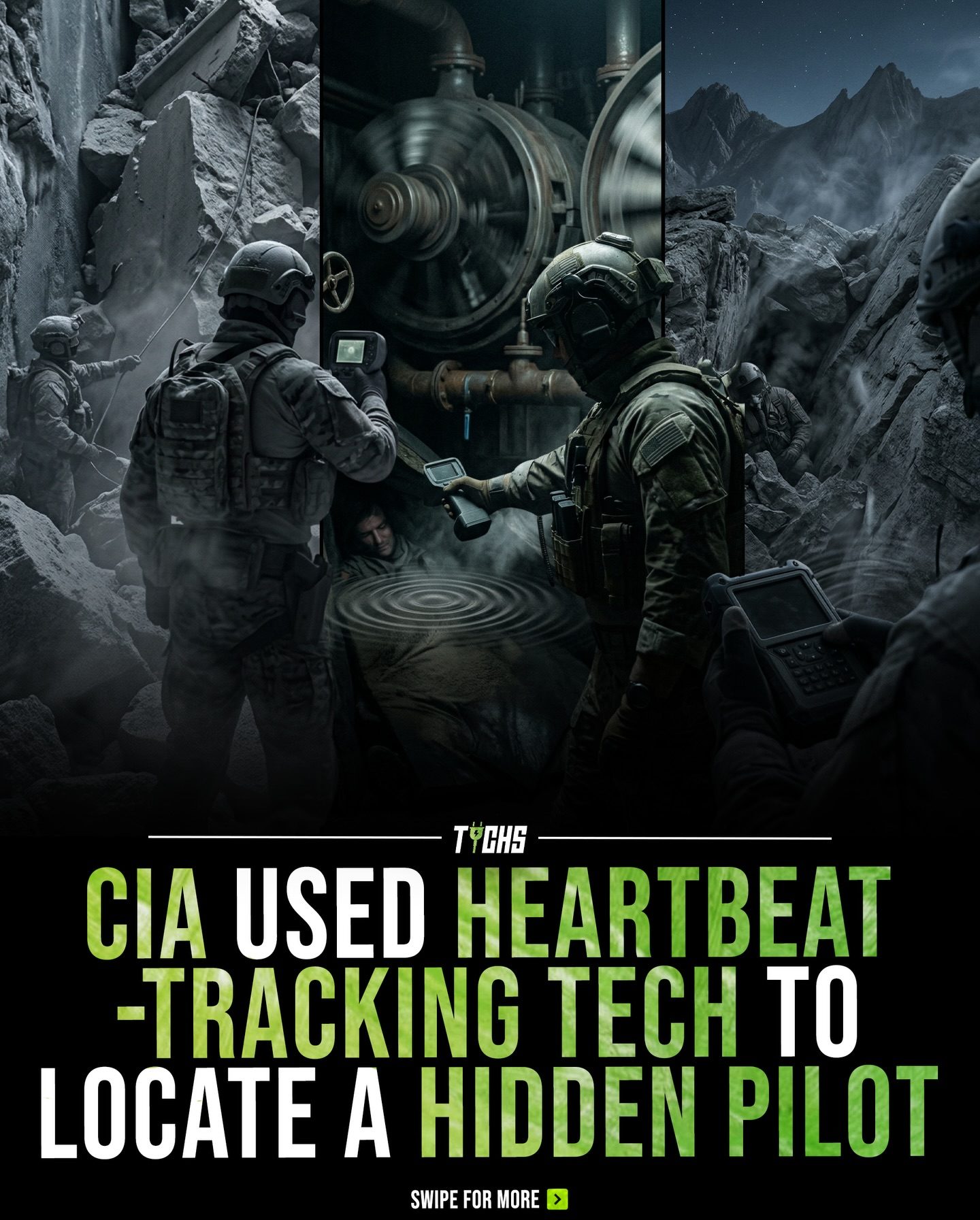
Heartbeat Detection Technology
Heartbeat detection technology has revolutionized the way we approach search and rescue missions, military operations, and even disaster relief efforts. These advanced sensing systems can detect human presence even without direct visibility, making them invaluable in scenarios where every second counts. The technology, often described as systems that can detect micro vital signals like breathing and heartbeat, is based on radar or RF sensing, which captures tiny movements caused by cardiac activity.
Context / Why This Matters
The ability to locate hidden individuals, trapped under debris or behind barriers, without direct visual contact, is a game-changer in several critical fields. For military personnel engaged in rescue operations, defense strategies, and disaster relief, this technology can significantly enhance the effectiveness and efficiency of their missions. Whether it's detecting survivors in a collapsed building or locating adversaries in a covert military operation, heartbeat detection technology provides a non-invasive, reliable means of identifying human presence.
Main Discussion
Technology Behind Heartbeat Detection
Heartbeat detection devices, such as those highlighted by TCHs, typically use radar or RF sensing to capture cardiac activity. These systems work by emitting electromagnetic waves that bounce off objects and return to the device. By analyzing the reflected signals, the device can detect the tiny movements caused by the heart's contractions and relaxations. This process allows the device to distinguish between real human presence and background noise, ensuring accurate detection even through barriers like rock or debris.
Applications in Military and Rescue Scenarios
The military often relies on advanced technologies to gain an edge in operations. Heartbeat detection devices can be used in covert surveillance, locating hidden adversaries without alerting them to the presence of the detection system. Search and rescue teams also benefit from this technology, as it helps in locating trapped individuals in scenarios such as earthquakes or building collapses. The ability to sense heartbeats through barriers makes it possible to detect survivors even when they are buried under rubble, significantly improving rescue efforts.
Challenges and Speculations
While the technology behind heartbeat detection is well-established, many specific claims about its applications and capabilities remain unverified. This is particularly true in the realm of classified military operations, where details are often kept under wraps. Speculations often arise around the real capabilities of such systems, blurring the line between actual technology and hypothetical scenarios. However, the proven ability of these devices to detect micro vital signals through barriers underscores their practical value in real-world situations.
Practical Tips
When considering the use of heartbeat detection devices, it's important to understand their limitations and proper applications. Here are some practical tips:
-
Understand the Environment: Different environments can affect the accuracy of heartbeat detection. For example, metal structures or electronic interference can impact the device's performance. Ensure the technology is appropriate for the specific conditions of the rescue or military operation.
-
Training and Proficiency: Proper training is essential for effectively using heartbeat detection devices. Personnel should be well-versed in the device's operation, including how to interpret the signals and distinguish between human presence and background noise.
-
Integration with Other Tools: Often, heartbeat detection is most effective when used in conjunction with other technologies, such as thermal imaging or ground-penetrating radar. Combining multiple tools can enhance the overall accuracy and efficiency of the detection process.
Important Takeaways
Heartbeat detection technology has made significant strides in enhancing the capabilities of military and rescue operations. Its ability to detect human presence through barriers has proven invaluable in various scenarios, from locating hidden adversaries to rescuing trapped individuals. While there is still much to learn and verify, the core principles of this technology are well-established and offer practical benefits in real-world applications.
Conclusion
As technology continues to advance, the applications of heartbeat detection devices are likely to expand. Their ability to non-invasively detect human presence through barriers makes them a valuable tool for military, rescue, and defense operations. Whether it's locating survivors in a disaster or identifying hidden adversaries, this technology provides a critical edge in situations where precision and efficiency are paramount. Through ongoing development and integration with other tools, heartbeat detection devices will remain at the forefront of advanced sensing systems, ensuring that they continue to play a vital role in saving lives and enhancing operational effectiveness.
Questions readers ask
How does radar-based heartbeat detection technology work?
Radar-based heartbeat detection technology uses radio frequency (RF) sensing to detect micro-vital signals. These signals are generated by the body through heartbeats and breathing. The radar scans the environment and analyzes these signals to detect the presence of a human heartbeats even through barriers or debris.
What are the primary applications of heartbeat detection in military operations?
In military operations, heartbeat detection is crucial for search and rescue missions, disaster relief, and locating hidden individuals in obscured conditions. It allows soldiers to detect and locate people in distress without direct visual contact, enhancing the effectiveness of rescue efforts and tactical maneuvers.
Can this technology detect heartbeats through solid barriers?
Yes, one of the key advantages of radar-based heartbeat detection is its ability to penetrate solid barriers. This is achieved through RF sensing, which can capture the subtle movements caused by cardiac activity, making it possible to track heartbeats even when individuals are trapped under debris or behind walls.
How does heartbeat detection technology assist in rescue operations?
Heartbeat detection technology aids rescue operations by providing precise location information of trapped or hidden individuals. This ability to pinpoint locations in obscured conditions saves valuable time, improving the chances of successful rescues, especially in scenarios where visual confirmation is not possible.
What makes radar-based sensing superior to other detection methods in rescue scenarios?
Radar-based sensing is superior in rescue scenarios because it can detect vital signs without requiring direct line of sight. It can capture signals through solid objects and in poor visibility conditions, making it a reliable tool for locating individuals in disaster zones, military operations and beyond.
What are the benefits of using heart radar sensing during military operations?
Military radar heartbeat sensing allows for more precise and efficient operations. Using the heartbeat radar, soldiers can locate hidden or trapped personnel with high accuracy, even in low-visibility or complex environments. This technology enhances operational readiness and increases the likelihood of successful missions and rescues.
How does heartbeat detection technology enhance disaster relief efforts?
Heartbeat detection technology significantly enhances disaster relief efforts by enabling search and rescue teams to find individuals trapped under debris or behind barriers. By providing real-time information about the location of survivors, this technology helps expedite rescue operations and improve survival rates in disaster-stricken areas.
Related deep dives
Similar reads based on topic and creator.




Recent articles
Fresh deep dives from the latest Reels we unpacked.




Comments
Be the first to comment.