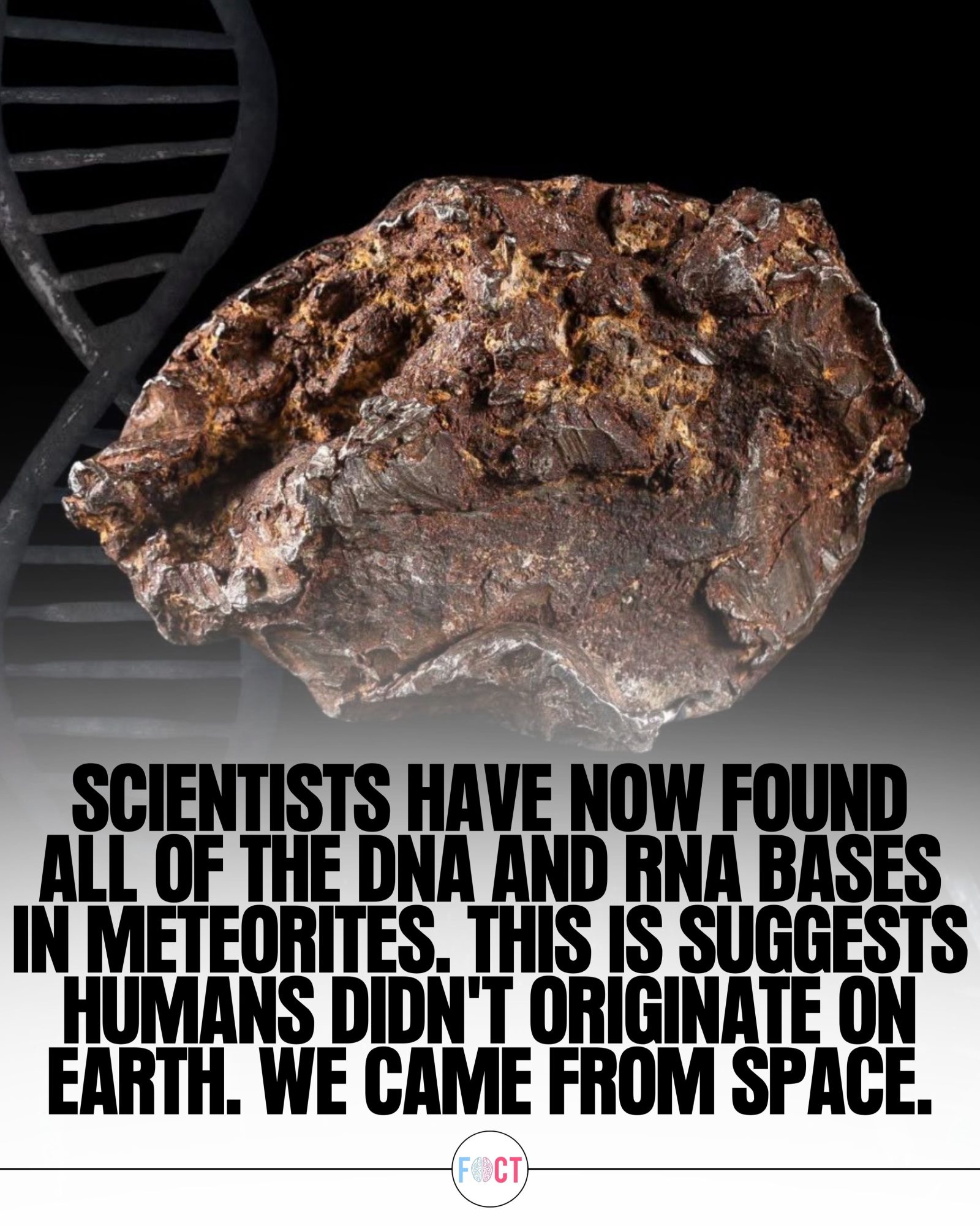
Meteorites and the Origins of Life
Meteorites, those ancient rocks from space, have long captivated human curiosity. Recent scientific discoveries have revealed that these celestial objects contain some of the fundamental building blocks of life, sparking intriguing questions about the origins of life on Earth and beyond.
Why This Matters
The idea that the raw materials for life could have been delivered to Earth by comets or meteorites is not new, but recent findings have brought this theory into the spotlight. Known as panspermia, this hypothesis suggests that the ingredients for life may be more common in the universe than previously thought. Understanding this phenomenon could reshape our comprehension of life's beginnings and the potential for life elsewhere in the cosmos.
Main Discussion
The Building Blocks of Life in Meteorites
Scientists have identified several key molecules in meteorites that are essential for life as we know it. These include compounds like adenine and guanine, which are related to the bases found in DNA and RNA. The presence of these molecules indicates that complex organic chemistry can occur naturally in space, long before planets like Earth even formed.
Panspermia: The Theory of Life's Origins
Panspermia proposes that comets and meteorites could have transported these raw materials to Earth billions of years ago. This theory suggests that the seeds of life might have been scattered throughout the universe, potentially leading to the emergence of life on multiple planets. While this idea is compelling, it's important to distinguish between the delivery of raw materials and the actual formation of life.
Misconceptions About Life's Origins
The discovery of these molecules in meteorites has led to some misconceptions. It's crucial to understand that finding these organic compounds does not imply that humans, or even fully formed life, came from space. What scientists have actually found are simple organic compounds, not living cells or complete life forms. These compounds are more like the basic ingredients of life, rather than the finished product.
The Role of Earth in Life's Evolution
The current scientific understanding is that while space may have contributed some of the raw materials, life itself developed on Earth over billions of years through a long process of chemical and biological evolution. The complex process of evolution, driven by factors unique to Earth, is what ultimately led to the diverse forms of life we see today. To understand this, consider the analogy of discovering letters of the alphabet: they are essential but alone do not form a book.
Scientific Insights from Meteorite Studies
Studies on meteorites have provided valuable insights into the chemical processes that could have occurred in the early solar system. These findings support the idea that the ingredients for life are not rare or unique to Earth. Instead, they may be widespread throughout the universe, suggesting that the conditions for life could exist elsewhere.
Practical Tips
For those interested in delving deeper into this fascinating topic, here are some practical tips:
Educate Yourself on Panspermia
Learn more about the panspermia theory and the scientific evidence supporting it. This will give you a better understanding of how the raw materials for life could have been delivered to Earth.
Explore Meteorite Samples
Visit museums or research institutions that house meteorite samples. Many institutions offer public viewing or educational programs where you can learn more about these cosmic objects.
Stay Updated on Scientific Discoveries
Follow reputable scientific journals and websites for the latest findings on meteorites and the origins of life. This will keep you informed about new developments and discoveries in the field.
Engage with Scientific Communities
Join online forums or local astronomy clubs to discuss and learn from experts and enthusiasts in the field. Engaging with a community of like-minded individuals can enhance your understanding and appreciation for this topic.
Important Takeaways
There are several key takeaways from the discoveries made in meteorites:
The Universality of Life's Ingredients
The discovery of DNA and RNA bases in meteorites suggests that the fundamental building blocks of life are not unique to Earth but are part of a more universal chemical process.
The Role of Panspermia
Panspermia offers an intriguing explanation for how life's raw materials could have been distributed across the universe, but it does not imply that life itself originated from space.
Earth's Unique Role in Life's Evolution
While meteorites may have delivered the basic ingredients, the complex process of life's evolution on Earth is what ultimately led to the diverse forms of life we know today.
Conclusion
Meteorites and their role in the origins of life offer a fascinating glimpse into the potential for life elsewhere in the universe. While the discovery of DNA and RNA bases in meteorites has sparked new questions and theories, it's important to recognize the distinction between the delivery of raw materials and the actual formation of life. The current scientific understanding emphasizes the unique role of Earth in the evolution of life, while also acknowledging the possibility that the ingredients for life may be more common in the universe than previously thought. This ongoing exploration not only deepens our understanding of life's origins but also inspires us to continue searching for answers to the mysteries of the cosmos.
Questions readers ask
What are the fundamental building blocks of life found in meteorites?
Meteorites contain various organic molecules that serve as the fundamental building blocks of life. These include amino acids, which are essential for protein formation, and nucleotides, which are crucial for DNA and RNA structures. Additionally, meteorites may harbor other chemical compounds that play vital roles in biological processes.
What is the panspermia theory and how does it relate to meteorites?
The panspermia theory proposes that the ingredients necessary for life, such as organic molecules and perhaps even microbial life, could be distributed throughout the universe by comets and meteorites. This theory is supported by the discovery of life's building blocks in meteorites, suggesting that these space rocks may have played a crucial role in seeding life on Earth.
How do meteorites contribute to our understanding of life's origins on Earth?
By containing organic molecules and other chemical compounds essential for life, meteorites provide insights into how life might have begun on our planet. These space rocks offer a glimpse into the raw materials that could have been present on early Earth, supporting the idea that life's origins may be intertwined with extraterrestrial influences.
Can meteorites contain DNA or RNA?
While meteorites have been found to contain the building blocks of DNA and RNA, such as nucleotides, the actual presence of complete DNA or RNA strands in meteorites is highly unlikely. The harsh conditions of space make it improbable for complex biological molecules like DNA or RNA to survive intact within meteorites.
What types of organic molecules are commonly found in meteorites?
Meteorites often contain a variety of organic molecules, including amino acids, which are the building blocks of proteins, and nucleic acid bases, which are essential components of DNA and RNA. These molecules are found in both primitive meteorites, such as carbonaceous chondrites, and in meteorites that have undergone more complex chemical processing.
How do scientists study the organic compounds in meteorites?
Scientists use a combination of analytical techniques to study the organic compounds in meteorites. These methods include mass spectrometry, which identifies the types and amounts of organic molecules present, and microscopy, which provides insights into the structure and distribution of these compounds within the meteorite. Additionally, scientists may use gas chromatography to separate and analyze complex mixtures of organic compounds.
Recent articles
Fresh deep dives from the latest Reels we unpacked.




Comments
Be the first to comment.