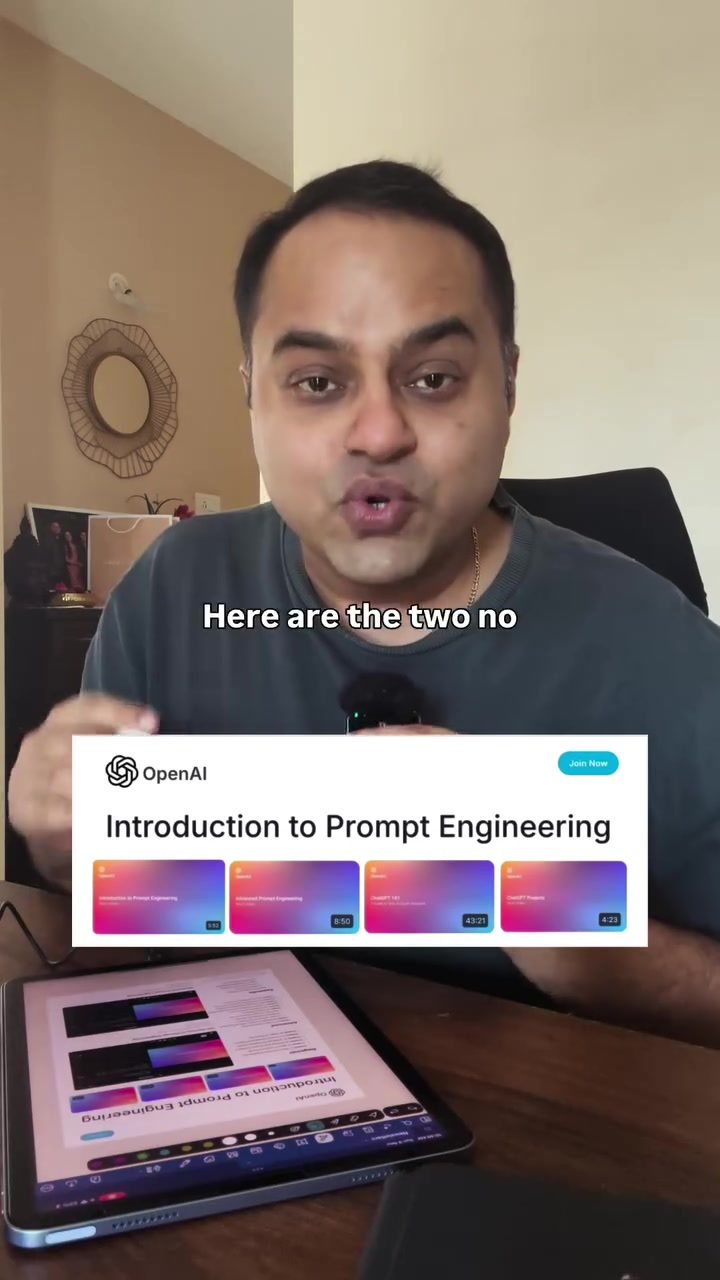
Prompt Engineering: The Path to Mastering Language Models
Prompt engineering is a crucial skill for anyone working with language models. It involves crafting input (prompts) that guide the model to generate relevant and useful outputs. OpenAI, a leader in this field, offers two comprehensive, free courses designed to help you master prompt engineering. Let's dive into what these courses cover and how they can benefit you.
Why This Matters
Prompt engineering is not just about getting a model to respond; it's about getting it to respond in a way that is accurate, relevant, and useful. Whether you're a developer, a data scientist, or someone interested in leveraging AI for your work, understanding how to prompt engineer effectively can significantly enhance your projects.
Understanding the Courses
OpenAI provides two distinct paths for learning prompt engineering: a beginner course and an advanced course. Each course is designed to build on the other, providing a solid foundation before delving into more complex topics.
Beginner Course
The beginner course is ideal for those new to prompt engineering. It covers the basics, ensuring you have a strong foundation before moving on to more advanced topics. Here's what you can expect to learn:
- What is Prompt Engineering? This chapter introduces the concept of prompt engineering and its importance in working with language models.
- Basic Prompt Structure: Learn how to structure your prompts to get the most out of language models.
- Writing Clear and Direct Prompts: Discover the art of writing prompts that are clear, direct, and unambiguous, ensuring the model understands your intent.
Advanced Course
Once you've mastered the basics, the advanced course dives deeper into the intricacies of prompt engineering. This course is for those who want to take their skills to the next level. Here are the key topics covered:
- Avoiding Hallucinations: Learn techniques to prevent the model from generating false or misleading information.
- Building Complex Multi-Step Prompts: Master the art of creating prompts that require the model to execute multiple steps to complete a task.
- Prompt Chaining: Understand how to chain multiple prompts together to guide the model through a complex task.
- Tooling and Function Calls: Discover how to use tools and functions to enhance the capabilities of your prompts.
- Case Studies and Exercises: Apply what you've learned through practical exercises and real-world case studies.
Key Chapters in the Courses
Both courses cover a range of topics, each designed to build your skills progressively. Here are some of the key chapters you'll encounter:
Beginner Course Chapters
- Chapter 1: What is Prompt Engineering? This introductory chapter sets the stage for the rest of the course, explaining the basics of prompt engineering and why it's important.
- Chapter 2: Writing Clear and Direct Prompts Learn the best practices for writing prompts that are clear, direct, and effective.
- Chapter 3: Safety and Guardrails Discover techniques to ensure that your prompts generate safe and ethical outputs.
Advanced Course Chapters
- Chapter 7: Avoiding Hallucinations In this chapter, you'll learn strategies to minimize the risk of the model generating false or misleading information.
- Chapter 8: Building Complex Multi-Step Prompts Master the art of creating prompts that guide the model through multi-step processes.
- Chapter 9: Prompt Chaining Learn how to chain multiple prompts together to achieve complex tasks.
- Chapter 10: Tooling and Function Calls Explore how to use tools and functions to enhance your prompts.
- Chapter 11: Retrieval-Augmented Generation (RAG) Learn about advanced techniques like RAG, which combines retrieval and generation to enhance the model's capabilities.
- Chapter 12: Reducing Hallucinations at Scale Discover scalable techniques to reduce hallucinations in large datasets.
- Chapter 13: Evaluation and Metrics for Prompts Learn how to evaluate the effectiveness of your prompts using various metrics.
- Chapter 14: Case Studies and Exercises Apply your knowledge through practical exercises and real-world case studies.
Practical Tips
Here are some practical tips to help you get the most out of these courses:
- Take Notes: Write down key points and techniques as you go through the courses. This will help reinforce your learning and serve as a reference later.
- Practice Regularly: The more you practice, the better you'll get at writing effective prompts. Use the exercises and case studies to apply what you've learned.
- Join the Community: Engage with other learners and experts in the field. Sharing experiences and learning from others can accelerate your progress.
Important Takeaways
- Foundation is Key: The beginner course provides a solid foundation in prompt engineering. Don't rush through it; take the time to understand the basics thoroughly.
- Practical Application: The advanced course emphasizes practical application. Make sure to complete the exercises and case studies to solidify your learning.
- Ongoing Learning: Prompt engineering is a field that continues to evolve. Stay updated with the latest trends and techniques to remain effective.
Conclusion
Prompt engineering is a vital skill for anyone working with language models. OpenAI's free courses provide a comprehensive path to mastering this skill, from the basics to advanced techniques. Whether you're a beginner or an experienced practitioner, these courses offer valuable insights and practical techniques to enhance your prompts and get the most out of language models. Start your journey in prompt engineering today and unlock new possibilities in your projects.
Questions readers ask
What are the key benefits of taking OpenAI's prompt engineering courses?
OpenAI's prompt engineering courses provide a structured learning path for users to develop skills in creating precise and relevant language model prompts. Participants can expect to gain practical knowledge in crafting effective prompts, improving the accuracy and usefulness of AI-generated outputs, and avoiding common pitfalls such as generating irrelevant or misleading responses, known as 'hallucinations.'
Who can benefit from OpenAI's beginner prompt engineering course?
OpenAI's beginner prompt engineering course is designed for individuals with little to no experience in prompt engineering. This includes professionals in various fields such as data science, software development, and digital marketing, as well as anyone interested in leveraging AI for work or personal projects. The course focuses on fundamental techniques for writing clear and direct prompts, making it accessible for novices.
What advanced topics are covered in the advanced prompt engineering course?
The advanced prompt engineering course delves into more complex techniques and scenarios, including best practices for prompt writing, exercises to refine your skills and advanced strategies for avoiding hallucinations. Participants can expect to learn sophisticated methods for guiding AI models to produce highly accurate and contextually relevant outputs, enhancing the overall effectiveness of their projects.
Are OpenAI's prompt engineering courses really free, and what format are they offered in?
Yes, OpenAI's prompt engineering courses are completely free. They are offered online, allowing participants to learn at their own pace. The courses are designed to be flexible, making them suitable for both beginners and advanced users who want to deepen their understanding and application of prompt engineering techniques.
How can mastering prompt engineering benefit my work in data science or software development?
Mastering prompt engineering enables data scientists and software developers to interact more effectively with language models. By crafting precise and relevant prompts, professionals can extract and generate more accurate data insights and functionalities, leading to improved outcomes in tasks such as data analysis, content creation, and more. This skill can also help in automating processes and reducing the time spent on manual tasks.
What are some best practices for crafting effective prompts in prompt engineering?
Some best practices for crafting effective prompts include being clear and direct, providing sufficient context, and avoiding ambiguity. It's also important to consider the structure and format of the prompt, as well as testing and refining prompts based on the model's responses. By following these practices, users can guide the language model to produce more relevant and useful outputs.
Related deep dives
Similar reads based on topic and creator.




Recent articles
Fresh deep dives from the latest Reels we unpacked.




Comments
Be the first to comment.