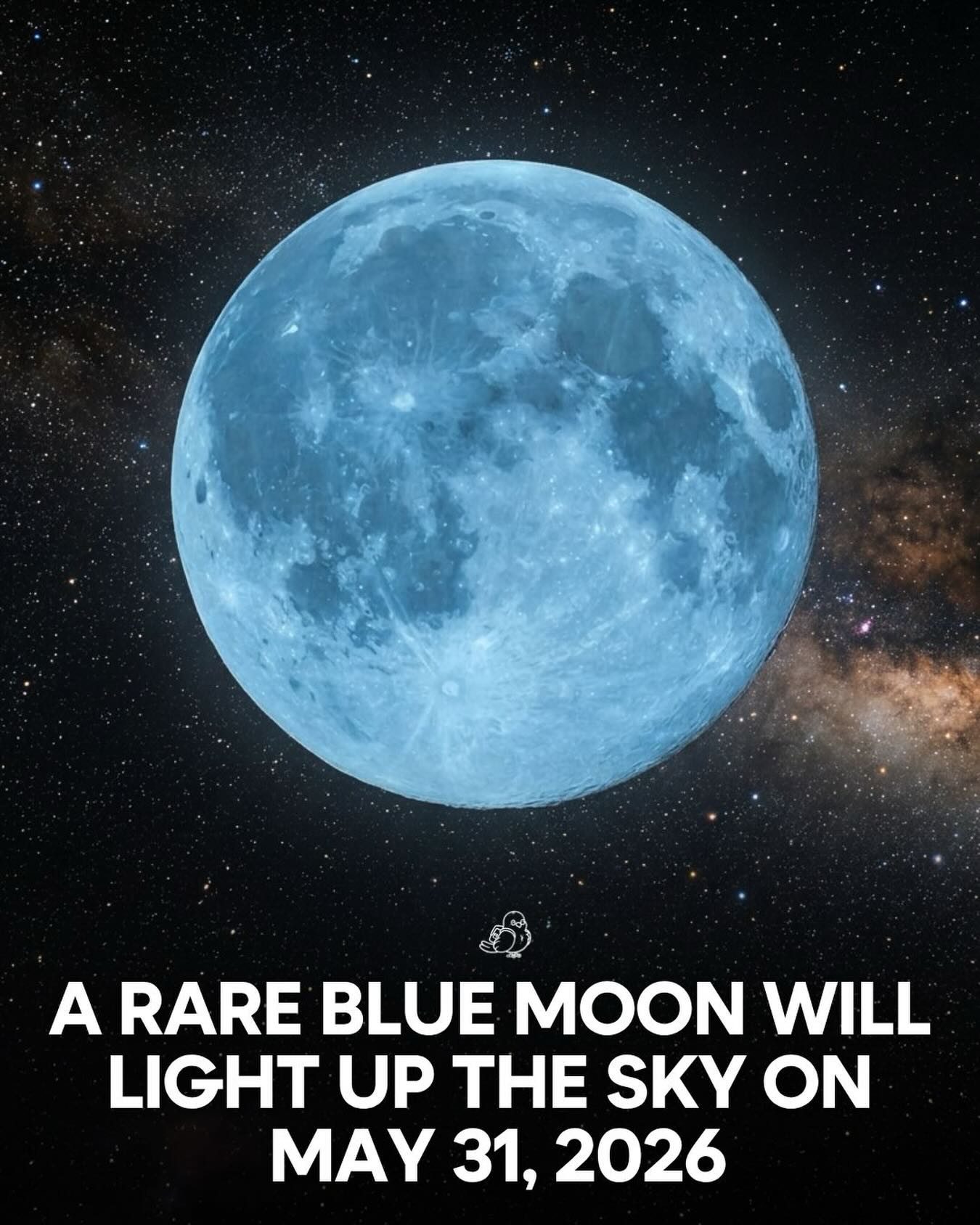
Blue Moon Event: A Celestial Rendezvous in 2026
A rare Blue Moon is set to grace the night sky on May 31, 2026. This celestial event occurs when two full moons appear within the same calendar month, making the second full moon a relatively uncommon sight. What makes this particular Blue Moon even more special is that it will also be a micromoon, occurring when the Moon is near its farthest point from Earth, causing it to appear slightly smaller than usual.
Why This Matters
Blue Moons are not just a rare sight; they are also a fascinating phenomenon that captures the imagination of skywatchers and astronomy enthusiasts. Understanding the intricacies of this event can enhance your appreciation of the night sky and the celestial mechanics at play.
The Science Behind a Blue Moon
A Blue Moon, contrary to its name, doesn't actually appear blue. The term refers to the rarity of the event, specifically when two full moons occur in a single calendar month. This happens because the lunar cycle is about 29.5 days long, which doesn't perfectly align with the 30- or 31-day months on our calendar. When this misalignment results in two full moons in a month, the second one is dubbed a Blue Moon.
The Micromoon Phenomenon
A micromoon occurs when the full moon coincides with the apogee, the farthest point of the Moon's orbit from Earth. During a micromoon, the Moon appears up to 14% smaller and 30% dimmer than when it is at its closest approach to Earth (perigee). This makes the micromoon a unique and visually striking event.
Main Discussion
The Last and Next Blue Moons
The last calendar Blue Moon took place in August 2023, and the next one after 2026 won’t occur until 2028. This rarity adds to the excitement and anticipation surrounding the 2026 event. Skywatchers around the world are already marking their calendars for this must-see event.
Why Does the Moon Appear Blue?
The term "Blue Moon" also has historical roots in folklore and superstition. In some ancient cultures, the appearance of a Blue Moon was seen as a sign of good or bad fortune. However, from a scientific perspective, the Moon does not change color during a Blue Moon. It retains its usual white or silver hue. The name "Blue Moon" is simply a way to denote the rarity of seeing two full moons in one month.
The Celestial Calendar
The Moon's phases are determined by its position relative to the Earth and the Sun. A full moon occurs when the Moon is on the opposite side of the Earth from the Sun, allowing the fully illuminated side of the Moon to be visible from Earth. The lunar cycle, which includes all the phases from new moon to full moon and back to new moon, takes approximately 29.5 days to complete.
Practical Tips
How to Observe the Blue Moon
Observing a Blue Moon is a straightforward and rewarding experience. Here are some tips to make the most of it:
-
Find a Dark Sky Location: Light pollution can significantly reduce the visibility of the Moon and stars. Try to find a location away from city lights for the best viewing experience.
-
Use Binoculars or a Telescope: While the naked eye is sufficient to enjoy the sight, binoculars or a telescope can enhance the viewing experience by allowing you to see the Moon's craters and other surface features more clearly.
-
Check the Weather: Clear skies are essential for optimal viewing. Check the weather forecast in advance and plan your observation accordingly.
-
Join a Stellar Event: Many astronomy clubs and observatories host special events for rare celestial occurrences like the Blue Moon. Joining one of these events can provide an enriching experience with knowledgeable guides.
Important Takeaways
-
Rarity: A Blue Moon is a relatively uncommon event, occurring when two full moons fall within the same calendar month.
-
Micromoon: The 2026 Blue Moon will also be a micromoon, appearing slightly smaller and dimmer due to its distance from Earth.
-
No Color Change: Despite its name, a Blue Moon does not actually appear blue; it refers to the rarity of the event.
-
Observation Tips: For the best viewing experience, find a dark sky location, use binoculars or a telescope, check the weather, and consider joining a staged event.
-
Historical and Cultural Significance: The term "Blue Moon" has historical and cultural significance, often associated with folklore and superstition.
Conclusion
The Blue Moon event on May 31, 2026, is a celestial spectacle not to be missed. Whether you are an avid skywatcher or simply curious about the night sky, this rare occurrence offers a unique opportunity to witness the beauty and wonder of the cosmos. Mark your calendars, find a prime viewing spot, and get ready to marvel at the Blue Moon.
Questions readers ask
What exactly is a Blue Moon and why is the one in 2026 so special?
A Blue Moon is the second full moon in a single calendar month. The one on May 31, 2026, is special because it is also a micromoon, meaning the Moon will be at its farthest point from Earth, making it appear smaller than usual.
Why does a Blue Moon occur?
Blue Moons occur because the lunar cycle (the time it takes for the Moon to go through all its phases) is about 29.5 days long, while months vary from 28 to 31 days. Occasionally, this mismatch results in two full moons in a single month.
How can I plan a backpacking trip around the Blue Moon in 2026?
To plan a backpacking trip around the Blue Moon on May 31, 2026, consider camping in an area with minimal light pollution for optimal viewing. Check the 2026 calendar moon phases to ensure the dates align with your trip, and be prepared for cooler night temperatures.
What is a micromoon and why is it significant?
A micromoon occurs when a full moon coincides with the Moon's farthest point from Earth (apogee). This makes the Moon appear about 14% smaller and 30% dimmer than a supermoon, which is why the Blue Moon in 2026 is so unique.
Will the Blue Moon in 2026 look blue?
No, the Blue Moon in 2026 will not appear blue. Despite its name, a Blue Moon does not change color. The term 'Blue Moon' is merely a reference to its rarity, which is why it's so captivating for skywatchers.
How often do two full moons occur in a month?
On average, a Blue Moon occurs once every 2.7 years. However, it's possible to have two Blue Moons in a single year, which last happened in 2018 and will occur again in 2037.
What are the best conditions for viewing the Blue Moon?
For the best viewing experience, find a location with a clear, unobstructed view of the night sky and minimal light pollution. Check the weather forecast to ensure clear skies, and be prepared to spend some time outside to fully appreciate the event.
Related deep dives
Similar reads based on topic and creator.




Recent articles
Fresh deep dives from the latest Reels we unpacked.




Comments
Be the first to comment.