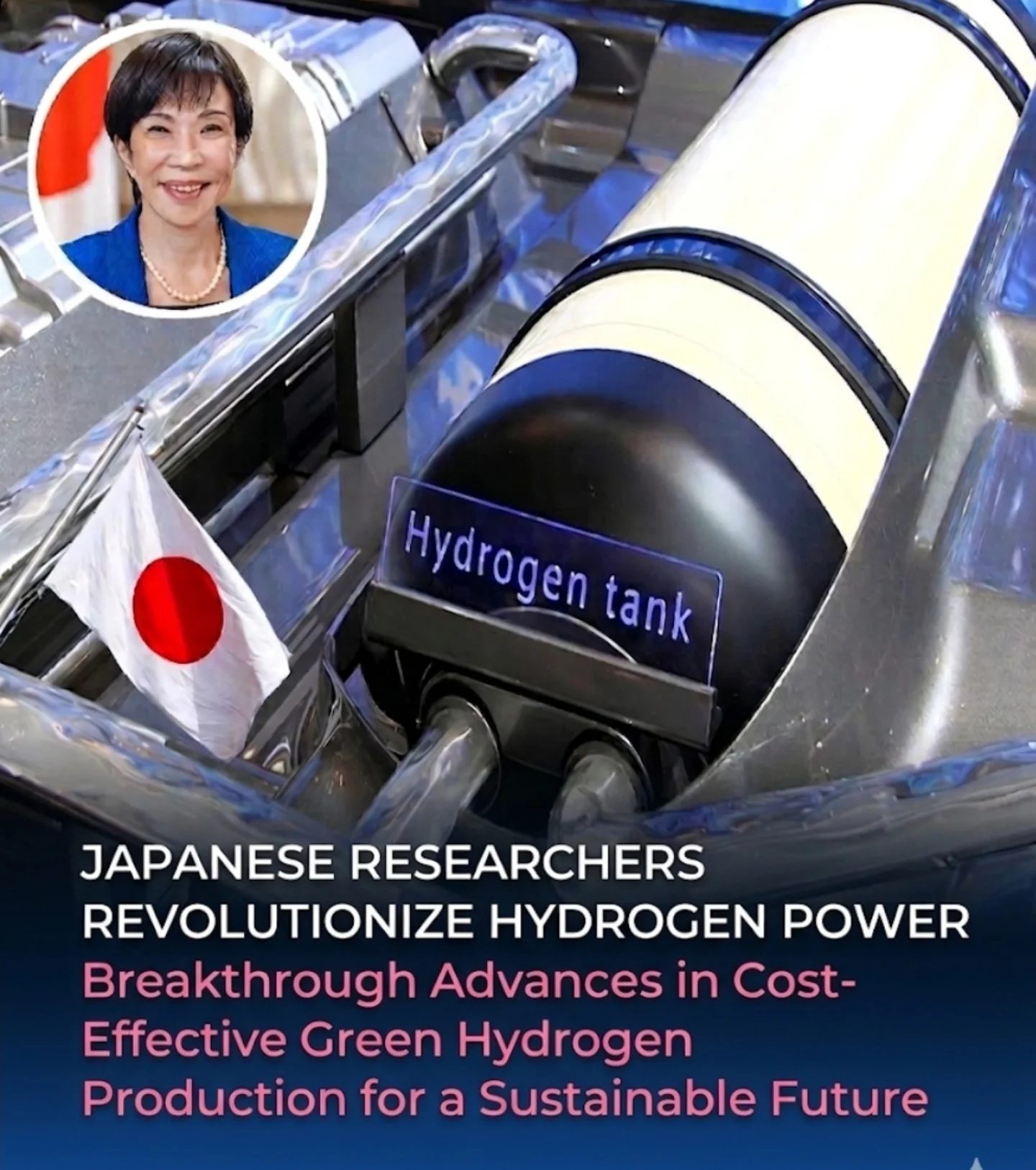
Hydrogen Power Breakthrough
Japan is at the forefront of a significant advancement in green hydrogen production, achieving a milestone that could revolutionize the energy landscape. Researchers in the country have developed a specialized process that generates hydrogen fuel using only sunlight and water. This breakthrough is pivotal to Japan's "Green Transformation" (GX) strategy, which aims for national energy self-sufficiency and a net-zero carbon economy by 2050.
Context / Why this matters
Hydrogen power has long been seen as a promising solution for clean energy. However, the challenge has been making the production process cost-effective and sustainable. Traditionally, hydrogen is produced through electrolysis, which requires a significant amount of external electricity. Japan's latest breakthrough in photocatalyst technology addresses these issues, paving the way for a more sustainable future.
The implications of this technology are vast. It not only contributes to reducing greenhouse gas emissions but also promises to decrease Japan's reliance on imported energy. By leveraging sunlight and water, this process aligns perfectly with the country's goal of achieving energy self-sufficiency and promoting a hydrogen society.
Main discussion
Japan's Green Transformation Strategy
Japan's "Green Transformation" (GX) strategy is a comprehensive plan aimed at achieving energy self-sufficiency and reducing carbon emissions. The GX initiative is a multi-faceted approach that includes developing new technologies, improving energy efficiency, and promoting renewable energy sources. The recent breakthrough in green hydrogen production is a cornerstone of this strategy, illustrating Japan's commitment to innovation and sustainability.
Breakthrough Photocatalyst Technology
The core of the recent breakthrough is the development of a high-efficiency photocatalyst. Unlike traditional electrolysis, which requires external electricity, these photocatalysts facilitate a chemical reaction that splits water molecules directly when exposed to light. This innovative process eliminates the need for additional electrical input, making it more cost-effective and environmentally friendly.
The Process
The process involves using sunlight to activate the photocatalyst, which then catalyzes the splitting of water molecules into hydrogen and oxygen. This reaction is efficient and can be carried out on a large scale, making it a viable option for industrial applications. The technology has been successfully demonstrated at scale, with researchers from institutions like Shinshu University and the University of Tokyo operating a 100-square-meter reactor for three consecutive years.
Scale and Success
The scale of this demonstration is impressive. Operating a 100-square-meter reactor for such an extended period showcases the technology's reliability and durability. This long-term success is a testament to the effectiveness of the photocatalysts and their potential for widespread application.
Real-World Performance
One of the most notable aspects of this technology is its performance under natural sunlight. The photocatalysts performed approximately 1.5 times better under natural sunlight compared to lab-simulated conditions. This real-world performance is crucial for outdoor applications, proving the technology's viability for practical use.
Practical tips
For those interested in the practical applications of this technology, here are a few key points to consider:
- Scalability and Efficiency: The technology has been successfully demonstrated at scale, making it suitable for industrial applications. Its efficiency under natural sunlight further enhances its practicality.
- Cost-Effectiveness: The use of sunlight and water as the primary inputs makes this process more cost-effective compared to traditional electrolysis methods.
- Environmental Impact: By reducing the need for external electricity, this technology contributes to a more sustainable and environmentally friendly energy production process.
Important takeaways
- Innovation in Hydrogen Production: The development of high-efficiency photocatalysts represents a significant advance in hydrogen production technology.
- Sustainable Energy Solutions: This breakthrough aligns with Japan's "Green Transformation" strategy, promoting energy self-sufficiency and a net-zero carbon economy.
- Real-World Applications: The technology's performance under natural sunlight demonstrates its viability for outdoor applications, making it a practical solution for various industries.
Conclusion
Japan's recent breakthrough in green hydrogen production is a game-changer in the energy sector. By leveraging sunlight and water, this innovative process offers a cost-effective and sustainable solution for hydrogen production. This advancement is a critical step towards Japan's goal of achieving energy self-sufficiency and reducing carbon emissions, paving the way for a more sustainable future.
Questions readers ask
How does Japan's new technology produce hydrogen fuel?
Japan's new technology uses a specialized photocatalyst process. This method converts water into hydrogen fuel using only sunlight and water, eliminating the need for external electricity sources.
What makes this hydrogen production method significant for Japan?
This method is significant because it aligns with Japan's 'Green Transformation' (GX) strategy, aiming for energy self-sufficiency and a net-zero carbon economy by 2050. It reduces dependence on imported energy and lowers greenhouse gas emissions.
What is photocatalyst water splitting and how does it work?
Photocatalyst water splitting is a process where sunlight is absorbed by a catalyst to split water molecules into hydrogen and oxygen. In Japan's new technology, this process is optimized to efficiently produce hydrogen fuel.
How does this breakthrough impact Japan's energy landscape?
This breakthrough positions Japan as a leader in renewable hydrogen technology. It paves the way for a more sustainable energy future, reducing the country's reliance on traditional energy sources and promoting a hydrogen economy.
What are the benefits of producing hydrogen from sunlight and water?
Producing hydrogen from sunlight and water offers several benefits, including lower production costs, reduced greenhouse gas emissions, and decreased dependence on imported energy. This method is more sustainable and aligns with global efforts to combat climate change.
What is the 'Green Transformation' (GX) strategy in Japan?
The 'Green Transformation' (GX) strategy is Japan's initiative to achieve energy self-sufficiency and a net-zero carbon economy by 2050. This strategy focuses on leveraging innovative technologies, such as the new green hydrogen technology, to promote a sustainable energy landscape in Japan.
Related deep dives
Similar reads based on topic and creator.




Recent articles
Fresh deep dives from the latest Reels we unpacked.




Comments
Be the first to comment.