AI-Driven Face Rendering: Revolutionizing Real-Time Graphics on Everyday Computers
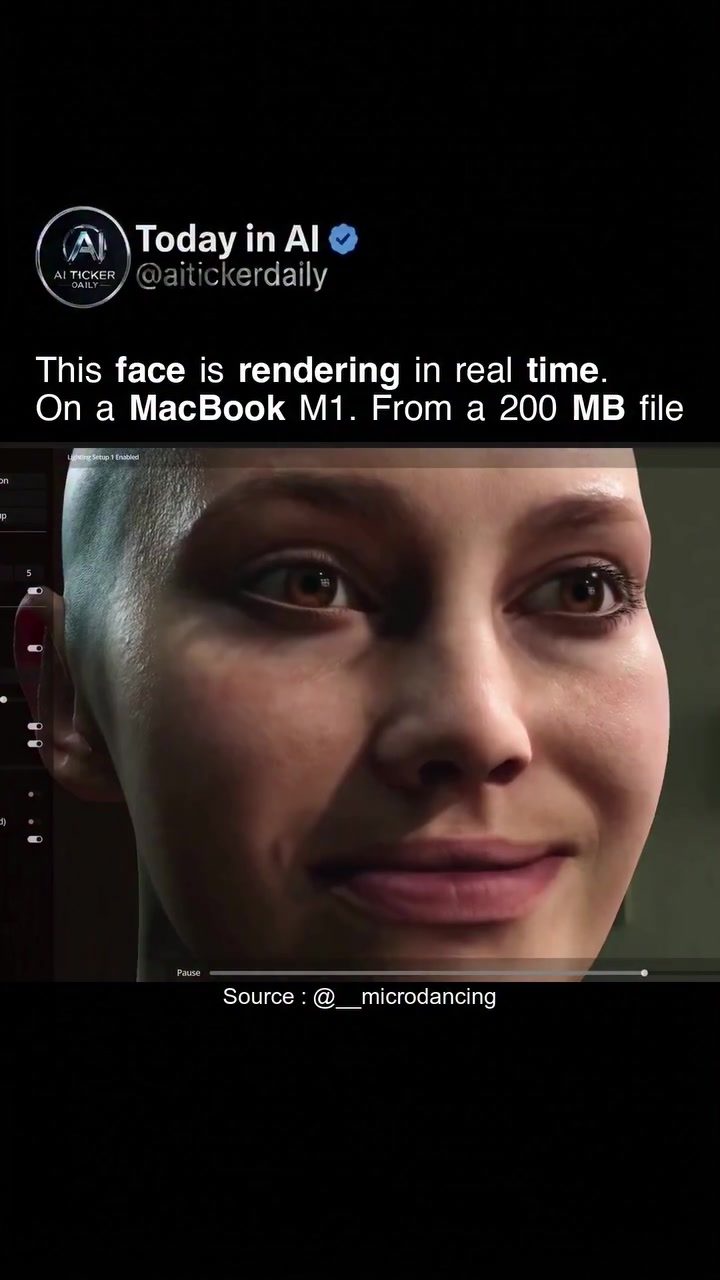
AI-driven face rendering is transforming the landscape of real-time graphics, making high-quality, photorealistic visuals accessible on everyday computers. This technology is not just a tool for high-end gaming or film production; it's a game-changer for indie developers, virtual production, and real-time filmmaking. The real-time rendering of a hyperreal human head on a MacBook M1, as showcased in the demo, is a stark example of this transformative power.
The Rise of Real-Time Rendering
The ability to render photorealistic faces in real-time on a MacBook M1 is a significant milestone. Traditionally, such high-quality rendering required powerful, expensive hardware and extensive software setups. However, advancements in AI and open-source game engines like Godot are changing this paradigm. Godot, a fully open-source game engine, ships as a single 200 MB executable, making it incredibly lightweight and accessible. This stands in stark contrast to other engines like Unreal Engine, which can be around 40 GB before a single project loads.
Godot: The Game Engine Redefining Accessibility
Built in Argentina and available for free, Godot is a testament to the power of open-source development. It eliminates the need for a 20 GB install, precompiling shaders, or a $2000 GPU. This makes it possible to achieve AAA-grade rendering on a laptop that most people use for everyday tasks like spreadsheets. The rendering process, originating from a 200 MB file, showcases the efficiency and capability of Godot, making it a formidable contender in the game engine market.
The Future of Indie Games and Virtual Production
The implications of AI-driven face rendering are vast. Indie game developers, who often face budget and resource constraints, can now create hyperrealistic visuals without the need for expensive licenses or hardware. Virtual production, which involves the use of real-time graphics to enhance live-action footage, is also set to benefit. Filmmakers can create immersive environments and characters in real-time, reducing the need for extensive post-production work.
Practical Tips for Embracing AI-Driven Face Rendering
-
Explore Open-Source Engines: Engines like Godot offer a cost-effective and accessible way to get started with real-time rendering. Look for repositories and communities that can provide support and resources.
-
Experiment with AI Tools: Many AI-driven tools and plugins are available for game engines, offering advanced rendering capabilities. Experiment with these to see how they can enhance your projects.
-
Leverage Cloud Computing: If your local hardware is not powerful enough, consider using cloud computing services to handle the heavy lifting. Many cloud services offer powerful GPUs that can be used for rendering tasks.
-
Join the Community: Engage with the community around open-source engines and AI tools. This can provide valuable insights, tips, and support as you navigate the complexities of real-time rendering.
-
Start Small: Begin with small projects to get a feel for the technology. This will help you understand the capabilities and limitations of the tools you're using, and give you practical experience.
Important Takeaways
AI-driven face rendering is more than just a technological advancement; it's a democratization of high-quality graphics. With tools like Godot, anyone with a basic computer can create hyperrealistic visuals. This is not only exciting for indie developers but also for the future of virtual production and real-time filmmaking. As these technologies continue to evolve, we can expect to see more innovative and immersive content being created by a wider range of creators.
Conclusion
The future of real-time rendering is here, and it's more accessible than ever. With the right tools and a willingness to experiment, anyone can create hyperrealistic visuals that were once the domain of high-budget productions. As we move forward, the lines between indie and AAA content will continue to blur, opening up new possibilities for creativity and innovation in the world of digital media.
Questions readers ask
Can a MacBook M1 handle high-quality face rendering?
Yes, the MacBook M1 is capable of rendering high-quality, photorealistic faces in real-time. This is a significant advancement, as traditionally, such tasks required much more powerful hardware.
What role does the Godot engine play in AI-driven face rendering?
The Godot engine, being open-source, provides indie developers with a powerful toolset to integrate AI-driven face rendering into their projects. It simplifies the development process and makes high-quality graphics more accessible.
How does AI enhance real-time face rendering on a MacBook M1?
AI optimizes the rendering process, enabling the MacBook M1 to achieve photorealistic visuals in real-time. This includes improving the efficiency of the M1 chip, reducing the need for high-end hardware, and advancing the overall quality of the rendered faces.
Can indie game developers benefit from this technology?
Absolutely. AI-driven face rendering allows indie developers to create high-quality, photorealistic graphics without needing expensive hardware or extensive software setups. This levels the playing field and encourages more creativity in indie game development.
What are the implications of real-time face rendering for virtual production and filmmaking?
Real-time face rendering brings significant benefits to virtual production and filmmaking. It allows for immediate feedback and adjustments, streamlining the production process and enabling more dynamic and realistic performances on screen.
Related deep dives
Similar reads based on topic and creator.




Recent articles
Fresh deep dives from the latest Reels we unpacked.




Comments
Be the first to comment.