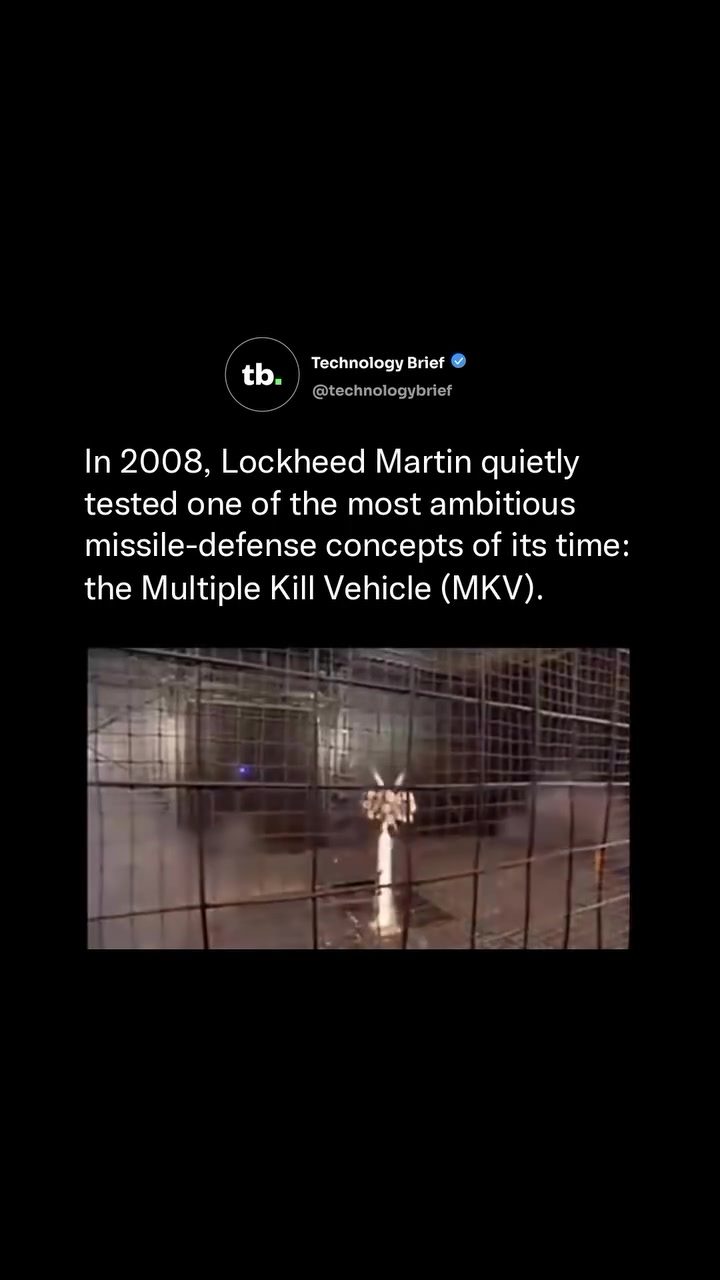
Lockheed Martin's Multiple Kill Vehicle
In 2008, Lockheed Martin embarked on an ambitious project to revolutionize missile defense. The initiative, known as the Multiple Kill Vehicle (MKV), aimed to address a fundamental challenge in missile defense systems: differentiating between real warheads and decoys. This innovative concept involved deploying a swarm of self-guided kill vehicles to increase the likelihood of intercepting genuine threats.
The Concept of the Multiple Kill Vehicle
The Multiple Kill Vehicle (MKV) was designed to overcome the limitations of traditional single-interceptor missiles. These traditional systems often struggled to identify and intercept genuine threats amidst a cloud of decoys, which enemy missiles could release to confuse and evade defenses. The MKV system was intended to solve this by releasing multiple small, self-guided kill vehicles from a single interceptor missile. Each of these 10-pound vehicles was equipped with its own thrusters and sensors, allowing them to maneuver and target individual objects within a threat cluster.
Test at Edwards Air Force Base
On December 2, 2008, Lockheed Martin conducted a significant test of the MKV system at Edwards Air Force Base in California. This test involved releasing a swarm of 10-pound kill vehicles within a controlled, caged test facility. The goal was to demonstrate the system's ability to successfully navigate and intercept multiple targets, regardless of whether they were real warheads or decoys. The test showcased the MKV's potential to significantly enhance missile defense capabilities by increasing the odds of a genuine hit.
The Technical Challenges
The MKV concept faced several technical challenges. Each kill vehicle needed to be lightweight and highly maneuverable. It had to carry its propulsion, guidance, and sensor systems, which added to the complexity of its design. Additionally, the control and coordination of a swarm of these vehicles required advanced algorithms and real-time decision-making capabilities. The system had to manage the swarm's movements and target prioritization in a dynamic and unpredictable environment.
Program's End and Future Directions
Despite its innovative approach, the MKV program was shut down in April 2009. The Pentagon, under Defense Secretary Robert Gates, decided to cut the program from the budget. This decision was likely influenced by the high costs associated with research and development, as well as the complex technical challenges the program faced. However, the concept did not disappear entirely. By 2015, similar concepts were explored again, with companies like Raytheon, Boeing, and Lockheed Martin re-evaluating and refining the MKV idea.
Practical Tips for Understanding Missile Defense
Understanding the complexities of missile defense systems can be challenging, but there are some key points to consider:
-
Identify the Problem with Decoys: Traditional missile defense systems often struggle to differentiate between real warheads and decoys. This limitation makes it difficult to ensure that the interception is effective.
-
Consider Swarm Technology: Concepts like the MKV demonstrate the potential of swarm technology in missile defense. By deploying multiple self-guided vehicles, the system increases the chances of hitting the real threat.
-
Evaluate Cost and Feasibility: While innovative, these systems can be cost-prohibitive. It's important to balance advanced technology with practical considerations such as cost and technical feasibility.
-
Keep Up with Technological Advances: Technology in missile defense is rapidly evolving. Staying informed about new developments and concepts, such as the MKV, can provide a deeper understanding of current and future defense strategies.
Important Takeaways
The Multiple Kill Vehicle (MKV) was a groundbreaking concept in missile defense, addressing the critical issue of decoys. Despite its potential, the program faced significant technical and financial challenges, leading to its shutdown. However, the idea of using swarm technology in missile defense continues to be explored, highlighting its enduring relevance in the field. The concept illustrates the importance of innovation and adaptability in defense strategies, as well as the need to balance technological advancement with practical considerations.
Conclusion
The MKV initiative by Lockheed Martin showcased a bold approach to enhancing missile defense capabilities. By leveraging swarm technology, the system aimed to solve a long-standing problem in intercepting enemy warheads amidst decoys. While the program faced challenges and ultimately ended, the concept continues to inspire new developments in the field. Understanding the MKV's innovations and the challenges it faced provides valuable insights into the evolving landscape of missile defense.
Questions readers ask
What was the primary goal of Lockheed Martin's 2008 MKV project?
The primary goal of the 2008 MKV project was to enhance missile defense capabilities by improving the ability to distinguish and intercept genuine warheads from decoys. This was achieved by deploying a swarm of self-guided kill vehicles, rather than relying on a single interceptor.
How did the MKV system improve upon traditional missile defense systems?
The MKV system improved upon traditional systems by using multiple, lightweight kill vehicles that could maneuver and target individual objects within a threat cluster. This approach significantly increased the chances of intercepting real threats among a group of decoys.
What challenges did the MKV project aim to address in missile defense?
The MKV project specifically aimed to address the challenge of differentiating between real warheads and decoys, a common tactic used to confuse traditional missile defense systems. The swarm technology allowed for more precise and effective interception of genuine threats.
What is the Multiple Kill Vehicle (MKV) and how does it function?
The Multiple Kill Vehicle (MKV) is a missile defense technology developed by Lockheed Martin. It functions by deploying a swarm of self-guided, lightweight kill vehicles that can independently target and intercept multiple objects within a threat cluster, enhancing the overall effectiveness of the defense system.
What advantages does the MKV missile swarm offer over single interceptor systems?
The MKV missile swarm offers several advantages, including increased interception rates, improved accuracy, and better performance against complex threats involving multiple warheads and decoys. The swarm can adapt and respond to different targets more effectively than a single interceptor.
How does the MKV technology enhance the interception of genuine threats?
The MKV technology enhances the interception of genuine threats by allowing each kill vehicle to independently identify and target individual objects. This means that even if some vehicles are decoyed, others can still successfully intercept the real warheads, increasing the overall success rate of the interception.
Related deep dives
Similar reads based on topic and creator.




Recent articles
Fresh deep dives from the latest Reels we unpacked.




Comments
Be the first to comment.