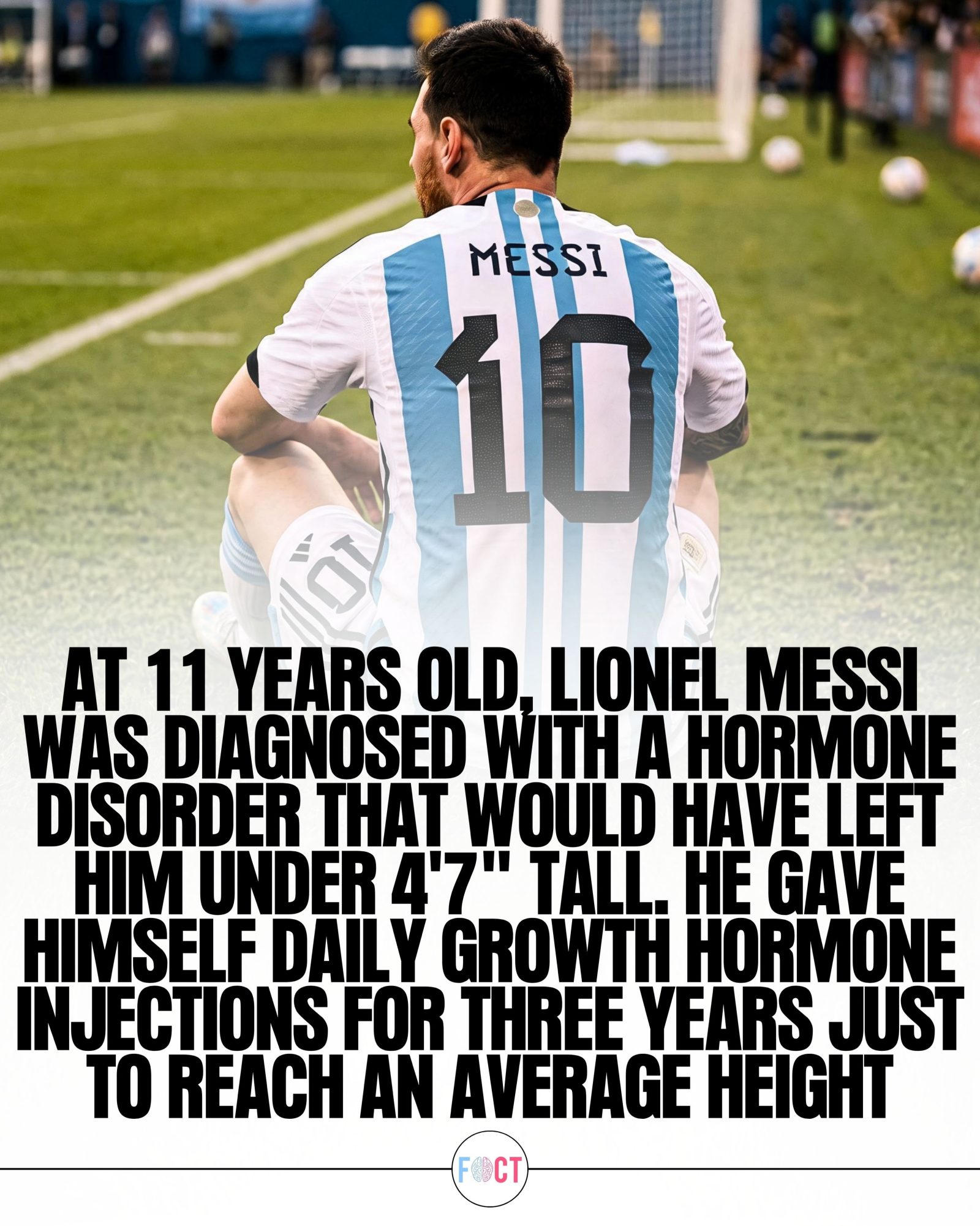
Lionel Messi's Growth and Overcoming Growth Hormone Deficiency
Lionel Messi, one of the most iconic figures in football, faced a significant challenge early in his life: a diagnosis of Growth Hormone Deficiency (GHD) at the age of 11. This rare condition had already dramatically slowed his growth, leading doctors to believe he might never grow beyond about 4 feet 7 inches without treatment. Messi's journey from this diagnosis to becoming one of the greatest players in football history is a testament to his resilience and the effective medical interventions that supported his growth.
The Diagnosis and Initial Challenges
Growth Hormone Deficiency (GHD) is a condition where the pituitary gland produces insufficient growth hormone. This deficiency can lead to severe short stature and other health complications. In Messi's case, his growth had largely stalled by the age of nine, prompting extensive testing in Rosario, Argentina. The diagnosis revealed that without treatment, Messi's height would be severely limited. The condition affects the body's production of IGF-1, a key protein responsible for normal bone, muscle, and organ development.
Treatment and Its Cost
Treatment for GHD typically involves daily injections of synthetic human growth hormone. Messi began administering these injections at age 11, continuing his hormonal therapy until he reached an average adult height. The therapy was crucial but came at a significant financial cost—approximately $1,500 per month. This expense was far beyond what Messi's family could afford, and his local club, Newell’s Old Boys, could only provide temporary financial support.
Barcelona's Role in Messi's Journey
At 13, Messi traveled to Barcelona for a trial with La Masia, the renowned youth academy of FC Barcelona. His exceptional football skills, particularly his reported five-goal performance during the trial, impressed the coaches. FC Barcelona agreed to sign Messi and cover the cost of his medical treatment, famously documented as an agreement on a paper napkin. This support was pivotal in allowing Messi to continue his hormone therapy, which he underwent until around age 14, ultimately helping him reach an adult height of 5 feet 7 inches.
The Impact on Messi's Career
Messi's growth hormone therapy was not just about physical development; it was also about enabling him to pursue his football career without the limitations imposed by his condition. The therapy allowed him to continue dominating youth football and eventually become one of the world's most celebrated athletes. His journey serves as an inspiring example of how medical interventions can significantly impact an individual's life and career trajectory.
The Importance of Early Intervention
Growth Hormone Deficiency is a condition that, if left untreated, can have profound impacts on an individual's growth and overall health. Early diagnosis and intervention, as seen in Messi's case, can be crucial in mitigating these effects. The synthetic human growth hormone injections he received were a crucial part of his treatment, enabling him to reach an average height and pursue his athletic dreams.
Practical Tips for Parents and Caregivers
For parents and caregivers, understanding the signs and symptoms of GHD is essential. Early detection can lead to timely intervention and better outcomes. Here are some practical tips:
- Regular Check-Ups: Regular medical check-ups can help detect any growth anomalies early.
- Consult Specialists: If growth patterns seem abnormal, consulting with endocrinologists or pediatricians specializing in growth disorders can provide valuable insights.
- Educational Resources: Learning about GHD and its symptoms can help in recognizing the condition early. Reliable medical resources and support groups can be invaluable.
- Financial Planning: Understanding the financial implications of long-term treatments is crucial. Exploring insurance options and support from sports organizations, if applicable, can ease the financial burden.
Important Takeaways
- Early Intervention Matters: Early diagnosis and treatment of GHD can significantly improve an individual's growth and health outcomes.
- Support Systems: Financial and emotional support from families, clubs, and organizations can play a pivotal role in managing long-term treatments.
- Medical Advancements: Advances in medical treatments, such as synthetic human growth hormone injections, have made it possible to manage conditions like GHD effectively.
- Resilience and Determination: Messi's story highlights the importance of resilience and determination in overcoming health challenges, showcasing how medical treatments can enable individuals to achieve their full potential.
Conclusion
Lionel Messi's journey from a young boy diagnosed with GHD to a global football icon is a powerful narrative of resilience, medical intervention, and the transformative power of support. His story underscores the importance of early diagnosis, effective treatment, and the critical role of supportive environments in overcoming health challenges. Whether you are a football enthusiast, a parent, or someone interested in medical advancements, Messi's journey offers valuable insights into the impact of GHD and the potential of modern medical treatments.
Questions readers ask
What is Growth Hormone Deficiency (GHD) and how did it affect Lionel Messi?
Growth Hormone Deficiency (GHD) is a medical condition where the body doesn't produce enough growth hormone, leading to slowed growth and short stature. Messi was diagnosed with GHD at age 11 and, without treatment, doctors predicted he would only reach about 4 feet 7 inches in height.
How did medical intervention help Messi overcome GHD?
Messi underwent a growth hormone supplement therapy, which involved regular injections. This treatment was crucial in stimulating his growth and allowing him to reach a normal height, enabling him to pursue his football career.
What challenges did Messi face during his childhood due to GHD?
Messi's primary challenge was the significant impact of GHD on his physical growth. Additionally, he had to endure regular medical treatments and cope with the emotional toll of dealing with a rare medical condition.
How did Messi's GHD diagnosis influence his football journey?
Despite his diagnosis, Messi's passion for football never wavered. His journey from a child with GHD to an international football legend showcases his determination and perseverance, proving that medical conditions do not have to define one's future.
What are the common symptoms of GHD in children?
Symptoms of GHD in children often include slowed or delayed growth, reduced muscle mass, increased body fat, and delayed puberty. Early intervention and diagnosis of GHD are key to supporting a child's normal growth and development.
How tall was Messi predicted to be without treatment for GHD?
Without treatment, doctors predicted that Messi would only grow to be about 4 feet 7 inches. However, with medical intervention and treatment, he managed to grow significantly and reach a height of 5 feet 7 inches as an adult.
How does Messi's story inspire others with GHD?
Messi's story serves as a powerful example of resilience and the impact of medical intervention. His journey from a child with GHD to a football legend demonstrates that overcoming medical challenges is possible, inspiring others to confront and manage their own health conditions.
Related deep dives
Similar reads based on topic and creator.




Recent articles
Fresh deep dives from the latest Reels we unpacked.




Comments
Be the first to comment.