Koala Sleeping Habits
Koalas are renowned for their extensive sleeping habits, spending up to 18 to 22 hours a day in a state of repose or rest. This behavior is not merely a lazy indulgence but a highly evolved strategy that ensures their survival. To understand the science behind their unique resting posture, it's essential to delve into the anatomical features that make their sleeping habits possible.
Why This Matters
Koalas' arboreal lifestyle necessitates unique adaptations for sleeping in trees. High up in the eucalyptus trees, koalas face the challenges of remaining securely perched without falling and avoiding discomfort or injury. The specific anatomical features they have developed address these challenges effectively, making their sleeping habits an intriguing subject of study.
Main Discussion
The "Built-In" Seat Structure
One of the most remarkable adaptations is the structure at the base of their spine. Unlike humans, who have a lot of soft muscle tissue in their glutes, koalas have a highly specialized skeletal and cartilage structure.
Ischial Tuberosities
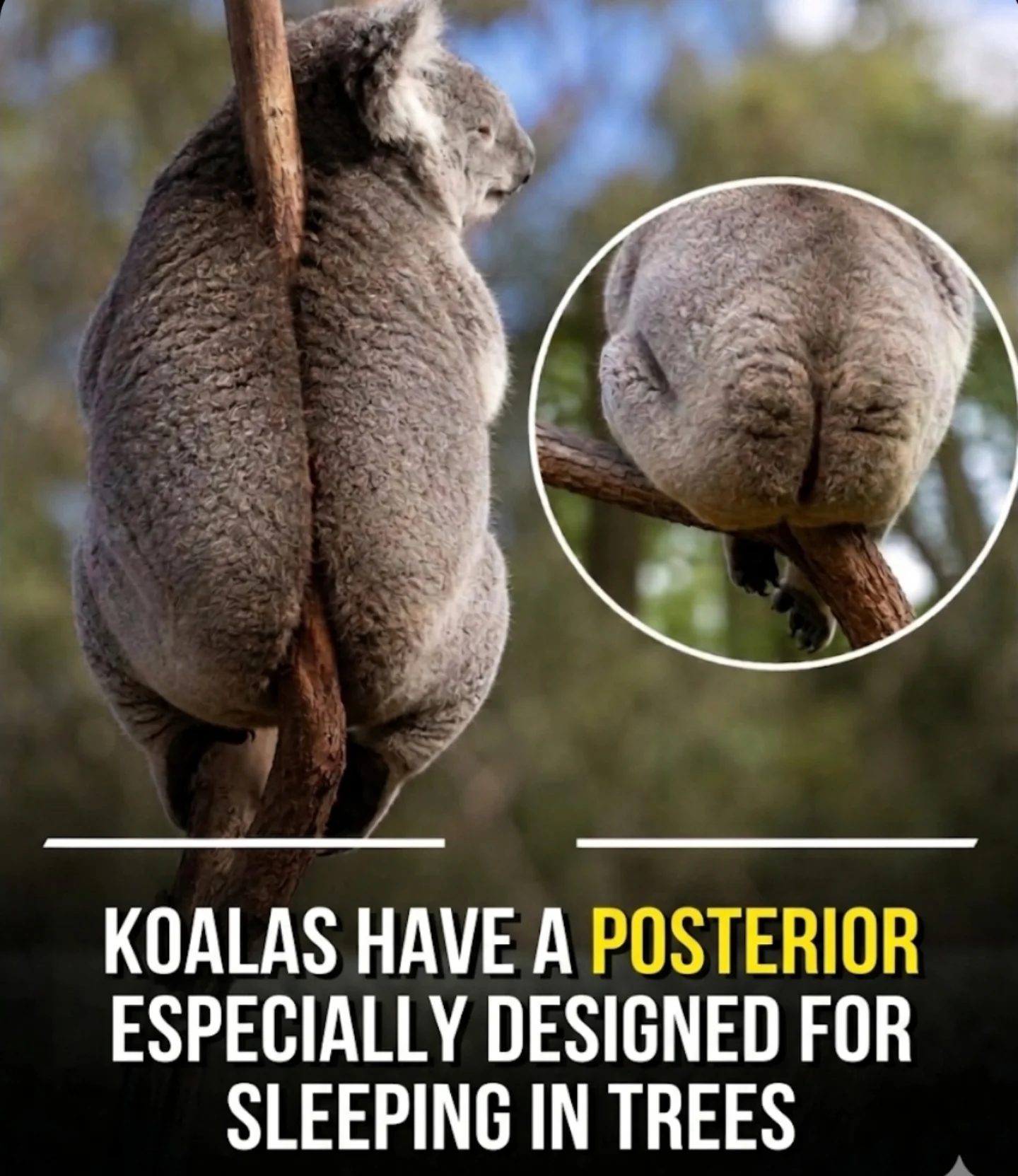
Koalas have heavily fused, elongated hip bones, specifically the ischial tuberosities. These are the bones that form the base of the spine in the pelvic region. In humans, these bones are separate and more flexible, but in koalas, they are fused and elongated, providing a stable base for sitting.
Cartilage Padding
This bone structure is covered by a thick pad of fibrous cartilage. This cartilage is unique because it completely lacks pain receptors or sensitive nerve endings, making it an ideal cushioning material. The lack of nerve endings means that the koala can remain in a seated position for extended periods without experiencing discomfort or numbness.
The Result
The combination of the fused hip bones and the thick cartilage padding acts exactly like a built-in camping stool. This allows koalas to wedge themselves firmly into the fork of a tree branch for hours. Their body weight is supported by bone and cartilage rather than compressed muscles or nerves, reducing the risk of injury and discomfort.
Thick Fur Camouflage and Cushioning
The fur on a koala's rear is much thicker and more tightly packed than on the rest of their body. This thick fur serves multiple purposes:
Extra Layer of Padding
It provides an extra layer of padding against the rough tree bark, which can be abrasive. This cushioned area helps to prevent skin irritation and injury, making their resting spots more comfortable.
Water Resistance
The fur is highly water-resistant, which is crucial for protection during rainstorms. This feature ensures that koalas can remain dry and warm, even when their environment is wet and cold.
Camouflage
The white-and-gray speckled pattern on their bottoms helps them blend into the tree canopy. This pattern makes them look like a natural tree growth, such as a burl, to predators looking up from the ground. This camouflage is an essential adaptation for avoiding predation while they are in a vulnerable, resting state.
Other Tree-Sleeping Adaptations
Koalas' posterior is not the only adaptation that keeps them safe while they snooze. Their unique physiology includes several other features that enhance their arboreal lifestyle.
Curved Spine
A koala’s spine is naturally curved, allowing them to comfortably curl into a ball. This posture lowers their center of gravity, making it easier to maintain balance on narrow limbs. The curved spine also contributes to their stability, reducing the risk of falling.
Opposable Claws
Their front paws feature a "two-thumbed" configuration, and their strong, curved claws can lock onto bark mechanically. This specialized grip means they don't have to expend much brainpower or physical effort to stay securely attached to the tree, as their claws do most of the work for them. This adaptation allows them to rest and sleep without constantly needing to adjust their position.
Practical Tips
Observing koalas in their natural habitat can be a fascinating experience. Here are some practical tips for anyone interested in seeing these creatures in action:
-
Visit National Parks and Reserves: Many national parks and reserves in Australia are home to koalas. Places like the Kangaroo Island Wildlife Park offer excellent opportunities to observe koalas in their natural habitat.
-
Look for Them in Trees: Koalas are primarily found in eucalyptus trees. Look for them high up in the branches, especially in the early morning or late afternoon when they are more active.
-
Be Quiet and Patient: Koalas are generally quiet and sleep a lot, so it may take some time to spot one. Be patient and move quietly to avoid disturbing them.
-
Use Binoculars: Binoculars are helpful for spotting koalas in the treetops. They can be difficult to see with the naked eye, especially from a distance.
-
Respect Their Habitat: If you do manage to spot a koala, remember to respect their habitat. Keep a safe distance and avoid touching or disturbing them. Koalas are protected animals, and it is illegal to harm or disturb them.
Important Takeaways
The adaptations that allow koalas to sleep for extended periods in trees are fascinating and complex. Their specialized skeletal structure, thick fur, and other physiological features make them uniquely suited for an arboreal lifestyle. These adaptations not only ensure their comfort and safety but also play a crucial role in their survival.
Understanding these unique features provides insight into the intricate ways in which animals adapt to their environments. The koala's sleeping habits are a testament to the incredible diversity and ingenuity found in the natural world.
Conclusion
Koalas' sleeping habits are more than just a quirky trait; they are a result of millions of years of evolution. Their unique adaptations, from their specialized skeletal structure to their water-resistant fur, make them perfectly suited for life high up in the eucalyptus trees. By understanding these adaptations, we gain a deeper appreciation for the complexity and beauty of the natural world.
Questions readers ask
How do koalas maintain their balance while sleeping in trees?
Koalas have a unique structure at the base of their spine that acts like a natural seatbelt, helping them maintain balance and stability while sleeping in tree forks. Additionally, their strong, opposable digits allow them to grip branches securely, further enhancing their safety.
What role does cartilage padding play in koalas' tree sleeping habits?
Cartilage padding in koalas helps to absorb shock and reduce pressure points while they sleep in tree forks. This adaptation makes their long hours of rest more comfortable and prevents injuries that could occur from prolonged pressure on hard surfaces.
Why do koalas sleep for such extended periods?
Koalas sleep for up to 22 hours a day to conserve energy. Their diet, primarily consisting of eucalyptus leaves, is low in calories and nutrients, making it essential for them to minimize energy expenditure. Additionally, sleeping helps them stay safe and hidden from predators.
How do koalas' muscle and spine adapt to their tree-dwelling lifestyle?
Koalas' muscles and spine are uniquely adapted to their arboreal lifestyle, allowing them to grip branches tightly and maintain a stable posture while sleeping. Their strong, flexible spine and powerful muscles help them navigate the tree environment with ease.
Can koalas sleep on the ground like other mammals?
While koalas can sleep on the ground, they prefer to sleep in trees due to safety reasons. Trees provide them with protection from predators and a comfortable perch for their long hours of rest. Additionally, koalas are not built for extended periods on the ground and prefer to stay in the canopy.
Related deep dives
Similar reads based on topic and creator.




Recent articles
Fresh deep dives from the latest Reels we unpacked.




Comments
Be the first to comment.