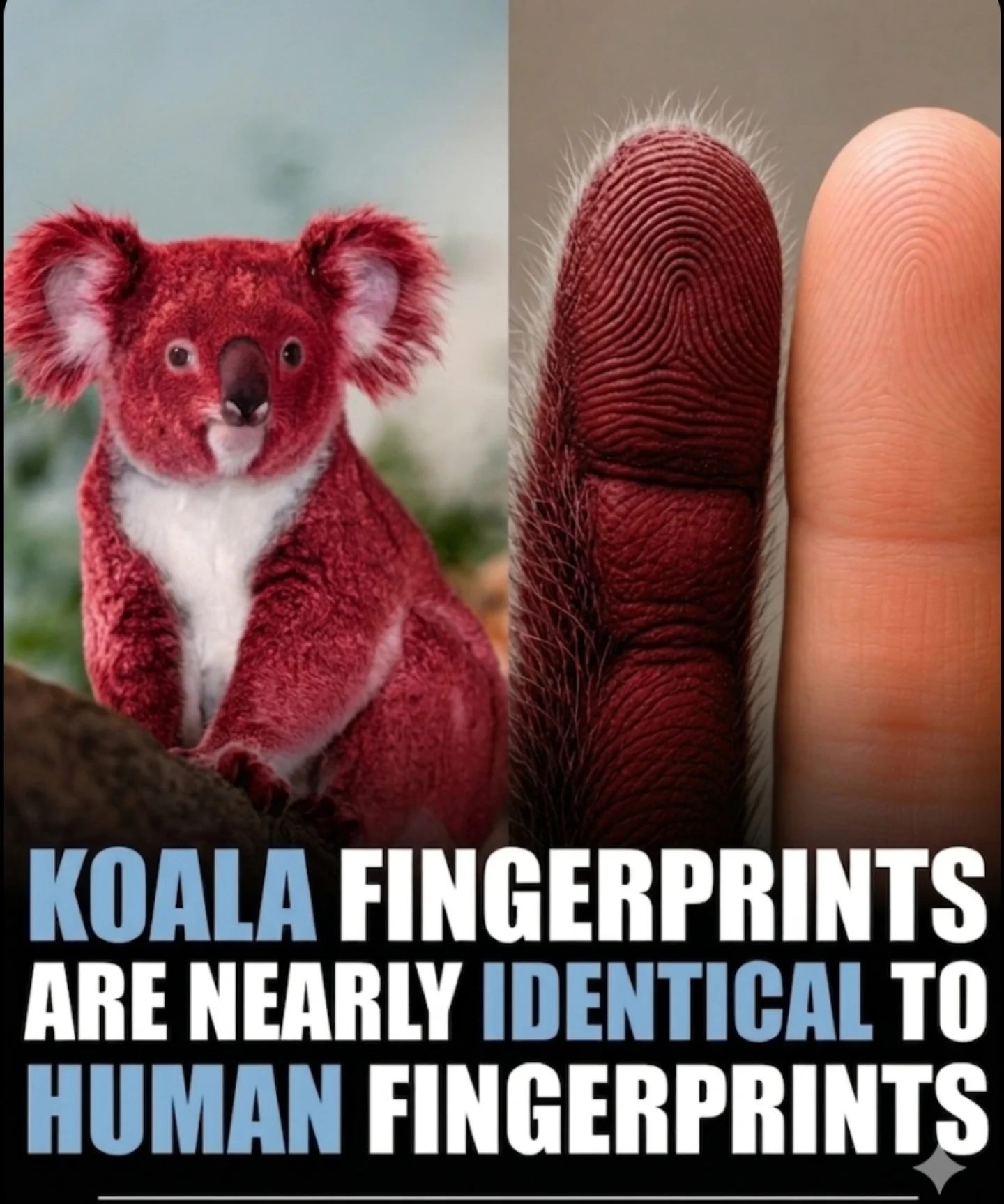
Koala Fingerprints
Koala fingerprints are a remarkable example of nature's ingenuity, featuring unique patterns that closely resemble human fingerprints. This astonishing similarity has sparked curiosity and intrigue among scientists and animal enthusiasts alike.
Why This Matters
Understanding the unique characteristics of koala fingerprints offers insights into the fascinating world of convergent evolution. It also sheds light on the functional aspects of these distinctive patterns and their importance in the koala's survival.
Main Discussion
Similarities to Human Fingerprints
Koalas are one of the few non-primates that possess unique, individualized fingerprints. These prints exhibit the same patterns found in human fingerprints, including loops, whorls, and arches. Under a scanning electron microscope, it is nearly impossible for a trained forensic scientist to distinguish between a koala's print and a human's.
The Crime Scene Myth
There is a popular urban legend that koala fingerprints have occasionally caused confusion at crime scenes in Australia. The story goes that these prints have been mistaken for human fingerprints, leading to false leads and misunderstandings. However, this scenario is highly unlikely to occur in real life. For such a mix-up to happen, a burglar would have to bring a koala accomplice along, which is far-fetched.
Evolutionary Purpose
The similarity between koala and human fingerprints is a prime example of convergent evolution. This phenomenon occurs when two unrelated species independently evolve the same trait to solve similar problems. Although humans and koalas are separated by over 70 million years of evolution, they both developed fingerprints to enhance their grip and tactile sensitivity. Primates, including humans, monkeys, and apes, evolved fingerprints to help them grip tools and branches. Koalas, being marsupials, are biologically unrelated to primates. Yet, they developed the same trait to aid in their arboreal lifestyle.
Key Functions for Koalas
Koalas' fingerprints serve crucial functions for their survival. First, the ridges on their fingers provide enhanced grip, allowing them to climb vertical eucalyptus trees and hang onto branches securely. This is essential for their arboreal lifestyle, as they spend most of their time in trees. Additionally, the ridges help koalas "feel" the texture of leaves. Given that koalas are incredibly picky eaters, this tactile sensitivity is crucial. They use their hands to inspect the quality and safety of eucalyptus leaves before consuming them, ensuring they select the best foliage for their dietary needs.
Practical Tips
While koala fingerprints are fascinating, they are unlikely to have practical applications for humans. However, understanding their unique characteristics can inspire curiosity about the natural world and the incredible adaptations that exist within it. This knowledge can also enhance appreciation for the diversity of life and the complexities of evolution.
Important Takeaways
Koalas' fingerprints are a marvel of nature, showcasing the power of convergent evolution. The similarities between koala and human fingerprints are not just a curiosity but a testament to the remarkable ways in which different species adapt to their environments. This trait highlights the importance of grip and tactile sensitivity for both primates and marsupials, despite their vast evolutionary separation.
Conclusion
Koala fingerprints are a fascinating biological fact that offers profound insights into the evolutionary adaptations of different species. Although the myth of crime scene confusion is unlikely, the real story of koala fingerprints is even more intriguing. The similarities to human fingerprints and their functional importance in koalas' lives underscore the wonders of nature and the intricate ways in which species evolve to thrive in their environments.
Questions readers ask
Why do koala fingerprints resemble human fingerprints?
Koala fingerprints resemble human fingerprints due to a phenomenon known as convergent evolution. This means that even though koalas and humans are not closely related, they have developed similar features to adapt to their environments. In both species, these unique patterns aid in grip and manipulation, highlighting the functional significance of these prints.
What are the specific patterns found in koala fingerprints?
Koala fingerprints exhibit the same basic patterns as human fingerprints, including loops, whorls, and arches. These patterns are not only visually striking but also serve important functions, such as enhancing grip strength and dexterity, which are crucial for koalas to navigate their arboreal habitats efficiently.
How do koala fingerprints aid in their survival?
Koala fingerprints play a significant role in their survival by providing exceptional grip strength. This allows koalas to climb and move through trees with ease, helping them to forage for food and evade predators. The unique patterns also offer insights into the adaptive strategies employed by these marsupials.
Are koala fingerprints truly unique to each individual, like human fingerprints?
Yes, koala fingerprints are unique to each individual, much like human fingerprints. This individuality is a result of genetic and developmental factors, making each koala's prints distinct. This uniqueness is a testament to the intricate biological processes that shape these remarkable traits.
What can the study of koala fingerprints reveal about evolutionary processes?
The study of koala fingerprints offers valuable insights into convergent evolution, where similar traits evolve independently in different species due to similar environmental pressures. By comparing koala and human fingerprints, researchers can better understand the mechanisms driving the development of these distinctive patterns and their adaptive benefits.
How do koala fingerprints compare to those of other animals?
Koala fingerprints are relatively unique among non-primates. While some animals, like great apes, also have unique fingerprints, koalas are one of the few non-primate species to exhibit this trait. This makes them a fascinating subject for comparative studies in biology and evolutionary research.
Related deep dives
Similar reads based on topic and creator.




Recent articles
Fresh deep dives from the latest Reels we unpacked.




Comments
Be the first to comment.