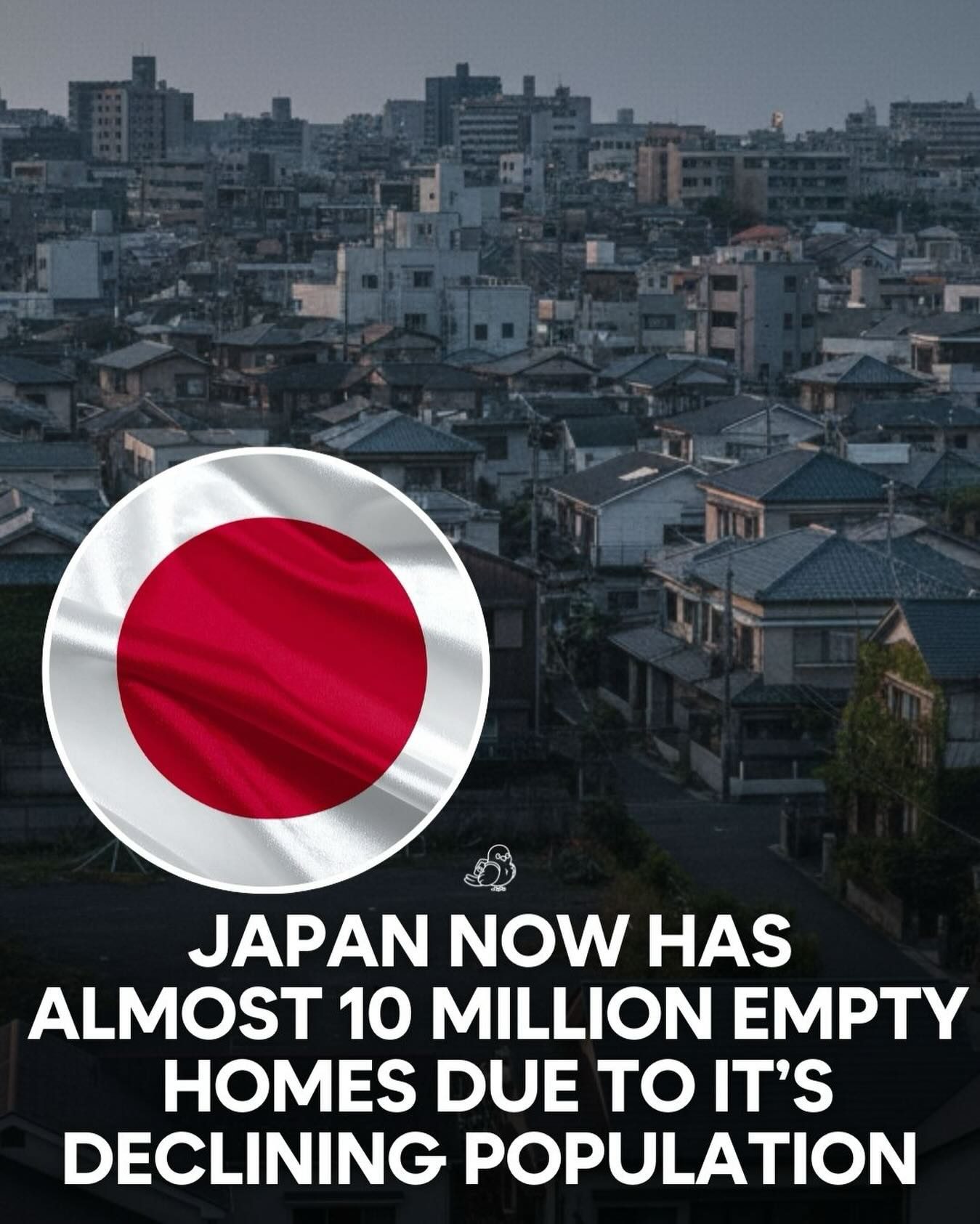
Japan's 10 Million Empty Homes
Japan's decline
Japan is currently experiencing an unprecedented phenomenon: a staggering 10 million empty homes, known as akiya. This situation is deeply intertwined with the country's aging population and declining birth rate. As more people age and fewer young people replace them, the population is shrinking, particularly in rural areas. This demographic shift is a global trend among developed nations, albeit one that is particularly acute in Japan.
Demographic change
Japan's demographic trends are particularly challenging. The country has one of the lowest birth rates in the world, and its population is aging rapidly. Life expectancy in Japan is among the highest in the world, which means that a significant portion of the population is living longer, but not reproducing at a rate that keeps the population stable. This aging population is leaving many homes vacant as older generations pass away and younger generations either move to cities or do not form families. While this trend has been developing for years, the sheer scale of vacant homes today underscores its severity.
As these trends unfold, rural areas are particularly affected. Many rural towns and villages are seeing populations decline as younger residents move to cities for better job opportunities and access to services. Consequently, entire neighborhoods in these areas are sometimes left completely abandoned, with rows of empty houses and huts lining once-thriving streets. This phenomenon further leads to a decline in local economies, as fewer people mean fewer customers for local businesses and services.
Government Initiatives
Local governments in Japan are urgently looking for solutions to this problem. They're offering abandoned properties at extremely low prices, or even giving them away for free, to anyone willing to move in and revitalize these areas. This strategy aims to repopulate rural communities and stimulate local economies, which have been suffering due to the lack of residents and commercial activity.
The goal is not just to fill these empty homes, but also to create sustainable communities. These programs often come with incentives, such as financial support for renovations and tax breaks for new residents. By attracting new inhabitants, the hope is that these areas can once again become vibrant hubs of activity, with local businesses and services flourishing.
The effects of this trend
Beyond the economic and social impacts, the presence of so many empty homes has a profound effect on the landscape. The Japanese countryside, once a thriving tapestry of communities, is now dotted with ghostly remnants of what was once vibrant life. Entire neighborhoods stand vacant, a stark reminder of the demographic changes underway.
This trend raises questions about the future of Japan’s rural areas, as well as its urban centers. The influx of people into cities can lead to overcrowding and increased pressure on infrastructure. In the countryside, the lack of people leads to a decline in local services and amenities, creating a vicious cycle that can be hard to break.
Rural depopulation is also pushing some local governments to innovate and find creative solutions. In some cases, they are turning to technology to attract new residents. For example, some towns are leveraging the growing trend of remote work by promoting themselves as affordable, peaceful alternatives to city life. Others are investing in high-speed internet infrastructure to make these rural areas more attractive to digital nomads and remote workers.
Practical tips for visiting
If you're planning a trip to Japan and want to explore the rural areas where these trends are most visible, there are some practical tips to keep in mind:
- Research Before You Visit: Some areas may have limited services, so make sure to plan your trip accordingly.
- Support Local Businesses: By buying local products and services, you can help contribute to the revitalization efforts.
- Respect Local Culture and Customs: These communities have rich traditions and histories. Be mindful of local customs and respect the environment.
Important takeaways
The trend of 10 million empty homes in Japan is a complex issue rooted in demographic change. It highlights the broader challenges facing Japan and many other developed nations as they grapple with aging populations and shrinking workforce. The impact of this trend is not just economic; it touches every aspect of society, from the landscape to local culture and the daily lives of its residents.
Conclusion
The presence of 10 million empty homes in Japan offers a stark reminder of the profound changes underway in the country. As the population ages and declines, rural areas are facing unprecedented challenges, while urban centers struggle with overcrowding. The situation is complex, but initiatives to revitalize these areas offer hope for the future. By addressing these challenges head-on, Japan has the opportunity to reshape its landscape in a way that benefits both its people and its communities.
Questions readers ask
What are akiya and why are they a concern in Japan?
Akiya are empty homes in Japan, and the country currently has around 10 million of them. This situation is concerning because it reflects rural depopulation and signifies challenges in maintaining local communities and economies. These abandoned homes can also lead to potential issues like urban decay and maintenance challenges.
How does Japan's aging population contribute to the empty homes issue?
Japan's aging population is a significant factor in the empty homes problem. As the elderly pass away or move to urban areas, their homes are often left empty. Additionally, younger generations are less inclined to live in rural areas, leading to a further increase in abandoned homes.
What are some of the challenges faced by rural Japan due to depopulation?
Rural Japan faces numerous challenges due to depopulation, including economic stagnation, limited services, and a lack of new residents to maintain local life. The loss of young people and new families can severely impact schools, hospitals, and local businesses, further exacerbating the problem of rural depopulation.
What steps is Japan taking to address the issue of empty homes?
Japan is exploring various strategies to tackle the empty homes problem, such as promoting rural revitalization initiatives, offering incentives for people to move to rural areas, and repurposing abandoned homes for new uses, like community spaces or rental properties. Additionally, the government is encouraging urban dwellers to relocate to rural areas to boost the economy and revive local communities.
How does the declining birth rate in Japan impact the number of empty homes?
Japan's declining birth rate contributes to the increase in empty homes by reducing the number of new residents who might occupy these properties. With fewer young people and new families, the demand for housing decreases, particularly in rural areas. This leads to even more homes being abandoned, continuing the cycle of rural depopulation and economic decline.
Are there any benefits to Japan's empty homes for those looking to relocate?
Yes, there are benefits for individuals or families considering a move to rural Japan. Many empty homes are available at low costs or even given away for free. This presents an opportunity for those seeking affordable housing or a change of pace, while also helping to revive local communities and economies by attracting new residents.
How do empty homes in Japan differ from other countries with similar issues?
Japan's empty homes issue is unique due to the sheer number of properties involved and the rapid pace at which the problem has developed. The cultural significance of homeownership and the strong attachment to ancestral homes in Japan also contribute to the high number of akiya, as families are often reluctant to sell or abandon their properties even when no longer in use.
Related deep dives
Similar reads based on topic and creator.



Recent articles
Fresh deep dives from the latest Reels we unpacked.




Comments
Be the first to comment.