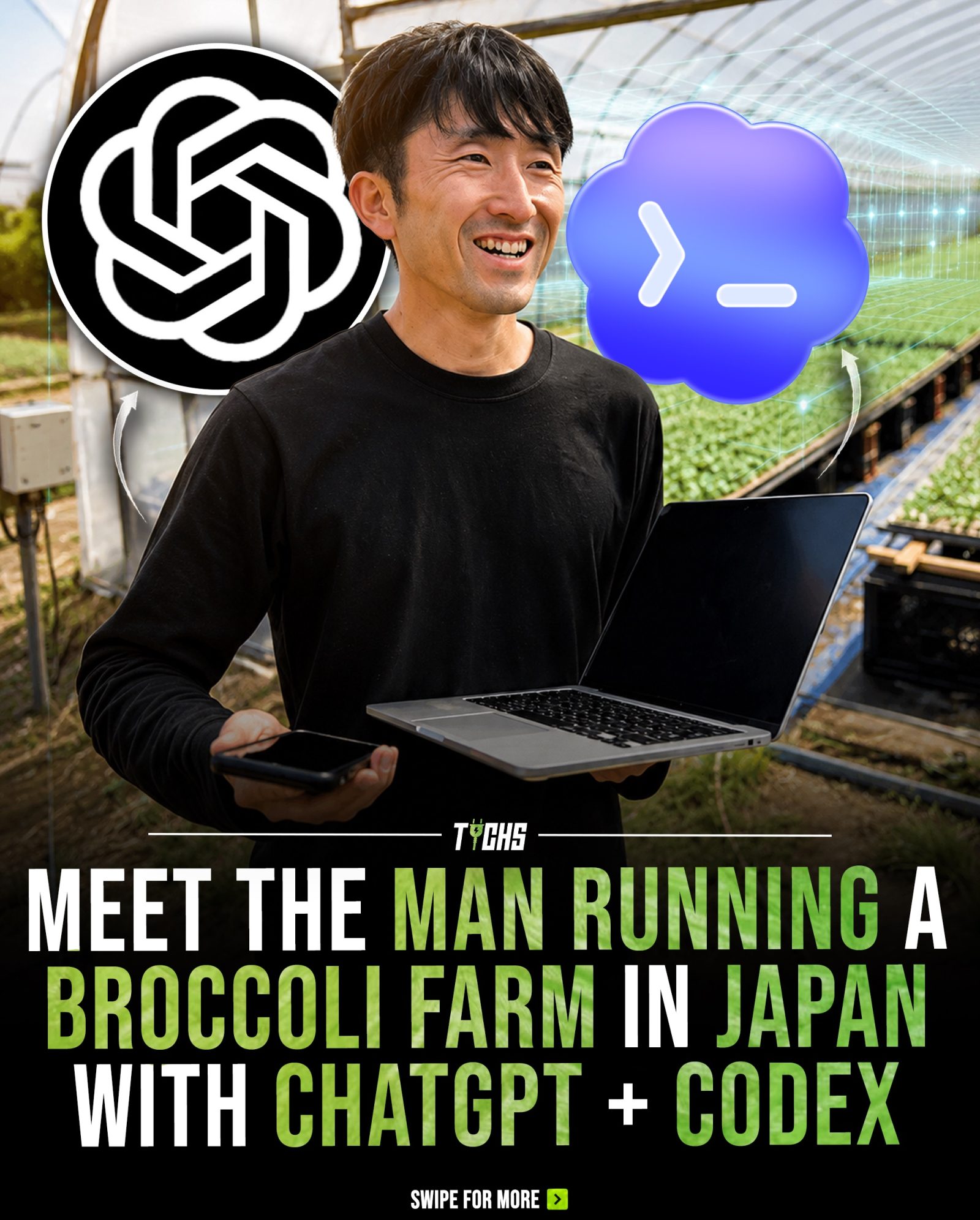
Tech-Driven Farming in Japan
In the heart of Japan, a new wave of agricultural innovation is taking root. Hiroki Tomiyasu, a former public servant, has transitioned into farming, specifically growing broccoli. He’s doing so with a modern twist by leveraging artificial intelligence (AI) and technology to manage his farm, showcasing how AI is no longer confined to tech companies.
Tomiyasu’s journey is a testament to how technology is transforming agriculture. He didn't inherit land or study agriculture, yet he has built a thriving farming operation. His story is part of a larger trend where AI and cutting-edge technology are becoming practical tools for individuals and small businesses, allowing them to develop solutions once exclusive to large organizations.
Tomiyasu’s farm spans approximately 100 hectares and utilizes a suite of technology tools. He uses ChatGPT and Codex to create custom solutions for:
- Greenhouse automation
- Satellite-based field monitoring
- Farm management
- Equipment planning
Context / Why This Matters
The integration of AI in agriculture is more than just a trend; it's a revolution. Traditional farming methods, while effective, often lack the precision and efficiency that technology can provide. Tomiyasu's use of AI for greenhouse automation and field monitoring demonstrates how technology can optimize resource use, enhance crop yields, and reduce labor.
Main Discussion
The Transition to Tech-Driven Farming
Tomiyasu’s transition from public service to farming was not straightforward. He had to learn farming from scratch, a challenge he tackled with determination and innovation. By leveraging AI, he was able to automate critical farming tasks, such as vent control in greenhouses and monitoring fields using satellite data. These technological interventions have not only improved efficiency but also allowed him to manage his operations more effectively.
Automating Greenhouse Vents
Greenhouses require precise environmental control to ensure optimal growing conditions. Tomiyasu uses AI to automate the control of greenhouse vents, ensuring that temperature, humidity, and air circulation are perfectly balanced. This automation reduces the need for manual intervention, saving time and labor while maintaining ideal conditions for crop growth.
Satellite-Based Field Monitoring
One of the most significant advancements in Tomiyasu’s farming practices is the use of satellite data for field monitoring. This technology allows him to oversee his entire farm, detecting issues like pest infestations, soil conditions, and water requirements in real-time. By analyzing satellite data, Tomiyasu can make informed decisions to address any problems promptly, ensuring the health and productivity of his crops.
Farm Management and Equipment Planning
AI also plays a crucial role in overall farm management and equipment planning. Tomiyasu uses AI to predict and plan for equipment maintenance, reducing downtime and ensuring that his machinery is always ready for use. This proactive approach to equipment management helps maintain operational efficiency and minimizes costs.
Practical Tips for Tech-Driven Farming
For farmers looking to integrate technology into their operations, here are some practical tips:
-
Start with Small Projects: Begin by automating one aspect of your farming operation, such as greenhouse ventilation or watering systems, to see how technology can enhance efficiency.
-
Leverage Existing Tools: Utilize readily available AI tools like ChatGPT and Codex to build custom solutions tailored to your specific needs.
-
Invest in Data Collection: Implement systems for collecting data on soil health, weather patterns, and crop performance. This information is invaluable for making informed decisions.
-
Collaborate with Experts: Partner with tech experts or consult with agriculture technology companies to help integrate the right tools and technologies into your farming practices.
Important Takeaways
-
AI is Revolutionizing Agriculture: AI tools like ChatGPT and Codex are transforming traditional farming methods, making them more efficient and precise.
-
Technology Can Empower Small Farmers: Even small-scale and individual farmers can benefit from AI, allowing them to compete with large agricultural operations.
-
Data-Driven Decisions: Using satellite data and other technological tools for monitoring and planning leads to better farm management and higher crop yields.
-
Continuous Learning and Adaptation: Tomiyasu's journey highlights the importance of continuous learning and adaptation in adopting new technologies for farming.
Conclusion
Tomiyasu's success story in Japan underscores the transformative power of AI and technology in agriculture. By leveraging AI, farmers can automate critical tasks, optimize resource use, and make data-driven decisions. This technology is not just a tool for large corporations but a practical solution for small businesses and individual farmers, enabling them to build solutions that were once thought to be out of reach. As AI continues to evolve, its impact on agriculture will only grow, paving the way for a more efficient, productive, and sustainable future in farming.
Questions readers ask
How does Hiroki Tomiyasu utilize AI in his broccoli farming operations?
Hiroki Tomiyasu uses AI for various tasks on his broccoli farm, including greenhouse automation, field monitoring, and overall farm management. This involves using advanced technology to automate processes, monitor crop health via satellite data, and make data-driven decisions to improve efficiency.
What kind of background does Hiroki Tomiyasu have in farming?
Hiroki Tomiyasu did not inherit farmland or have a background in farming. He transitioned from being a public servant to becoming a tech-driven farmer, demonstrating how technology can enable individuals from diverse backgrounds to enter and succeed in agriculture.
What are the benefits of AI in farming as demonstrated by Tomiyasu's farm?
AI in farming, as seen in Tomiyasu's operations, enhances efficiency by automating routine tasks, providing real-time monitoring of crop health, and helping with predictive maintenance. This allows for more precise and effective management of farming activities, leading to improved productivity and resource utilization.
How does AI-driven technology contribute to greenhouse automation in Japan's agriculture?
AI-driven technology in Japan's agriculture, including Tomiyasu's broccoli farm, automates greenhouse operations by controlling environmental factors such as temperature, humidity, and light. This ensures optimal growing conditions and reduces the need for manual intervention, leading to more consistent and reliable crop yields.
What role does satellite field monitoring play in Tomiyasu's farming practices?
Satellite field monitoring allows Tomiyasu to track the health and growth of his broccoli crops in real-time. By analyzing satellite data, he can identify any issues such as pests, diseases, or nutrient deficiencies early, enabling him to take swift corrective actions and prevent potential losses.
Related deep dives
Similar reads based on topic and creator.




Recent articles
Fresh deep dives from the latest Reels we unpacked.




Comments
Be the first to comment.