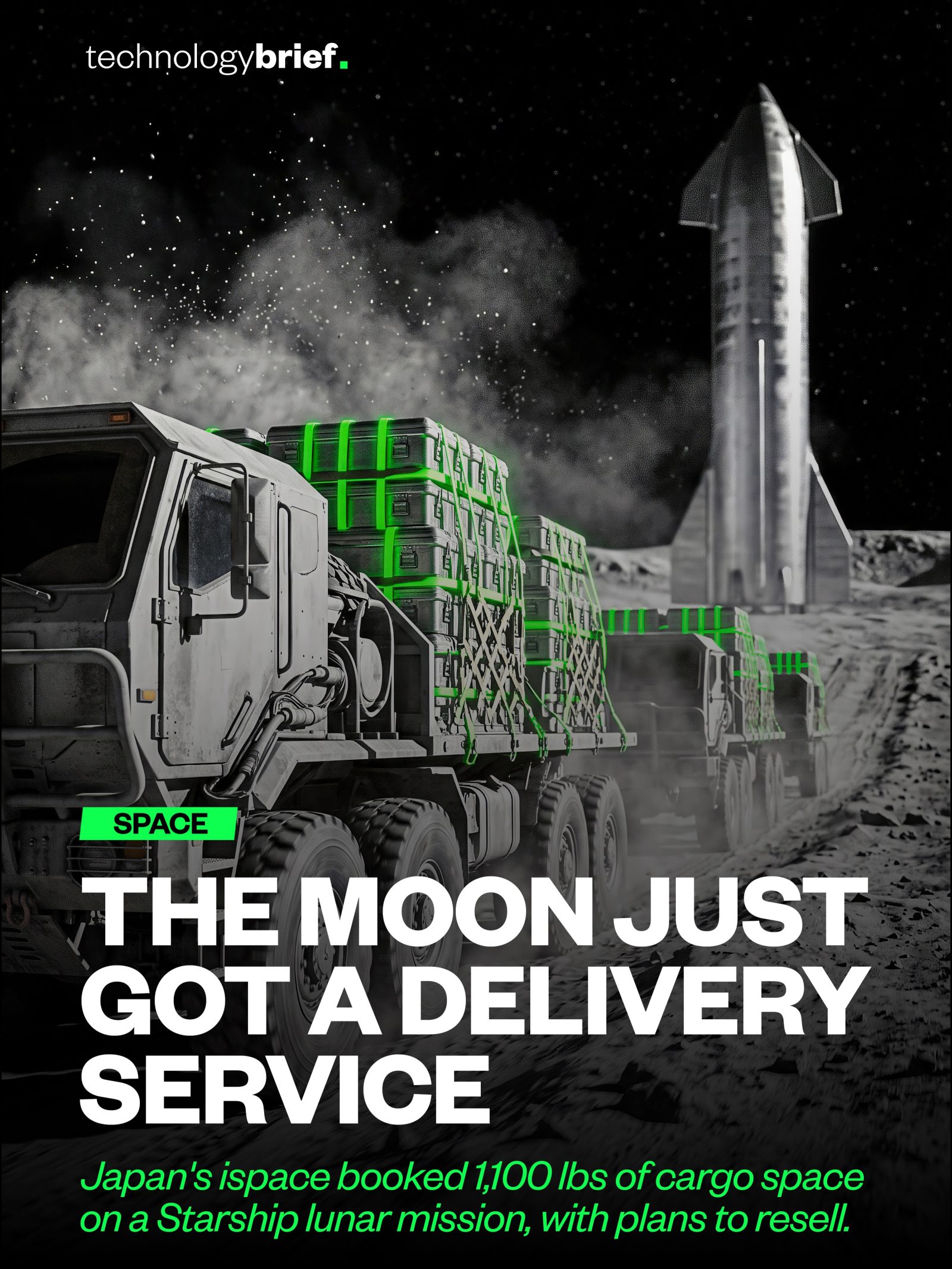
Lunar Cargo Services: Japan's iSpace and the Future of Space Logistics
Lunar cargo services are the next frontier in space logistics, with Japan's iSpace aiming to become a full-service provider. This ambitious venture involves more than just landing payloads on the moon; it encompasses the entire journey from planning and integration to post-delivery management. Let's explore the details and implications of this innovative approach.
Why This Matters
Space exploration and commercialization are rapidly evolving. As more companies and governments set their sights on the moon, the demand for efficient and reliable logistics solutions will only increase. iSpace's plans to offer comprehensive lunar cargo services could revolutionize how we approach lunar missions, making it easier and more cost-effective for a broader range of entities to participate.
The Logistics of Lunar Cargo Services
The iSpace and Starship Partnership
iSpace has secured a significant deal with SpaceX to utilize the Starship for lunar missions. This partnership allows iSpace to book cargo space on Starship flights, making it possible to transport large payloads to the lunar surface. The Starship, with its massive cargo capacity, is envisioned as a 'bus' that can carry multiple payloads from various customers, including governments, research labs, and private companies. iSpace will manage the integration of these payloads, ensuring they are securely packed and ready for launch.
Small Landers as Delivery Vehicles
Once the payloads reach lunar orbit, iSpace will use its own small landers to deliver the cargo to the surface. These landers act as 'taxis,' transporting the payloads from the Starship to their final destinations. This dual-system approach—using a large transporter (Starship) and smaller delivery vehicles (landers)—offers flexibility and efficiency, allowing for precise and targeted deliveries.
Targeting the Lunar South Pole
The primary target for these lunar delivery services is the lunar south pole, a region of particular interest due to its potential water resources and strategic importance for future exploration. NASA plans to establish a moon base in this area, and iSpace's missions are timed to align with this goal, launching no earlier than 2030. By being one of the first to move cargo to this critical location, iSpace aims to secure a competitive advantage and establish itself as a leader in lunar logistics.
Practical Tips for Future Lunar Missions
Planning and Integration
For organizations planning to send payloads to the moon, working with a full-service provider like iSpace offers several advantages. iSpace can help with mission planning, ensuring that payloads are designed and integrated correctly for the trip. This includes considering factors like weight, size, and environmental conditions, all of which are crucial for a successful lunar mission.
Bundling for Cost Efficiency
Smaller payloads that may not justify a dedicated mission can benefit from iSpace's bundling approach. By combining multiple payloads into a single flight, customers can share the costs and logistics, making lunar missions more affordable and accessible. This is particularly beneficial for research institutions and startups with limited budgets.
Post-Delivery Management
iSpace's services extend beyond delivery, offering post-mission support for equipment and payloads. This ensures that once the cargo reaches the lunar surface, it is properly managed and maintained, maximizing its usefulness and longevity. This end-to-end service can be invaluable for missions that require long-term operations or continuous monitoring.
Important Takeaways
The Shift Towards Comprehensive Logistics
Japan's iSpace is making a significant shift from being a simple lander operator to a full-service lunar logistics provider. This transition reflects the growing complexity and demands of lunar missions, as well as the need for more integrated and efficient supply chain solutions. By taking on a more comprehensive role, iSpace can offer greater value to its customers and establish a stronger foothold in the space industry.
The Role of Starship
The Starship, with its massive cargo capacity, is a key player in this new logistics model. Its ability to transport large volumes of cargo and multiple payloads makes it an ideal platform for delivering a wide range of goods and equipment to the moon. The partnership between iSpace and SpaceX highlights the potential for collaboration between private companies to achieve ambitious space goals.
Strategic Targeting
The lunar south pole is a strategic location for future exploration and resource utilization. By targeting this region, iSpace is positioning itself at the forefront of lunar commercialization, aligning its services with the broader goals of space agencies and private enterprises. This strategic choice not only enhances iSpace's competitive advantage but also contributes to the broader development of lunar infrastructure.
Conclusion
As the space industry continues to expand, the need for efficient and reliable lunar cargo services will become increasingly important. Japan's iSpace is setting a new standard in lunar logistics by offering comprehensive, end-to-end solutions that address every aspect of the mission, from planning and integration to post-delivery management. With its innovative use of Starship and strategic targeting of the lunar south pole, iSpace is poised to lead the way in lunar logistics, making space exploration more accessible and cost-effective for a wide range of customers.
Questions readers ask
What makes iSpace's lunar cargo delivery services unique?
iSpace distinguishes itself by offering full-service cargo delivery to the Moon, which includes mission planning, payload integration, lunar surface delivery, and post-delivery management. This comprehensive approach sets it apart from other lunar logistics companies, ensuring a seamless experience for clients throughout the entire mission lifecycle.
How does iSpace plan to transport large payloads to the Moon?
iSpace has partnered with SpaceX to utilize the Starship for transporting large payloads to the Moon. Starship's substantial cargo capacity enables efficient and cost-effective lunar payload transportation, accommodating a variety of clients, including governments and private companies.
What are the benefits of using iSpace's lunar cargo services for moon missions?
iSpace's services can enhance lunar mission accessibility and cost-effectiveness. By streamlining the process from mission planning to post-delivery management, iSpace makes it easier and more affordable for clients to execute moon missions, ultimately increasing the feasibility of lunar exploration and commercialization.
What types of clients can benefit from iSpace's lunar cargo services?
iSpace caters to a diverse range of clients, including governments seeking to expand their space programs, private companies aiming to leverage lunar resources, and research institutions pursuing scientific discoveries. The versatility of iSpace's services makes it an attractive option for any entity with lunar mission goals.
What is the significance of iSpace's lunar cargo services for the future of space logistics?
As the demand for lunar mission services increases, iSpace's innovative approach to cargo delivery could revolutionize space logistics. By providing comprehensive, reliable, and cost-effective solutions, iSpace is poised to play a crucial role in the future of lunar exploration and commercialization, particularly as more entities set their sights on the Moon in the coming decades.
What is the timeline for iSpace's lunar cargo delivery services?
iSpace is actively planning for future launches, aiming to be a significant player in the lunar logistics landscape by 2030. The company's strategic partnerships and innovative approach position it well to meet the growing demand for space cargo delivery services in the upcoming years.
Related deep dives
Similar reads based on topic and creator.




Recent articles
Fresh deep dives from the latest Reels we unpacked.




Comments
Be the first to comment.