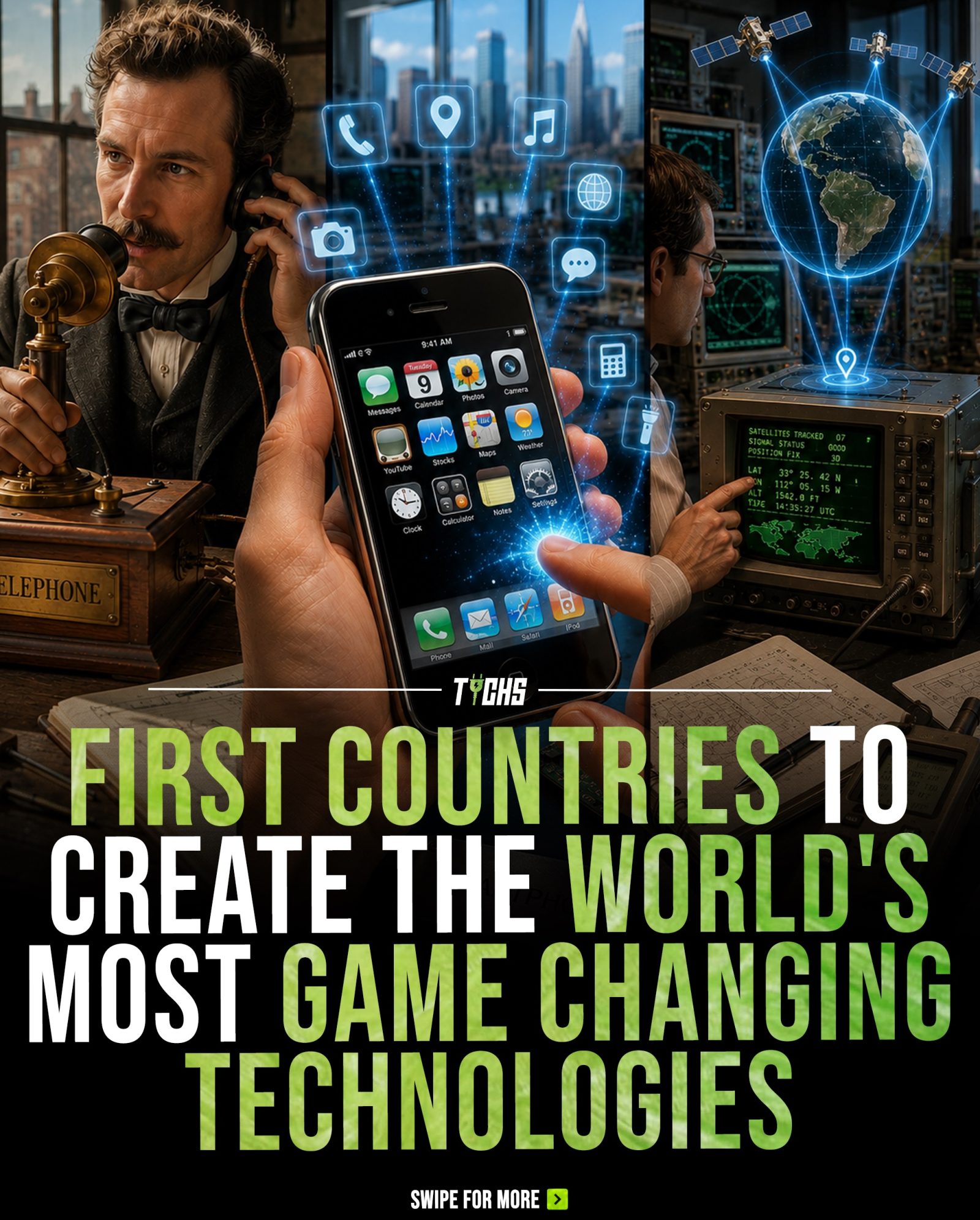
Game-Changing Technologies: From the ATM to the Smartphone
The technologies we rely on daily—from the ATM and touchscreen to the World Wide Web, GPS, QR codes, Bluetooth, and the smartphone—were first developed decades ago. Many of these innovations originated in countries that continue to drive global innovation. Each invention addressed a significant challenge and transformed how people communicate, travel, work, and access information. Their impact continues to influence billions of lives worldwide.
Why This Matters
Innovation is rarely the result of a single breakthrough. It is built on years of research, engineering, and collaboration. Each invention lays the foundation for the technologies we use today. Understanding the origins and evolution of these technologies provides insights into how future innovations might emerge and shape our world.
The Birth of the World Wide Web
The World Wide Web, developed in Switzerland, is one of the most transformative technologies of the modern era. It was envisioned as a wide-area hypermedia information retrieval initiative. The goal was to provide universal access to a vast universe of documents. Tim Berners-Lee, a British computer scientist, proposed this idea in 1989. The Web's development involved early computer technology, which allowed for the creation of a global network that could connect users to an unprecedented amount of information. The Web's impact is immeasurable, transforming how we access, share, and disseminate information.
Switzerland, the birthplace of the World Wide Web, has a rich history of technological innovation. Since its inception, the Web has evolved from a niche tool for researchers to a ubiquitous platform that underpins modern communication and commerce. This evolution underscores the importance of continuous development and the cumulative nature of technological progress.
The Evolution of Bluetooth Technology
Bluetooth technology, originating from Sweden, has revolutionized how devices communicate wirelessly. Named after the 10th-century Viking king Harald Bluetooth, this technology enables short-range data exchange between devices. Ericsson, a Swedish telecommunications company, played a pivotal role in developing Bluetooth.
Bluetooth's functionality extends beyond simple data transfer. It allows for seamless connectivity between devices such as smartphones, laptops, and peripherals. A key advantage of Bluetooth is its low power consumption, making it ideal for portable devices. This technology has evolved to support high-speed data transfer and enhanced security, ensuring reliable and secure connections.
The Smartphone Revolution
The smartphone, exemplified by devices like the iPhone, has become an essential tool in our daily lives. It combines the functionalities of a phone, camera, GPS, and internet access into a single device. The iPhone, in particular, has set new standards for design and user experience, making technology more accessible and intuitive.
Smartphones have transformed various aspects of our lives, from how we communicate to how we work and access information. They have become indispensable in both personal and professional settings, driving innovation in sectors such as healthcare, education, and entertainment.
The Impact of Touchscreens and Global Positioning Systems (GPS)
Touchscreens and GPS systems have fundamentally changed how we interact with technology and navigate the world. Touchscreens allow for intuitive, direct interaction with devices, making them user-friendly and accessible. They have become ubiquitous in smartphones, tablets, and other electronic devices, enabling seamless interactions.
GPS systems, originally developed for military use, have found widespread application in civilian life. They provide accurate location data, enabling navigation, location-based services, and real-time tracking. GPS technology has revolutionized travel, logistics, and emergency services, making our world more connected and efficient.
Practical Tips
When exploring the origins and impact of game-changing technologies, it's useful to consider the following tips:
- Research the Origins: Understanding the historical context and the pioneering efforts behind these technologies provides a deeper appreciation for their significance.
- Explore Applications: Look at how these technologies have been applied in various fields and how they continue to evolve.
- Follow Innovators: Stay updated on the latest developments by following key players and innovators in the technology sector.
- Engage with Technology: Experiencing these technologies firsthand can provide valuable insights into their capabilities and future potential.
Important Takeaways
The journey of game-changing technologies from their inception to their current forms highlights several key takeaways:
- Collaboration and Research: Innovation is often the result of collaborative efforts and extensive research.
- Global Influence: Many groundbreaking technologies originated in countries known for their innovation, influencing global development.
- Continuous Evolution: Technologies evolve over time, driven by ongoing research and development.
- Impact on Daily Life: These innovations have transformed how we live, work, and communicate, making our world more connected and efficient.
Conclusion
The evolution of technologies from the ATM to the smartphone showcases the profound impact of innovation on our world. Each invention, built on years of research and collaboration, has laid the foundation for the technologies we rely on today. Technologies like the World Wide Web, Bluetooth, and GPS have transformed how we communicate, travel, and access information, influencing billions of lives worldwide. Understanding the origins and evolution of these technologies provides valuable insights into how future innovations might shape our world.
Questions readers ask
When and where was the first ATM invented?
The first ATM was invented in the 1960s by John Shepherd-Barron in the United Kingdom. This invention revolutionised banking by providing round-the-clock access to cash, setting the stage for further advancements in financial technology today.
Who developed the first smartphone and when was it launched?
The first smartphone, the Simon Personal Communicator, was developed by IBM and launched by BellSouth in 1992. It combined a mobile phone with features like a calendar, address book, and games, paving the way for the smartphones we use today.
What are the origins of the World Wide Web?
The World Wide Web was invented by Tim Berners-Lee in 1989 at CERN in Switzerland. It was designed to facilitate information sharing among researchers and has since evolved into the foundation of the internet, influencing how we access and share information globally.
How have innovations from the 80s and 90s influenced modern technology?
Innovations from the 80s and 90s, such as the ATM, smartphone, and World Wide Web introduced groundbreaking concepts that remain relevant. These inventions laid the groundwork for modern conveniences, transforming communication, work, and information access.
What role do countries with rich innovation histories play in modern technology?
Countries with rich innovation histories, such as the UK, US, Germany, and Switzerland, have been pivotal in developing foundational technologies. Their continued investment in research and development drives global innovation, shaping technologies that influence billions of lives today.
What significant challenges did early technologies like the ATM and smartphone aim to solve?
Early technologies like the ATM and smartphone aimed to solve significant challenges such as limited access to cash outside banking hours and the need for integrated communication and computing devices. These innovations transformed how people handle financial transactions and communicate, enhancing efficiency and convenience in daily life.
How might understanding the history of these technologies influence future innovations?
Understanding the history of technologies like the ATM and smartphone reveals patterns of development and the importance of collaboration. This knowledge can guide future innovations, helping innovators build on existing technologies to address current and emerging challenges, continuing to shape our world.
Related deep dives
Similar reads based on topic and creator.




Recent articles
Fresh deep dives from the latest Reels we unpacked.




Comments
Be the first to comment.