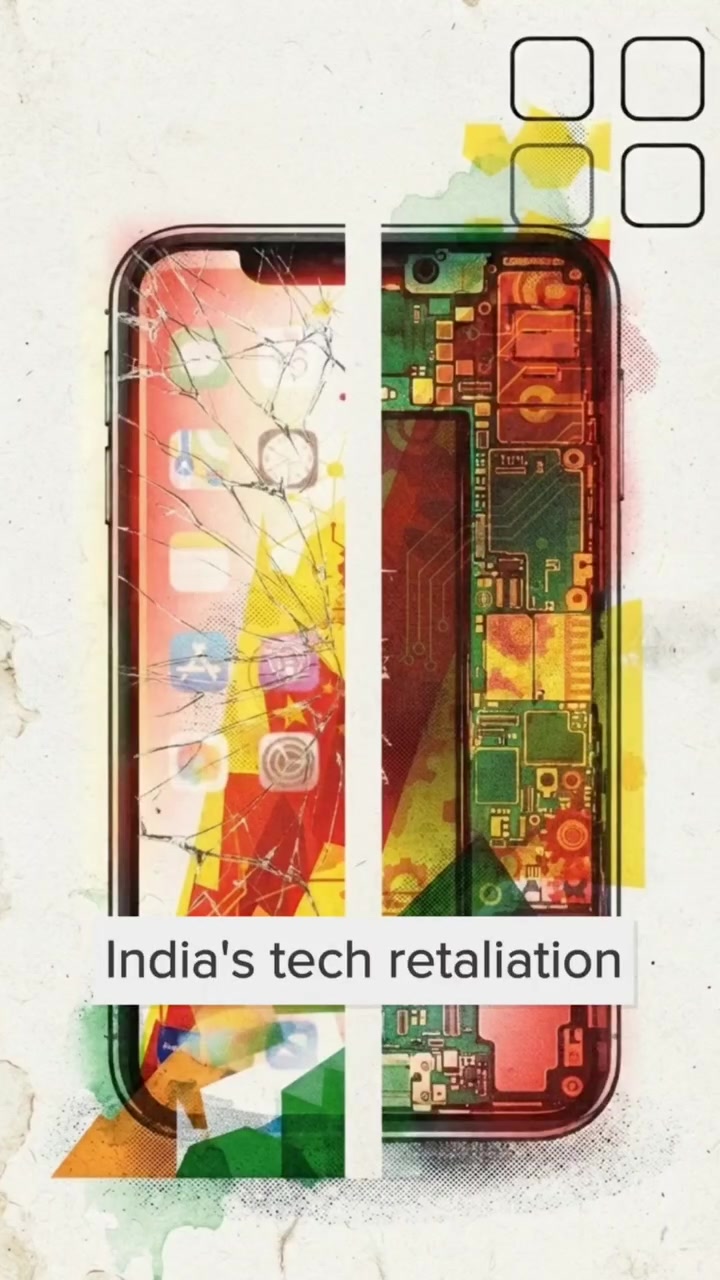
The 2020 app ban targeted Chinese apps. It did not disrupt the market dominance of Chinese smartphone hardware. That's the surprising backdrop. In 2020 Indian telecom market saw what brands wanted and where the consumers' money went. Indian government banned 300+ Chinese apps over national security and data concerns. But a hardware ban could collapse the Indian telecom market, spike consumer prices, and destroy thousands of local livelihoods. The Indian government has instead moved to use "invisible regulatory levers" to close import loopholes and squeeze Chinese hardware companies slowly, without causing an economic shock. The government blocked foreign direct investments and squeezed Chinese hardware companies slowly "without causing an economic shock."
Hard Truths About Smartphones and Security
In 2020, Indian consumers smartly reached for smartphones. But it was easier to remove an app than replace the hardware. At the heart of the paradox, software can be replaced, but hardware is an inescapable economic trap. After all that, the Indian government, at first, banned 300+ Chinese apps over national security and data concerns. But a hardware ban could collapse the Indian telecom market, spike consumer prices, and destroy thousands of local livelihoods. The Indian government targeted apps rather than hardware.
The 2013–2020 market shift
That retail market shift was massive, if subtle to the consumer. At first, domestic brands and Samsung dominated the market in 2013. Chinese brands, however, dominated the market in 2020. By 2017, Chinese brands skyrocketed past 50% market share, virtually collapsing the domestic Indian alternatives. By the time the 2020 border clash triggered the app bans, Chinese smartphone hardware was approaching a staggering 70% dominance.
China's Market Rise and Fall
In 2013, Chinese brands commanded a practically zero percent market share. But in 2020, Chinese brands surpassed 50% market share. Samsung dominated the landscape in 2013. Chinese brands crushed those odds, then Samsung and local Indian brands. Samsung and local Indian brands dominated the landscape in 2013. In 2020, Chinese brands held 70% of the market, while Indian brands held 33%.
The domino effect
The Indian market for smartphones was as large as it was complicated. The executive's concern was more than consumer data. By the time the 2020 border clash triggered the app bans, Chinese hardware was approaching a staggering 70% dominance. That could disable the entire market. The Indian government blocked foreign direct investments and squeezed Chinese hardware companies slowly "without causing an economic shock." Without viable alternatives, a sudden hardware ban would instantly collapse the Indian telecom market. It would spike consumer prices and destroy the livelihoods of thousands of local workers.
The new hardware paradox
This regulatory dialogue was about more than just economic viability. At the same time, the hardware market kept rising. In 2020, Indian brands increased their market share to 33%. Samsung and local Indian brands dominated the landscape in 2013, when Chinese brands held a dominant 72.8% of the Indian smartphone market. The hardware remained in the hands of "Chinese hardware companies." It kept rising while Samsung held the market share in 2013. The three-step shift was simple; Samsung and local Indian brands dominated the landscape in 2013, when Chinese brands held a dominant 72.8% of the Indian smartphone market. In 2020, Chinese brands held a 70% market share, while Indian brands increased their market share to 33%.
The Indians' Options
If you want to buy a new phone while avoiding the Chinese brands
- Turn to Indian brands that are reclaiming market share — local Indian brands saw their share grow 6.2% from 2013 to 2020.
- Consider Samsung — the Korean tech giant has been the only significant non-Chinese brand consistently holding Indian market share.
Buyer Beware: The Market Delay
The Indian market still has a significant portion of Chinese hardware. Chinese smartphone brands still dominate nearly 70% of India's market. Chinese hardware companies are, without competition, producing more hardware at the same time. The 2020 app ban targeted Chinese apps. It did not disrupt the market dominance of Chinese smartphone hardware. India still has virtually no alternative supply chains or manufacturing ecosystems. But to block Chinese imports is to collapse the Indian economy — and the Indian markets are complicated. For this reason, the Indian government isn't going to shut down Chinese smartphones directly.
Questions readers ask
Why didn't the 2020 app ban affect Chinese smartphone hardware sales in India?
The 2020 app ban targeted Chinese apps specifically, not the hardware. The Indian government was cautious about banning hardware because it could lead to market collapse, price spikes, and job losses. Instead, they opted for regulatory measures to gradually reduce dependence on Chinese hardware.
How did Chinese smartphone brands gain such a strong foothold in the Indian market?
Chinese brands entered the Indian market with aggressive pricing and competitive features, quickly gaining market share. By 2017, they had surpassed 50% market share, and by 2020, they held around 70% of the market. This dominance was a result of strong consumer demand and the inability of domestic brands to compete effectively.
What are 'invisible regulatory levers' and how are they being used against Chinese hardware companies?
Invisible regulatory levers refer to indirect measures taken by the Indian government to close import loopholes and squeeze Chinese hardware companies. These measures include blocking foreign direct investments and gradually implementing regulations to reduce dependence on Chinese hardware without causing an economic shock.
What would happen if India suddenly banned Chinese smartphone hardware?
A sudden ban on Chinese smartphone hardware could collapse the Indian telecom market, leading to a spike in consumer prices and the loss of thousands of local jobs. The market is heavily dependent on Chinese hardware, and a sudden ban would have severe economic repercussions.
How did the 2020 border clash influence the Indian government's approach to Chinese apps and hardware?
The 2020 border clash triggered the app bans. However, the Indian government recognized the economic implications of banning hardware. They chose to focus on apps for national security reasons while gradually implementing measures to reduce dependence on Chinese hardware to avoid market disruption.
Related deep dives
Similar reads based on topic and creator.




Recent articles
Fresh deep dives from the latest Reels we unpacked.



Comments
Be the first to comment.