Vibe Coding: The AI Revolution in Software Development
Vibe coding, a term coined by Andrej Karpathy in February 2025, has fundamentally changed the landscape of software development. This practice allows anyone to prompt an AI to build a working app without any programming knowledge, making it a powerful tool for both startups and casual users. By 2025, the impact of vibe coding was already evident, with 25% of startups in Y Combinator’s Winter 2025 batch having codebases that were 95% AI-generated.
Why This Matters
The rise of vibe coding has democratized software development, lowering the barrier to entry for creating functional applications. This shift has significant implications for the tech industry, as well as for the broader public. However, it also presents new challenges, particularly related to code quality and security.
Main Discussion
The Rise of AI-Generated Code
The term "vibe coding" quickly gained traction, even being named Word of the Year by Collins Dictionary. By 2026, 92% of US developers were using AI coding tools, highlighting the widespread adoption of this technology. The ability to generate code with minimal effort has enabled a new wave of innovation, but it has also brought about new challenges.
Code Quality and Security Concerns
While vibe coding has accelerated the development process, the quality of AI-generated code varies widely. On average, AI-generated code produces roughly 1.7 times more major bugs than human-written code. Additionally, 45% of AI-generated code samples fail basic security checks. These issues are a significant concern, especially for applications that handle sensitive user data. A scan of 1,645 apps built on a single vibe coding platform found 170 with critical flaws that exposed real user data. This underscores the need for rigorous testing and validation of AI-generated code.
Practical Applications of Vibe Coding
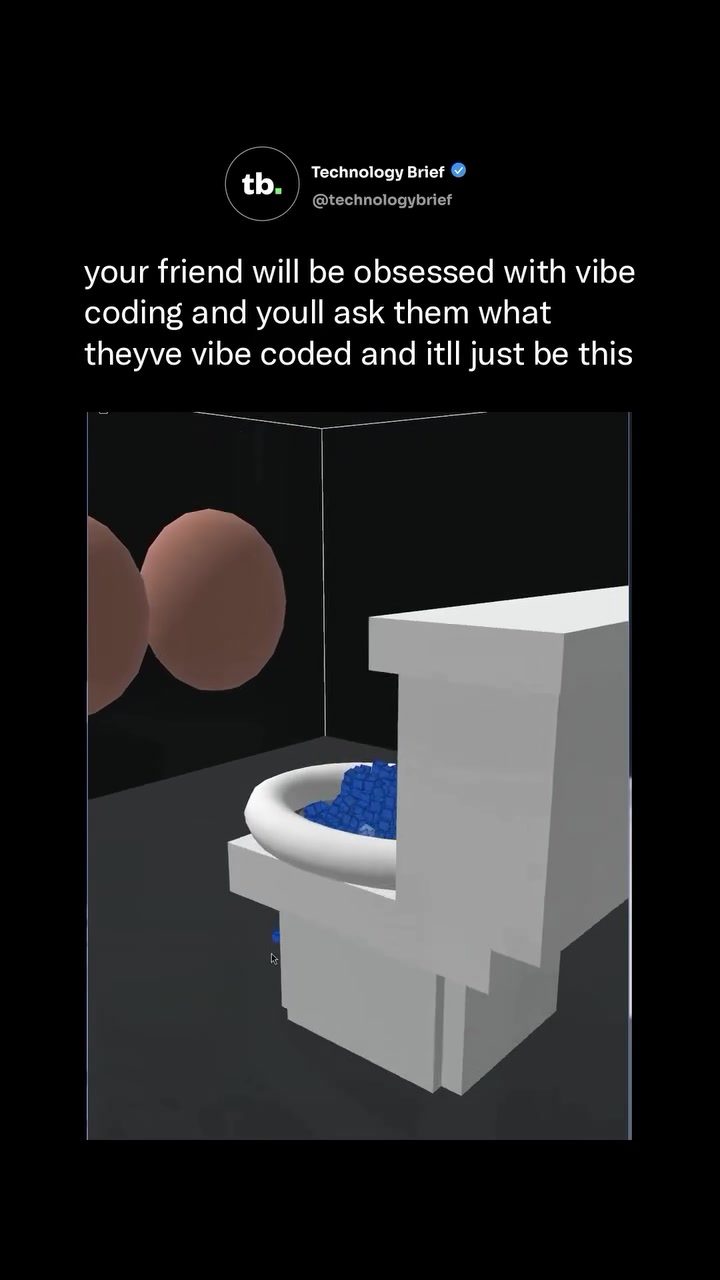
Vibe coding is not limited to serious projects; it has also found its way into more whimsical applications. When the barrier to building drops to zero, people find creative and humorous ways to use the technology. This includes simulating everyday scenarios, such as a toilet overflowing at 144 frames per second. These playful applications highlight the versatility of vibe coding and its potential for both serious and casual use.
The Humorous Side of AI-Generated Code
The creative use of vibe coding can be seen in the 3D animation of a toilet spilling out brown objects. This example illustrates the playful side of what happens when you can create complex visual effects without deep programming knowledge. As the technology continues to evolve, we can expect to see even more innovative and entertaining applications of AI-generated code.
Practical Tips
Maximizing the Benefits of Vibe Coding
To make the most of vibe coding, it's essential to understand its strengths and limitations. Here are some practical tips for effectively using AI-generated code:
- Thorough Testing: Always conduct thorough testing of AI-generated code to identify and fix bugs. Automated testing tools can be particularly useful in this context.
- Security Audits: Regularly perform security audits to ensure that the code is free of vulnerabilities. This is especially important for applications that handle sensitive data.
- Validation and Verification: Validate and verify the generated code to ensure it meets the required specifications and standards. This can help catch issues that automated tools might miss.
- Human Oversight: Use AI-generated code as a starting point, but always have a human developer review and refine it. This ensures that the final product is reliable and secure.
- Continuous Learning: Stay updated with the latest developments in AI coding tools and best practices. This will help you leverage the technology more effectively.
Important Takeaways
Vibe coding represents a significant shift in software development, making it accessible to a broader audience. While it offers numerous benefits, it also presents challenges related to code quality and security. By understanding these aspects, developers and users can make the most of this powerful technology while mitigating its risks.
Conclusion
The advent of vibe coding has revolutionized the way we approach software development. It has empowered individuals to create complex applications with minimal technical knowledge, fostering a new wave of innovation and creativity. However, it is crucial to address the challenges associated with AI-generated code, such as increased bug rates and security vulnerabilities.
By adopting best practices and maintaining a balance between automated and human-driven development, we can harness the full potential of vibe coding. Whether you're a seasoned developer or a casual user, vibe coding offers a world of possibilities, from serious applications to playful experiments. Embrace this technology and explore its vast potential, but always do so with a critical eye and a commitment to quality and security.
Questions readers ask
What is vibe coding and how does it differ from traditional coding?
Vibe coding is a modern approach to software development that utilizes AI to generate functional applications based on user prompts. Unlike traditional coding, which requires extensive programming knowledge, vibe coding allows users to create software with minimal technical expertise, significantly lowering the barrier to entry.
How has vibe coding influenced the startup ecosystem, particularly in 2025?
By 2025, vibe coding had a notable impact on the startup ecosystem, with 25% of startups in Y Combinator’s Winter 2025 batch utilizing AI-generated code. It enabled rapid development and innovation, allowing startups to focus more on their ideas than on technical implementation.
What are the main challenges associated with vibe coding?
While vibe coding democratizes software development, it also presents challenges related to code quality and security. AI-generated code may not always be optimized or secure, requiring additional scrutiny and potential manual intervention to ensure reliability and safety.
Can vibe coding completely replace traditional coding practices?
Vibe coding is a powerful tool, but it's unlikely to completely replace traditional coding. It excels in scenarios where rapid prototyping and minimal technical expertise are needed, yet traditional coding remains essential for complex, high-performance, and highly secure applications.
How does vibe coding compare to other no-code and low-code platforms?
Vibe coding differs from traditional no-code and low-code platforms by leveraging AI to interpret user inputs and generate code automatically. This makes it more accessible to those with no programming experience, while also potentially producing more sophisticated and functional applications.
What steps can be taken to mitigate code quality issues in AI-generated code?
To address code quality issues, AI-generated code should be reviewed and tested thoroughly. Integrating automated testing and code review tools can help identify and rectify potential problems. Additionally, combining AI-generated code with traditional coding practices ensures a balance between innovation and reliability.
What are the security implications of using vibe coding in software development?
AI-generated code can introduce security vulnerabilities if not properly vetted. Best practices include rigorous security testing, code audits, and possibly involving security experts to ensure that the applications are safe from common threats. Regular updates and patches are also crucial to maintain security.
Related deep dives
Similar reads based on topic and creator.




Recent articles
Fresh deep dives from the latest Reels we unpacked.




Comments
Be the first to comment.