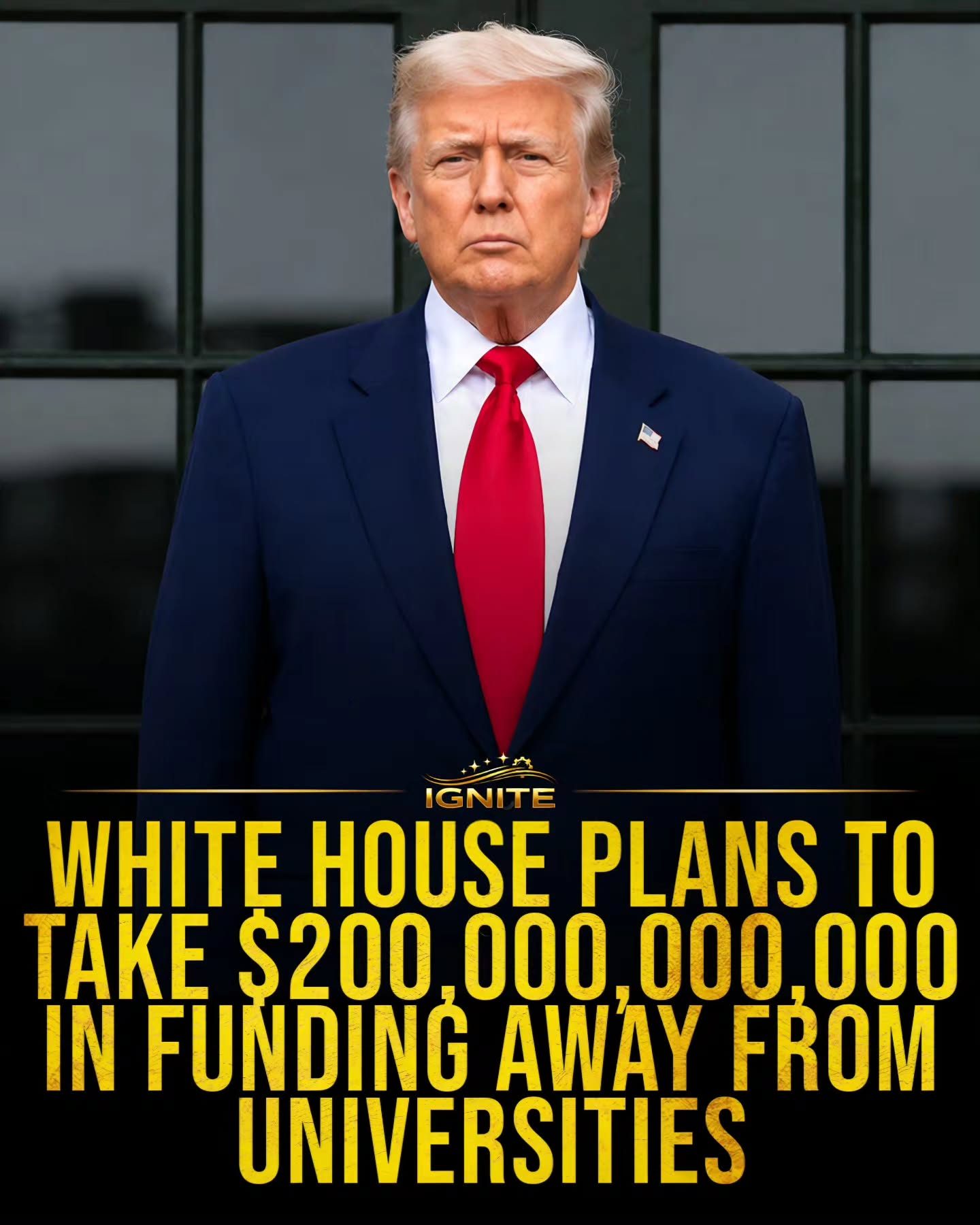
Political Advertisement: Examining the Claim on University Funding
A recent political advertisement from IGNITE has sparked attention with a bold claim about university funding. This advertisement, featuring a portrait of Donald Trump, asserts that the White House plans to redirect $200 billion in funding away from universities. Here, we'll break down the context and implications of this claim.
Why This Matters
Political advertising often distills complex issues into concise, impactful messages. This particular ad goes directly to a contentious issue: federal funding for higher education. Understanding the specific claim and its potential impact on the education sector is crucial for stakeholders—from students and faculty to policymakers and taxpayers.
The Claim in Detail
The Ad's Message
The advertisement is straightforward. It features Donald Trump's portrait accompanied by a statement: "WHITE HOUSE PLANS TO TAKE $200,000,000,000 IN FUNDING AWAY FROM UNIVERSITIES." This message is designed to evoke strong reactions, especially among those who rely on or support federal funding for higher education.
Breaking Down the Numbers
The figure of $200 billion is substantial. To put it in perspective, current federal funding for higher education encompasses various programs, including Pell Grants, research grants, and institutional aid. Reducing such a large sum would have sweeping effects on universities, programs, and the students who depend on this funding. It's essential to consider the broader context of federal education spending and how this claim aligns with current budget proposals or policy discussions.
The Role of Political Advertising
Impact and Intention
Political advertisements often aim to sway public opinion by presenting stark claims. This ad's intention is likely to galvanize opposition to the Trump's administration policies, whether these policies are real or imagined. By focusing on such a significant sum, the advertisement aims to hit a nerve with voters who are concerned about the future of higher education.
Fact-Checking the Claim
It's crucial to verify the accuracy of the claim. At the time of writing, there's no publicized evidence from the White House of a plan to reduce university funding by $200 billion. Political rhetoric can sometimes exaggerate or misrepresent facts, making it necessary to seek out official statements, budget proposals, or legislative actions that substantiate this claim.
Practical Tips for Evaluating Political Advertisements
When encountering political advertisements, especially those making bold claims, consider the following steps to evaluate their accuracy:
- Check the Source: Determine who is behind the advertisement. In this case, the IGNITE logo indicates the source, but it's still essential to understand their agenda.
- Look for Official Statements: Search for official documents, press releases, or legislative proposals from the government or relevant officials. These sources can provide concrete information.
- Fact-Checking Websites: Utilize reliable fact-checking websites to see if the claim has been verified or debunked.
- Cross-Reference with Other Sources: Look for reports from reputable news outlets, academic studies, or think tanks that can provide additional context.
Example: Cross-Referencing the Claim
In the case of the IGNITE ad, cross-referencing involves seeking official budget proposals or statements from the White House or relevant government agencies to confirm or deny the claim of a $200 billion reduction in university funding. Additionally, looking at recent news coverage or analyses from educational policy experts can provide valuable insights.
Important Takeaways
Understanding the implications of political advertising claims is essential for informed participation in public discourse. Key takeaways from this analysis include:
- Context Matters: Always consider the context and broader implications of a political claim. Funding for higher education affects millions of students and institutions.
- Verify Information: Never assume the accuracy of a political advertisement. Verifying claims with official sources and fact-checking websites is crucial.
- Engage Critically: Be wary of emotionally charged messaging. Critical engagement helps to separate fact from fiction.
Conclusion
Political advertisements, like the one from IGNITE, often present stark claims to attract attention and galvanize support. The claim that the White House plans to take $200 billion in funding away from universities is a significant one, with potentially far-reaching consequences. By critically evaluating such claims, verifying information, and seeking out reliable sources, individuals can navigate the complexities of political messaging more effectively. Understanding the implications of funding changes in higher education is essential for shaping public opinion and policy decisions.
Questions readers ask
What is the source of IGNITE's claim about the White House planning to cut $200 billion in university funding?
IGNITE's claim originates from a political advertisement. The advertisement features a portrait of Donald Trump and asserts that the White House intends to redirect $200 billion in funding away from universities. However, the specific details and evidence supporting this claim are not provided in the advertisement itself, leaving room for further examination and verification.
How might a $200 billion reduction in university funding impact students?
A reduction of this magnitude could have severe consequences for students. It could lead to increased tuition fees, reduced financial aid, and cuts to essential student services. Additionally, universities might need to scale back on course offerings, research programs, and faculty positions, indirectly affecting the quality of education.
What are the potential implications for faculty if the White House implements these funding cuts?
Faculty members could face significant challenges, including the possibility of reduced job security, decreased funding for research projects, and larger class sizes due to potential layoffs and hiring freezes. These changes could also impact faculty morale and their ability to provide high-quality instruction and support to students.
Which federal education programs could be most affected by the proposed funding cuts?
The proposed cuts could impact a wide range of federal programs, including Pell Grants, which provide financial aid to low-income students, and funding for research initiatives, such as those supported by the National Science Foundation (NSF) and the National Institutes of Health (NIH). Additionally, programs like TRIO and GEAR UP, which offer support services to first-generation and low-income students, could be at risk.
What steps can stakeholders take to stay informed about the potential impacts of these funding cuts?
Stakeholders, including students, faculty, and concerned citizens, should closely monitor updates from reputable news sources, government publications, and university administrators. Engaging with advocacy groups, attending public forums, and participating in policy discussions can also provide valuable insights and opportunities to voice concerns.
Related deep dives
Similar reads based on topic and creator.




Recent articles
Fresh deep dives from the latest Reels we unpacked.




Comments
Be the first to comment.