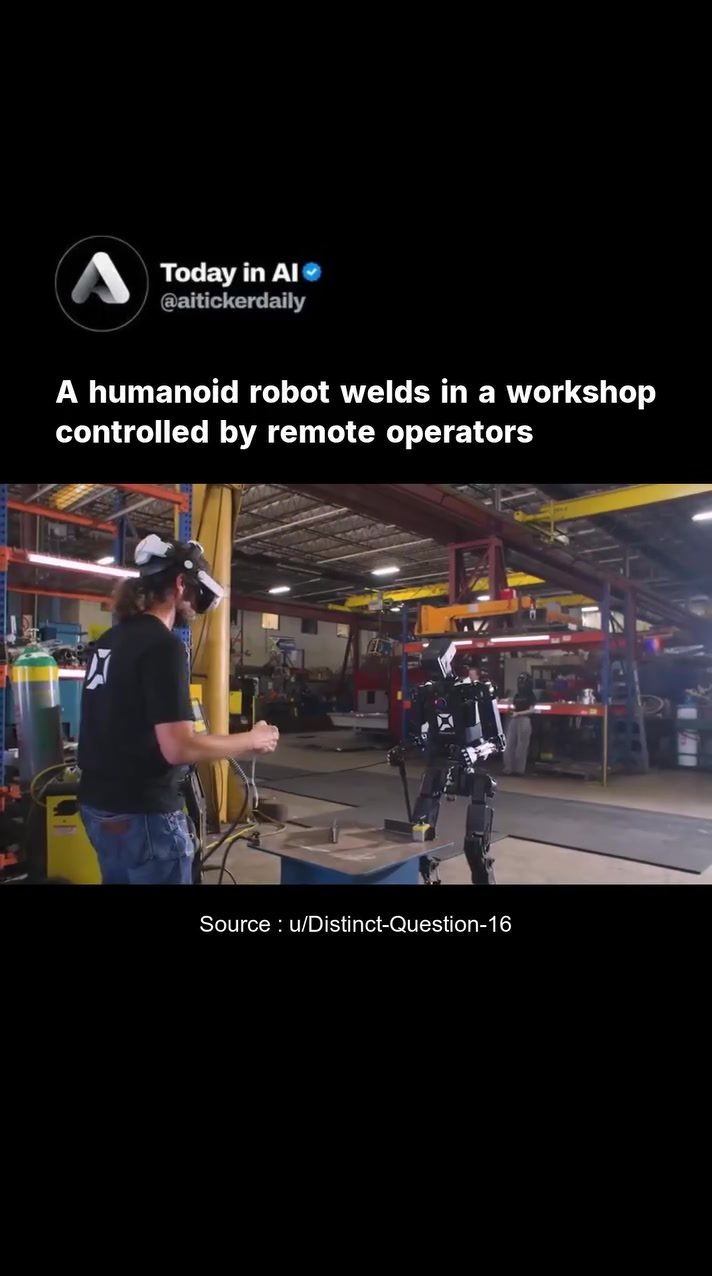
Humanoid Robots in Industrial Welding
Humanoid robots are quickly becoming vital in industrial applications, particularly in tasks like welding. These robots, controlled remotely, can handle the most hazardous and precision-critical jobs, leading the way to safer, more efficient workplaces.
Why This Matters
Industrial welding is traditionally a dangerous and challenging task for human workers. Yet, with advancements in robotics and AI, these tasks are now being handled by humanoid robots. Such applications provide a critical look into the future of industrial automation and safety. By enabling remote teleoperation, these robots reduce the risk of human injury and increase the precision and efficiency of welding tasks.
Demonstration of Humanoid Robots in Welding
The Role of Remote Teleoperation
The demo showcased how a humanoid robot can perform welding tasks in a workshop setting while being controlled remotely. This capability is particularly important in environments where human presence is hazardous. Remote teleoperation ensures that operators can guide the robot's movements with precision, even from a safe distance. This minimizes the risk of injuries and allows for a higher level of control over the welding process.
Use of AI and Robotics
The use of AI in industrial automation, as seen in the welding demo, highlights the potential of robotics in hazardous environments. AI-powered robots can perform complex tasks with greater accuracy and consistency than humans. This not only enhances the quality of the work but also ensures that it is done more efficiently. The AI-driven control systems enable real-time adjustments and corrections, making the welding process more reliable and less prone to errors.
Practical Implications
With the increasing demand for automation in industries, the use of humanoid robots in welding is a significant step forward. The ability to perform tasks remotely not only enhances safety but also increases efficiency. This technology can be deployed in various industries, from manufacturing to construction, where welding is a critical part of the process.
Practical Tips for Integrating Humanoid Robots in Welding
Choosing the Right Equipment
When integrating humanoid robots into a welding workflow, selecting the right robot and control systems is crucial. Ensure that the robot is equipped with the necessary sensors and control mechanisms to handle the specific welding tasks. The VR headset used in the demo is a good example of the advanced control systems available.
Training and Safety Protocols
Training operators to effectively use the robots is essential. Operators need to be familiar with the control systems and understand how to guide the robot through the welding process. Additionally, safety protocols must be established to prevent accidents and ensure the smooth operation of the robots.
Maintenance and Upgrades
Regular maintenance of the robots and their control systems is necessary to keep them in optimal working condition. This includes regular inspections, software updates, and repairs as needed. Upgrading the robots with the latest advancements in AI and robotics can also enhance their performance and efficiency.
Important Takeaways
The integration of humanoid robots in welding tasks is a significant advancement in industrial automation. By enabling remote teleoperation, these robots can handle hazardous tasks with greater precision and efficiency. They reduce the risk of human injury and improve the overall quality of the welding process. The use of AI and advanced control systems further enhances the capabilities of these robots, making them a valuable asset in various industries.
Conclusion
The future of welding in industrial settings is increasingly being shaped by the integration of humanoid robots. These robots, controlled remotely, can handle the most challenging and hazardous tasks with precision and efficiency. The demo of the Gen 1 humanoid robot by aitickerdailyPersona.AI highlights the potential of this technology in enhancing safety and productivity. As the field of robotics and AI continues to evolve, the role of humanoid robots in industrial applications is set to become even more prominent.
Questions readers ask
How do humanoid robots enhance welding safety in industrial settings?
Humanoid robots significantly improve welding safety by taking over high-risk tasks that were previously performed by human welders. By operating remotely, these robots minimize human exposure to hazardous conditions, such as extreme heat, fumes, and electrical hazards, thereby reducing the likelihood of injuries.
What kinds of tasks can a remote-controlled robot handle in welding?
Remote-controlled robots, particularly humanoid models, can handle a wide range of welding tasks, from precision welding that requires intricate movements to repetitive and high-risk tasks. They can operate in confined or dangerous spaces, ensuring both precision and efficiency.
How does AI integrate with humanoid robots in welding processes?
AI enhances the capabilities of humanoid robots in welding by enabling advanced automation and precision. AI algorithms can optimize welding paths, adjust parameters in real-time, and even predict and correct potential errors, ensuring high-quality welds and increased productivity.
Can humanoid robots be controlled from a distance?
Yes, humanoid robots designed for welding can be controlled remotely, often through teleoperation systems. This allows operators to guide the robots from a safe distance, reducing the need for human presence in hazardous environments while maintaining control over the welding process.
What are the benefits of using automated welding robots?
Automated welding robots offer numerous benefits, including increased precision, reduced human error, and higher productivity. They can work continuously without breaks, ensuring consistent weld quality and faster completion of tasks. Additionally, they minimize the risk of human injury, making the workplace safer.
How do advanced welding robots compare to traditional welding methods?
Advanced welding robots, particularly those controlled remotely and equipped with AI, offer significant advantages over traditional welding methods. They provide greater precision and consistency, higher productivity, and improved safety. Traditional methods, while still relevant, often involve higher risks and less efficiency.
What is the role of teleoperated welding in modern industries?
Teleoperated welding, where robots are controlled from a distance, is becoming increasingly important in modern industries. It allows for safer and more efficient welding operations, especially in environments that are hazardous or difficult for humans to access. By enabling remote control, it ensures that skilled operators can oversee the process without being exposed to risks.
Related deep dives
Similar reads based on topic and creator.




Recent articles
Fresh deep dives from the latest Reels we unpacked.




Comments
Be the first to comment.