Open-Source Voice AI
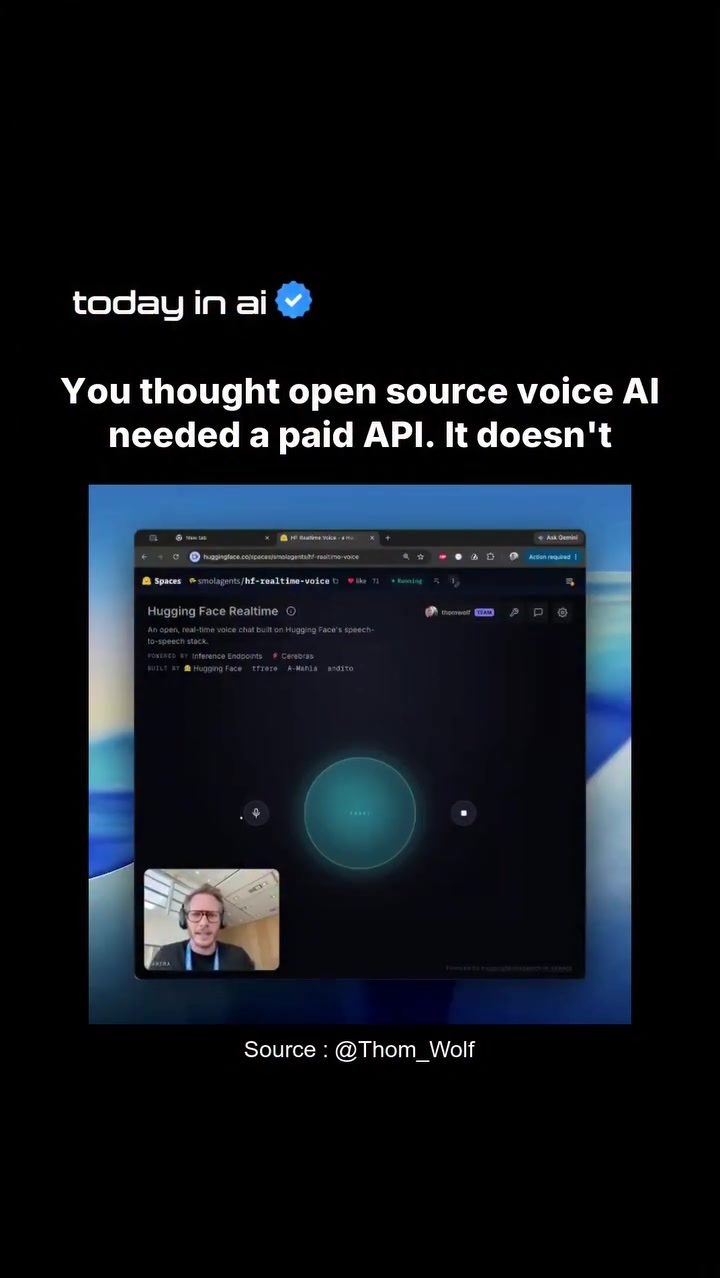
Open-source voice AI has traditionally lagged behind proprietary solutions, but recent developments have significantly narrowed that gap. Hugging Face, in collaboration with Cerebras, has developed a real-time speech-to-speech AI demo that operates entirely on open-source technology. This breakthrough eliminates the need for paid APIs, making advanced voice AI more accessible than ever.
Why This Matters
The shift towards open-source voice AI signifies a major leap in technological democratization. Previously, achieving real-time speech-to-speech capabilities required extensive resources and proprietary software. Now, with the models and code publicly available, developers and enthusiasts can explore and innovate without financial barriers.
Real-Time Voice Interactions
The demo showcases the AI’s ability to engage in real-time voice interactions. This is achieved through a combination of speech recognition, natural language processing, and text-to-speech synthesis. The system can understand and respond to queries instantaneously, making it useful for various applications, from customer service to personal assistants.
Conference Recognition
One of the demo’s impressive features is its ability to read and interpret conference badges. During the demonstration, the AI accurately identified the event as the AI Engineers' World Fair and even read out the full name from the badge. This level of visual and textual data processing highlights the AI’s versatility and potential.
Web Search Integration
Beyond simple voice recognition, the demo integrates web search capabilities. It can look up specific information, such as a speaker's schedule, and provide accurate results. This feature was demonstrated when the AI successfully found and relayed the keynote speaking slot time for the day.
Sports Updates
The AI’s capabilities extend to sports updates as well. When asked about a recent soccer match at Levy Stadium, the AI conducted a web search and provided details about the World Cup game between the USA and Bosnia and Herzegovina. It even offered real-time social media sentiments, showcasing its ability to monitor and analyze online reactions.
Practical Tips
To harness the power of this open-source voice AI, consider the following steps:
-
Explore the Codebase: The models and code are publicly accessible, allowing you to dive deep into the technology. Understanding the underlying mechanisms can help you tailor the AI to your specific needs.
-
Integrate with Existing Systems: If you have an existing application or service, consider integrating this voice AI to enhance user interactions. The real-time capabilities make it ideal for dynamic environments.
-
Experiment with Custom Models: The open-source nature of the project means you can experiment with different models and training data. This flexibility is invaluable for customizing the AI to fit unique use cases.
-
Leverage Community Support: Being part of the open-source community means you have access to a wealth of knowledge and support. Engage with the community to share insights, troubleshoot issues, and stay updated on the latest developments.
Important Takeaways
The demonstration by Hugging Face and Cerebras underscores several key points:
- Accessibility: Open-source voice AI is now accessible to a broader audience, eliminating the need for costly proprietary solutions.
- Real-Time Capabilities: The AI can engage in real-time voice interactions, making it useful for a wide range of applications.
- Integration Potential: The ability to integrate with web searches and analyze social media sentiments opens up numerous possibilities for enhanced user experiences.
- Community-Driven Innovation: The open-source model encourages collaboration and innovation, driving continuous improvement and adaptation.
Conclusion
The open-source voice AI demo by Hugging Face and Cerebras represents a significant milestone in the field of voice technology. By making advanced real-time speech-to-speech capabilities publicly available, they have democratized access to cutting-edge AI, paving the way for broader innovation and application. As the technology continues to evolve, its potential to transform various industries and enhance user experiences is undeniable.
Questions readers ask
What is the significance of Hugging Face's collaboration with Cerebras in the field of voice AI?
The partnership between Hugging Face and Cerebras has led to the creation of an open-source voice AI demo that supports real-time speech-to-speech interactions. This collaboration is notable because it makes advanced voice AI technology accessible to a wider audience by eliminating the need for paid APIs.
How does the Hugging Face voice demo differ from traditional voice AI solutions?
Unlike traditional voice AI solutions, the Hugging Face voice demo is entirely open-source, meaning its models and code are publicly available. This allows developers and enthusiasts to explore, modify, and build upon the technology without the financial constraints often associated with proprietary software.
What are some of the standout features of the Hugging Face real-time voice AI demo?
The demo showcases several impressive features, including conference badge recognition, web search integration, and real-time sports updates. These capabilities demonstrate the practical applications and versatility of open-source voice AI in various settings.
Can users interact with the voice AI demo in real-time?
Yes, one of the key features of the Hugging Face voice demo is its real-time speech-to-speech capability. This means users can engage in seamless, instant interactions with the AI, making it useful for live conversations, real-time data retrieval, and other time-sensitive applications.
How does the open-source nature of the Hugging Face voice demo benefit developers?
The open-source nature of the demo provides developers with the freedom to access, modify, and expand upon the technology without needing to pay for licensing or APIs. This encourages innovation, as developers can create new voice AI applications, tools, and integrations tailored to their specific needs.
What kind of hardware is required to run the Hugging Face voice demo?
The specifics about the hardware requirements are not detailed in the article. However, since it is an open-source project, users can typically find this information in the project documentation. It is likely designed to run on standard hardware to ensure accessibility.
How can users get started with the Hugging Face real-time voice AI demo?
Users can get started by accessing the open-source code and models provided by Hugging Face. The documentation accompanying the project will guide users through the setup process, allowing them to run the demo on their own systems and begin experimenting with the voice AI capabilities.
Related deep dives
Similar reads based on topic and creator.




Recent articles
Fresh deep dives from the latest Reels we unpacked.




Comments
Be the first to comment.