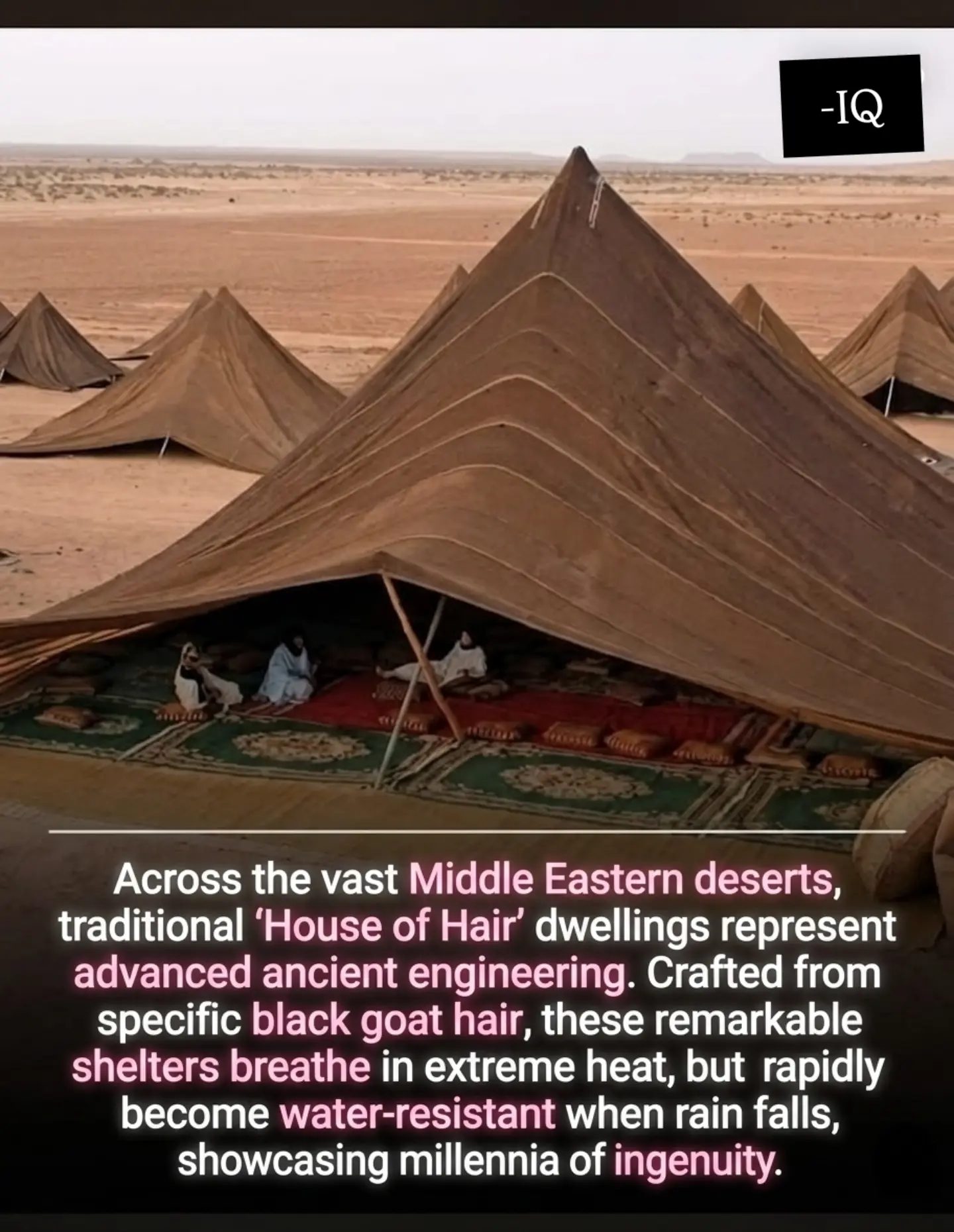
Traditional Middle Eastern Dwellings
Deep in the Middle Eastern deserts, the "House of Hair" (beit al-sha'ar) has been a lifeline for Bedouin nomads for millennia. These dwellings are not just shelters; they are marvels of ancient engineering, designed to withstand the harsh desert climate with remarkable efficiency. Here’s a deep dive into the ingenious design and functionality of these traditional structures.
Context / Why this matters
The "House of Hair" is more than just a tent; it represents thousands of years of adaptation and innovation. These dwellings are crafted from specific black goat hair, a material chosen for its unique properties that make it ideal for desert living. Understanding these structures offers insights into sustainable living and ancient engineering, showcasing how natural materials can be used to create efficient and resilient shelters.
Main discussion
The Construction and Materials
The "House of Hair" is hand-woven from dark goat hair, creating a thick canopy that blocks out the intense desert sun. This materials provides natural climate control, keeping the interior surprisingly cool even in extreme heat. The goat hair fibers are woven into a fabric with a loose weave that leaves microscopic gaps. These gaps allow scorching air and breezes to circulate freely, ensuring the interior remains cool even when the outside temperature soars above 120°F.
Waterproofing
One of the most remarkable features of the "House of Hair" is its ability to become waterproof during rare desert rains. When rain hits the goat hair fibers, they absorb the water and expand, closing the microscopic gaps in the fabric. This swelling action transforms the tent into a watertight shelter, preventing any water from leaking through. This natural waterproofing mechanism is a testament to the ingenuity of ancient engineers who designed these dwellings.
Sustainability
The "House of Hair" is built entirely without synthetic materials like zippers, plastic, or modern technology. This commitment to natural materials makes it a sustainable and eco-friendly choice. The use of goat hair, a renewable resource, aligns with modern sustainability goals, making these ancient dwellings relevant even today.
Practical tips
Choosing the Right Materials
When attempting to replicate the functionality of a "House of Hair," the choice of materials is crucial. While goat hair is ideal, other natural fibers with similar properties can be used. Look for materials that are breathable, can block sunlight, and can absorb water to create a similar waterproofing effect.
Design Considerations
Designing a structure inspired by the "House of Hair" requires attention to the weave and thickness of the fabric. The loose weave is essential for allowing air to circulate, while the thickness ensures that the shelter remains cool. Consider the climate of your location and adjust the design accordingly.
Maintenance
Maintaining a "House of Hair" involves ensuring the fabric remains in good condition. Regular cleaning and occasional treatments to enhance the waterproofing properties can extend the lifespan of the shelter. Keep an eye out for any signs of wear and tear, especially around the seams and where the fabric is most exposed to the elements.
Important takeaways
- The "House of Hair" is a remarkable example of ancient engineering, designed to withstand the harsh desert climate.
- The use of goat hair provides both cooling and waterproofing properties, making it an ideal material for desert dwellings.
- The natural materials and sustainable design of the "House of Hair" offer valuable insights into eco-friendly and resilient construction methods.
- Understanding and replicating the design and functionality of the "House of Hair" can provide practical solutions for modern sustainable living.
Conclusion
The "House of Hair" is a testament to the ingenuity and adaptability of ancient civilizations. Its unique design and natural materials make it a sustainable and efficient shelter for desert environments. By understanding and appreciating the engineering behind these traditional dwellings, we can gain valuable insights into sustainable living and resilient construction, making it a relevant and inspiring topic for modern times.
Questions readers ask
How does the 'House of Hair' use goat hair to cool the interior during extreme desert heat?
The black goat hair used in the construction of the 'House of Hair' absorbs heat during the day, preventing it from entering the interior. At night, the heat stored in the hair is gradually released, keeping the interior cooler than the outside environment.
What makes the 'House of Hair' an effective solution for desert dwelling?
The 'House of Hair' is effective for desert dwelling because it is designed to manage desert heat and provide a comfortable interior. The goat hair fabric reflects sunlight and absorbs heat, while the structure's design allows for airflow, ensuring the interior remains cool.
Are there specific techniques used in the design of the 'House of Hair' to manage rain and water in the desert?
The 'House of Hair' is designed to shed water efficiently, preventing it from entering the dwelling. The woven goat hair fabric allows water to run off, and the structure's conical shape helps to direct water away from the interior, keeping it dry and cool.
What are the key features of the 'House of Hair' that contribute to its cooling efficiency in extreme desert heat?
The 'House of Hair' uses a combination of materials and design features to cool the interior. These features include the black goat hair fabric, which absorbs and releases heat, and the structure's design, which allows for natural airflow and ventilation.
How does the 'House of Hair' compare to other traditional Middle Eastern dwellings in terms of cooling techniques?
The 'House of Hair' stands out among traditional Middle Eastern dwellings due to its use of goat hair, which provides unique cooling properties. While other dwellings may use thick walls or courtyards for shade, the 'House of Hair' relies on the insulating properties of its fabric to manage heat.
What role does the conical shape of the 'House of Hair' play in its cooling functionality?
The conical shape of the 'House of Hair' helps to create a cool interior by allowing hot air to rise and escape through the top, while cool air enters through the bottom. This natural ventilation process, combined with the insulating properties of the goat hair, keeps the interior surprisingly cool, even in extreme desert heat.
Related deep dives
Similar reads based on topic and creator.



Recent articles
Fresh deep dives from the latest Reels we unpacked.




Comments
Be the first to comment.