Muck-Spreading: The Strategic Role of Scent Marking in Hippopotamuses
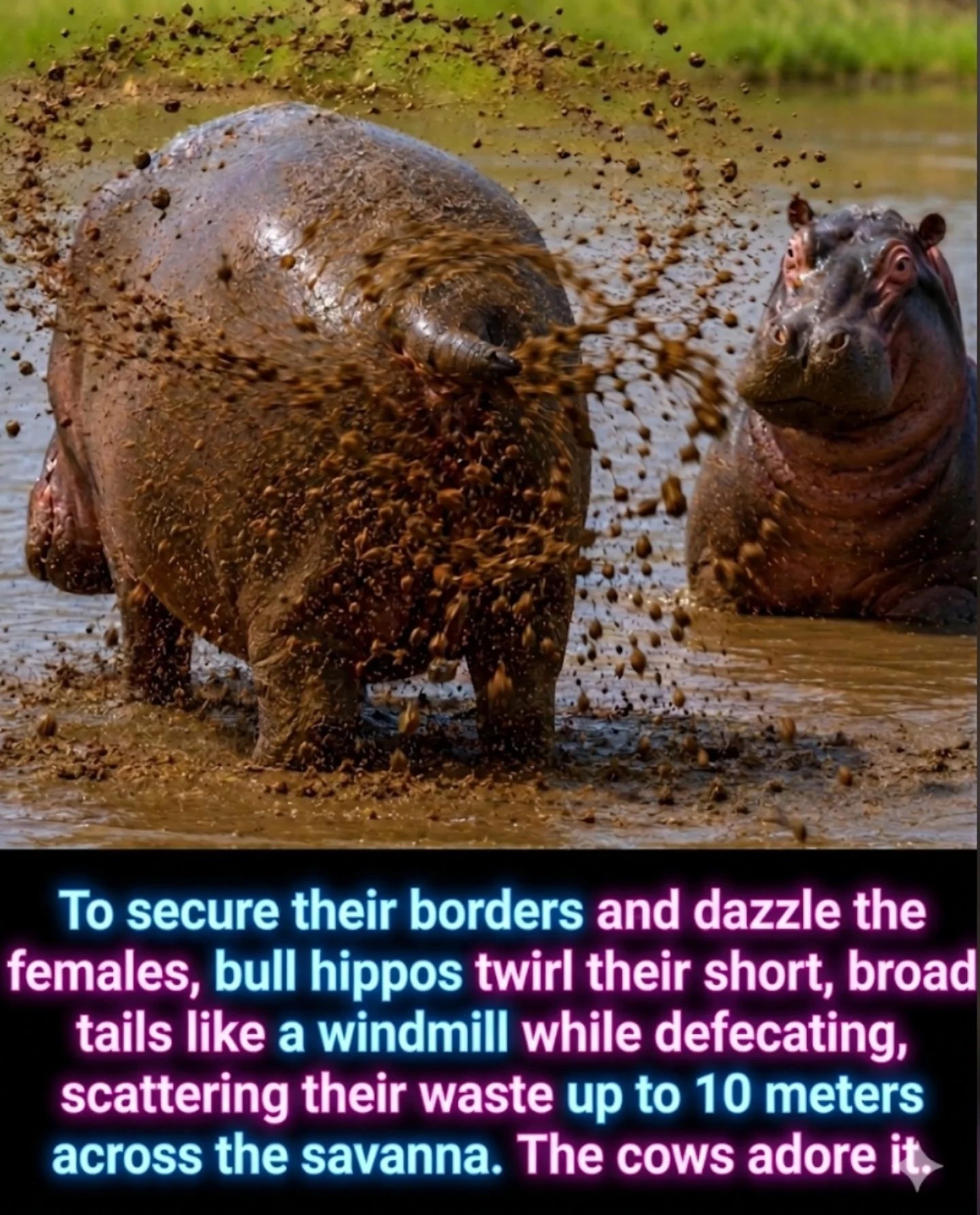
Muck-spreading is a distinctive territorial behavior exhibited by male hippopotamuses. This behavior involves the simultaneous act of defecation and the rapid, propeller-like rotation of the tail, effectively dispersing excrement across riverbanks and waterways. This mechanism serves as a primary method of olfactory communication, crucial for establishing social order and ensuring reproductive success in the murky aquatic environments where hippos reside.
Why This Matters
In the murky aquatic environments where hippos reside, visual signaling is often ineffective. Consequently, scent-based communication becomes the dominant tool for establishing hierarchy and spatial boundaries. This behavior serves two critical functions: territorial deterrence and individual identification. Understanding this behavior provides insight into how these animals navigate their social structures and maintain order in their environments.
Main Discussion
The Mechanism of Muck-Spreading
A bull hippo's tail is short and broad, resembling a paddle. When a hippo defecates, it will use its tail, spinning it quickly to spread the waste. This action is not random; it is a deliberate and strategic move. The rapid, propeller-like rotation of the tail scatters the waste up to 10 meters across the savanna. This action helps the hippopotamus to mark its territory and communicate with other members of the pod.
Territorial Deterrence
This behavior acts as a chemical "keep out" sign for rival males, reducing the need for physical confrontation. By marking their territory with their unique scent, male hippos can signal to other males that they have already secured this territory and will fight to keep it. This helps to reduce unnecessary fights, which can be dangerous. The scent marking is a way of maintaining dominance and ensuring that other hippos know where the boundaries of their home range are.
Individual Identification
Hippo dung contains unique chemical profiles that allow other members of the pod to identify the individual's health, age, and social status. This allows the pod to stay informed about each other's conditions and react accordingly. Understanding these chemical signals is key to understanding the social dynamics of a hippo pod. This ability to identify individuals through their scent is another key aspect of hippo communication.
Reproductive Implications
While the behavior is often framed humorously in popular culture, it plays a vital role in mate selection. A male’s ability to successfully claim and mark a prime territory is a key indicator of biological fitness. Female hippopotamuses are naturally drawn to dominant males who control high-quality territories, as these areas provide superior protection and more reliable access to essential resources. This makes the ability to mark and defend territory a critical factor in a male hippo's reproductive success.
Practical Tips
If you're an avid wildlife observer, looking out for this behavior can provide valuable insights into the social dynamics of a hippo pod. Here are a few tips:
- Watch for Tail Movement: Pay close attention to the tail movements of male hippos. The rapid, propeller-like rotation of the tail is a clear indicator of muck-spreading behavior.
- Observe Reactions: Notice how other hippos and even other animals, like cows, react to this behavior. This can give you a sense of how widely recognized and respected this territorial marking is.
- Note the Environment: Understand that this behavior is more common in murky aquatic environments where visual signaling is less effective.
Important Takeaways
- Territorial Marking: Muck-spreading is a primary method of olfactory communication for male hippos, helping them to secure their territory and deter rivals.
- Chemical Signals: The unique chemical profiles in hippo dung allow other members of the pod to identify the individual's health, age, and social status.
- Reproductive Success: The ability to successfully mark and defend territory is a key indicator of biological fitness and is crucial for reproductive success.
- Social Order: This behavior plays a vital role in maintaining social order and ensuring the cohesion of the hippo pod.
Conclusion
Muck-spreading is not just a peculiar quirk of hippo behavior; it is a sophisticated evolutionary strategy. By understanding this behavior, we gain deeper insight into the complex social structures and communication methods of these fascinating animals. This knowledge helps us appreciate the intricate ways in which animals like hippos navigate their environments and maintain their social order.
Questions readers ask
What is muck-spreading and why do hippos do it?
Muck-spreading is a behavior where hippos defecate and use their tails to disperse the waste. They do this to mark their territory and communicate with other hippos, especially in murky waters where visual signals are hard to see. It's a way for them to establish dominance and reduce conflicts. In many cases, it helps to prevent physical confrontations by communicating social standing and territory claims.
How do hippos use scent marking to communicate?
Hippos use scent marking through muck-spreading to communicate various messages to other hippos. These chemical signals can indicate a hippo's presence, territory, and even their reproductive status. This form of communication helps to maintain social order and minimize aggressive interactions.
Which hippos are most likely to exhibit muck-spreading behavior?
Muck-spreading behavior is predominantly exhibited by male hippos, especially dominant males. These males use this behavior to assert their dominance, establish their territory, and deter potential challengers. It is a key strategy in their reproductive behavior, as it helps them maintain control over a group of females and ensure their reproductive success.
What is the role of a hippo's tail in muck-spreading?
A hippo's tail plays a crucial role in muck-spreading. After defecating, a hippo rapidly rotates its tail like a propeller to disperse the waste widely. This action helps to spread the scent over a large area, making it an effective means of marking territory and communicating with other hippos.
Why is muck-spreading important for hippo social structure?
Muck-spreading is vital for maintaining the social structure among hippos. It helps to establish a hierarchy and spatial boundaries, reducing the need for physical confrontations. By using scent-based communication, hippos can convey complex information about their social standing and territorial claims, thereby maintaining order within their groups.
How does muck-spreading benefit the dominant male hippo?
Muck-spreading benefits the dominant male hippo by reinforcing its social status and territorial claims. By spreading its scent, a dominant male can deter potential challengers and maintain control over a group of females, which is essential for its reproductive success. This behavior helps to minimize physical confrontations and ensure the dominant male's status within the group.
How does muck-spreading help in maintaining order in murky water environments?
In murky water environments, visual signals are often ineffective, making scent-based communication crucial. Through muck-spreading, hippos can mark their territory and communicate their presence and status to others. This scent-based communication helps to establish social order, reduce conflicts, and maintain spatial boundaries without the need for frequent physical interactions.
Related deep dives
Similar reads based on topic and creator.




Recent articles
Fresh deep dives from the latest Reels we unpacked.




Comments
Be the first to comment.