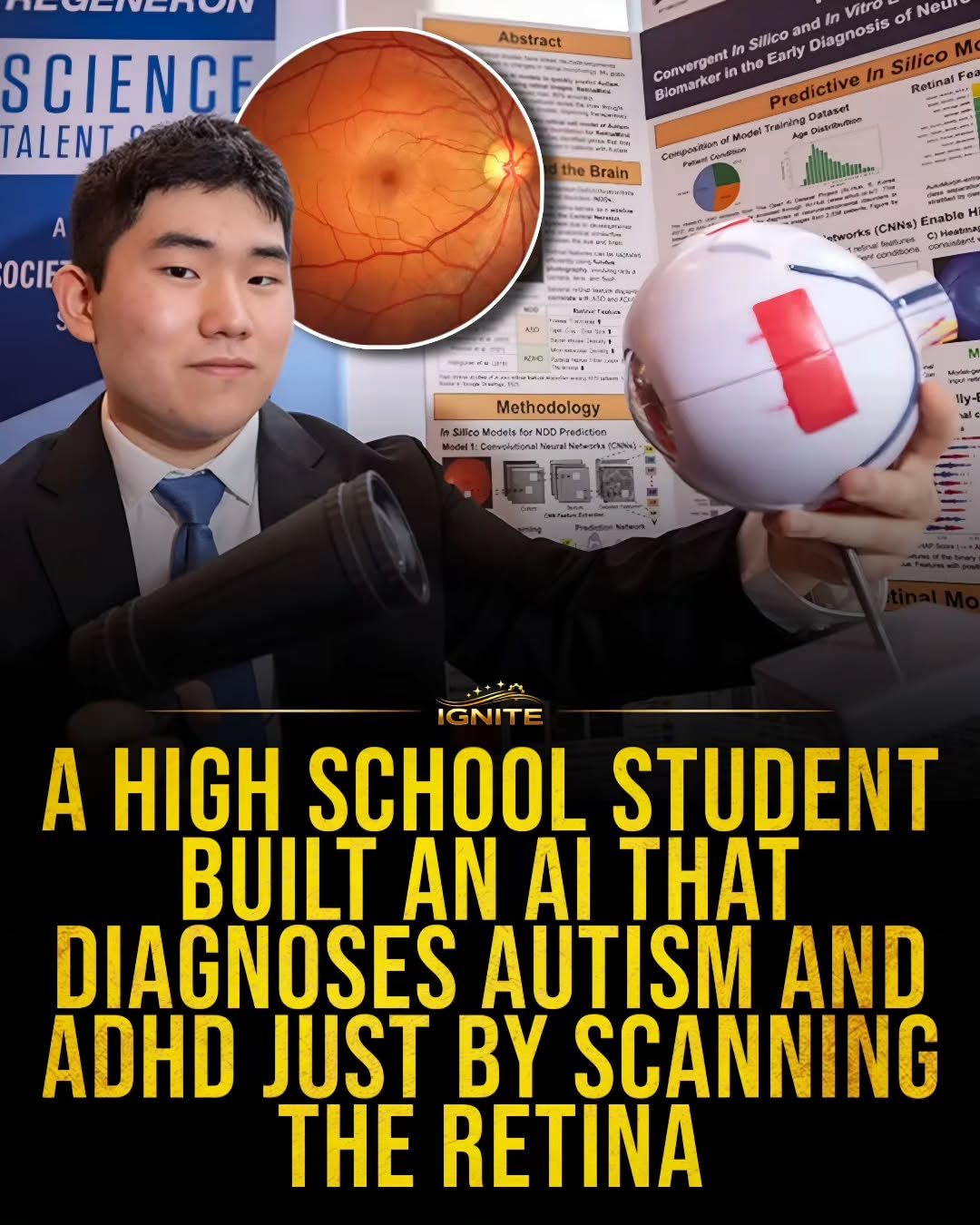
AI Diagnosis of Autism and ADHD
Autism and ADHD are neurodevelopmental disorders that affect millions of people worldwide. Traditional diagnosis methods often rely on behavioral observations and subjective evaluations, which can be time-consuming and sometimes inaccurate. Recent advancements in technology, however, are paving the way for more objective and efficient diagnostic tools. One such innovation is an AI model developed by a high school student that diagnoses these conditions by analyzing retinal scans.
Why This Matters
The ability to diagnose autism and ADHD through retinal scans offers several significant advantages. It provides a non-invasive, objective method that could potentially reduce the time and resources required for diagnosis. This could lead to earlier interventions, which are crucial for improving outcomes for individuals with these conditions. Additionally, the use of AI in diagnosis can help standardize the process, reducing variability and potential biases that may arise from human judgment.
The AI Model and its Development
The Science Behind Retinal Scans
Retinal scans have long been used in medical diagnostics for various conditions, from diabetes to glaucoma. The retina, located at the back of the eye, contains a rich network of blood vessels and nerves that reflect the overall health of the body. Recent studies have shown that certain patterns in the retinal vasculature can be indicative of neurological conditions, including autism and ADHD.
How the AI Model Works
The AI model developed by the high school student leverages machine learning algorithms to analyze retinal scans. By examining the patterns and structures within the retina, the model can identify biomarkers associated with autism and ADHD. This process involves several steps:
-
Data Collection: The model is trained on a large dataset of retinal images from individuals diagnosed with autism, ADHD, and those without these conditions.
-
Feature Extraction: The AI identifies key features within the retinal scans, such as the density and branching patterns of blood vessels.
-
Pattern Recognition: Using these features, the model learns to recognize patterns that are characteristic of autism and ADHD.
-
Diagnosis: Based on the recognized patterns, the AI can predict the likelihood of an individual having one of these conditions.
The Role of In Silico and In Vitro Models
The development of this AI model incorporates both in silico (computer-based) and in vitro (laboratory-based) methodologies. In silico models simulate biological processes and interactions within a computer, allowing for the rapid testing and refinement of hypotheses. In vitro models, on the other hand, involve laboratory experiments using biological samples. The combination of these approaches enables a more comprehensive understanding of the underlying mechanisms and enhances the accuracy of the AI model.
Practical Tips for Implementing AI in Diagnosis
Implementing AI in the diagnosis of autism and ADHD requires careful consideration of several factors:
Ensuring Data Quality
The accuracy of the AI model heavily depends on the quality and diversity of the data it is trained on. It is essential to have a large, representative dataset that includes a wide range of retinal scans from individuals of different ages, ethnicities, and health backgrounds. This ensures that the model can generalize well to new, unseen data.
Ethical Considerations
The use of AI in medical diagnostics raises important ethical questions. It is crucial to ensure that the model is fair and unbiased, and that it respects patient privacy. Transparency in the development and deployment of the AI model is also important, as it helps build trust with healthcare providers and patients.
Integration into Clinical Practice
For AI to be widely adopted in clinical practice, it needs to be integrated seamlessly into existing workflows. This involves training healthcare providers on how to use the technology, ensuring that the results are easily interpretable, and providing support for any technical issues that may arise.
Important Takeaways
The development of an AI model that diagnoses autism and ADHD through retinal scans represents a significant advancement in medical diagnostics. This non-invasive, objective method has the potential to improve the efficiency and accuracy of diagnosis, leading to earlier interventions and better outcomes for individuals with these conditions. However, the successful implementation of AI in clinical practice requires careful consideration of data quality, ethical issues, and integration into existing workflows.
Conclusion
The use of AI in the diagnosis of autism and ADHD is a promising area of research with the potential to transform how these conditions are identified and treated. As technology continues to advance, it is likely that we will see more innovative solutions that leverage AI to improve healthcare outcomes. By embracing these advancements and addressing the associated challenges, we can create a future where medical diagnostics are more accurate, efficient, and accessible to all.
Questions readers ask
How does the AI model developed by the high school student work?
The AI model analyzes retinal scans to detect patterns and biomarkers associated with autism and ADHD. By focusing on the retina, the model offers a non-invasive way to identify potential indicators of these neurodevelopmental disorders, which could lead to earlier and more accurate diagnoses.
What are the benefits of using retinal scans for autism and ADHD diagnosis?
Retinal scans are non-invasive, quick, and objective. This method can reduce the reliance on subjective behavioral observations, making the diagnostic process more efficient and potentially leading to earlier interventions. Additionally, retinal scans can be conducted easily and safely, which is beneficial for individuals who may struggle with traditional diagnostic methods.
Can this AI model replace traditional diagnostic methods entirely?
While the AI model shows promise, it is not intended to replace traditional diagnostic methods entirely. Instead, it can serve as a complementary tool, providing additional data to support clinical evaluations. Traditional methods, such as behavioral observations and interviews, will still be important for a comprehensive diagnosis.
How does early diagnosis benefit individuals with autism and ADHD?
Early diagnosis can significantly improve outcomes for individuals with autism and ADHD. It allows for earlier interventions, which can help manage symptoms more effectively and improve quality of life. Early identification also enables families and caregivers to access necessary support and resources sooner.
What role can AI play in the future of autism and ADHD research?
AI has the potential to revolutionize autism and ADHD research by providing more objective and efficient diagnostic tools. It can help identify new biomarkers and patterns, leading to better understanding and treatment of these disorders. AI models, like the one developed by the high school student, can also pave the way for more personalized and accurate diagnostic methods.
What challenges might arise from implementing AI in autism and ADHD diagnosis?
While AI offers numerous benefits, challenges include ensuring the accuracy and reliability of the models, integrating them into existing healthcare systems, and addressing potential ethical concerns, such as data privacy. Ongoing research and collaboration between technologists and healthcare professionals will be crucial to overcome these challenges and maximize the benefits of AI in autism and ADHD diagnosis.
How can high school students contribute to AI advancements in healthcare?
High school students can contribute to AI advancements in healthcare by engaging in innovative projects, such as the one highlighted in the article. By leveraging their curiosity and technical skills, students can develop models that address real-world problems. Encouraging and supporting such projects can foster a new generation of innovators in healthcare technology.
Related deep dives
Similar reads based on topic and creator.




Recent articles
Fresh deep dives from the latest Reels we unpacked.




Comments
Be the first to comment.