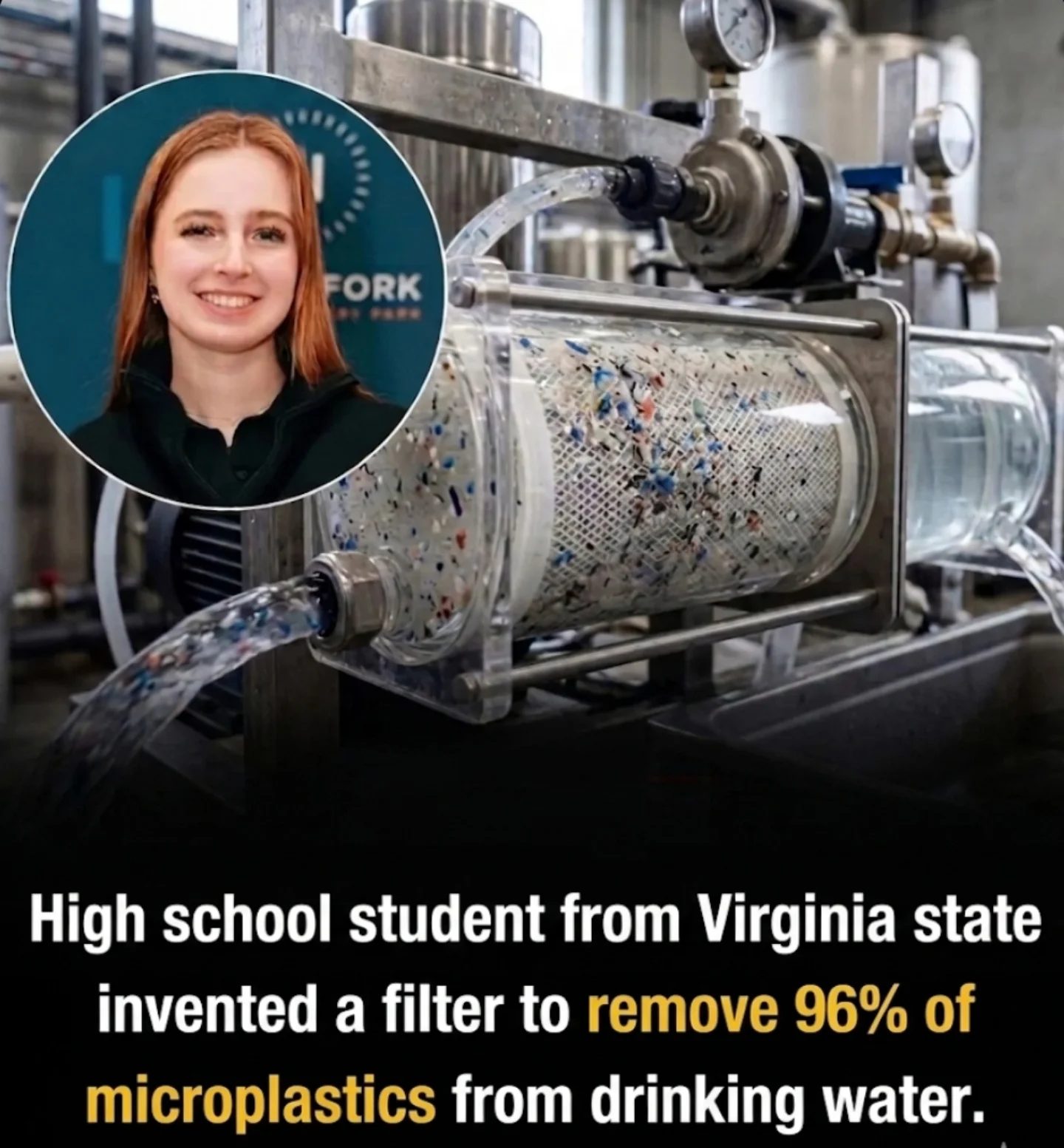
Microplastics Filter Invention by Mia Heller
Mia Heller, an 18-year-old from Warrenton, Virginia, has developed a groundbreaking water filtration system that has captured attention for its efficiency and affordability. Her invention, known as Fork, is designed to tackle the pervasive problem of microplastics in drinking water. The system has garnered significant interest in recent years, particularly in 2025 and 2026, due to its innovative approach and cost-effectiveness.
Why This Matters
Microplastics are tiny particles of plastic, often invisible to the naked eye, that contaminate water sources. These particles come from various sources, including the breakdown of larger plastic items, microbeads in personal care products, and synthetic fibers from clothing. Large-scale water treatment plants can remove some microplastics, but home filtration systems often fall short. Traditional home filters are expensive, require frequent maintenance, and typically use disposable membranes that contribute to waste. Mia's invention addresses these issues by providing a more sustainable and effective solution.
How the Technology Works
Unlike conventional filters that rely on physical meshes, Mia's system leverages the power of magnetism. Here’s a step-by-step breakdown of how it works:
Ferrofluid Binding
The process begins with a magnetic liquid known as ferrofluid. This ferrofluid is made from a canola oil base, which ensures it is safe and non-toxic. The ferrofluid is pumped into the water, where it plays a crucial role in capturing microplastics.
Selective Attachment
The key to Mia’s system is the ferrofluid’s ability to selectively bind to tiny plastic particles. The ferrofluid’s magnetic properties allow it to attach to the microplastics, forming a complex that can be easily separated from the water.
Magnetic Separation
Once the ferrofluid has attached to the microplastics, the water is passed through a magnetic field. This magnetic field pulls the ferrofluid—and the microplastics attached to it—out of the water stream, effectively removing 96% of the microplastics from the drinking water.
Closed-Loop Recycling
One of the standout features of the Fork system is its self-recycling capability. The system recovers approximately 87% of the ferrofluid, which can then be reused. This closed-loop system reduces waste and ensures that the filtration process remains both effective and environmentally friendly.
The Inspiration Behind the Invention
Mia Heller was inspired to create her filtration system after learning about local water contamination in her neighborhood. This personal connection to the issue drove her to find a solution that could make a real difference. Her goal was to develop a system that was not only effective at removing microplastics but also affordable and sustainable for everyday use.
Practical Tips for Using and Maintaining the Fork System
While the Fork system is designed to be user-friendly, there are a few practical tips to keep in mind for optimal performance and longevity:
Installation and Setup
- Follow the Instructions: Carefully read the installation guide provided with the system. Proper installation ensures that the magnetic fields and filtration processes work as intended.
- Positioning: Place the system in a location where it can easily access the water supply and has enough space for ventilation.
Maintenance
- Regular Cleaning: Although the system is self-recycling, regular cleaning of the ferrofluid and magnetic components can help maintain efficiency.
- Monitoring: Keep an eye on the system’s performance by regularly checking the water quality. This can be done using simple water testing kits available in many stores.
Important Takeaways
Mia Heller’s invention of the Fork water filtration system is a testament to the power of innovative thinking and the importance of addressing environmental issues. Here are some key takeaways:
- Efficiency: The system removes 96% of microplastics from drinking water, making it one of the most effective solutions currently available.
- Affordability: Compared to traditional home filtration systems, the Fork system is more cost-effective, making it accessible to a wider range of users.
- Sustainability: The closed-loop recycling feature reduces waste and ensures the system remains environmentally friendly.
- Innovation: The use of magnetism in water filtration is a groundbreaking approach that sets Mia’s invention apart from conventional methods.
Conclusion
Mia Heller’s Fork water filtration system represents a significant advancement in the fight against microplastics in drinking water. Her innovative use of magnetism and ferrofluid binding offers a sustainable, efficient, and cost-effective solution to a pressing environmental issue. By addressing the limitations of traditional home filtration systems, Mia’s invention paves the way for cleaner, safer drinking water.
Questions readers ask
What are microplastics and why are they a concern in drinking water?
Microplastics are tiny plastic particles, often smaller than 5 millimeters, that contaminate water sources. They come from various sources such as the breakdown of larger plastic items, microbeads in personal care products, and synthetic fibers from clothing. Their presence in drinking water is a concern due to potential health impacts and the environmental damage they cause.
How does Mia Heller's Fork water filtration system work?
Mia Heller's Fork system utilizes the power of magnetism to target and remove microplastics from water. It is a type of ferrofluid water filter, which uses magnetic properties to attract and trap microplastic particles, ensuring cleaner and safer drinking water.
What makes the Fork water filtration system cost-effective?
The Fork system is cost-effective due to its simple and efficient design. The use of magnetic filtration reduces the need for expensive replacement filters, and the system's innovative approach minimizes operational costs, making it more affordable than traditional filtration methods.
Can the Fork system be used in schools to address microplastics in water?
Yes, the Fork water filtration system can be a valuable addition to schools. It provides a practical solution to remove microplastics from water, promoting safer hydration habits among students and staff without requiring significant budget allocation.
What inspired Mia Heller to create the Fork water filtration system?
Mia Heller developed the Fork system in response to the growing concern over microplastics in drinking water. Recognizing the need for a sustainable and efficient solution, she leveraged her innovative skills to design a cost-effective and reliable magnetic filtration system to address this issue.
Recent articles
Fresh deep dives from the latest Reels we unpacked.




Comments
Be the first to comment.