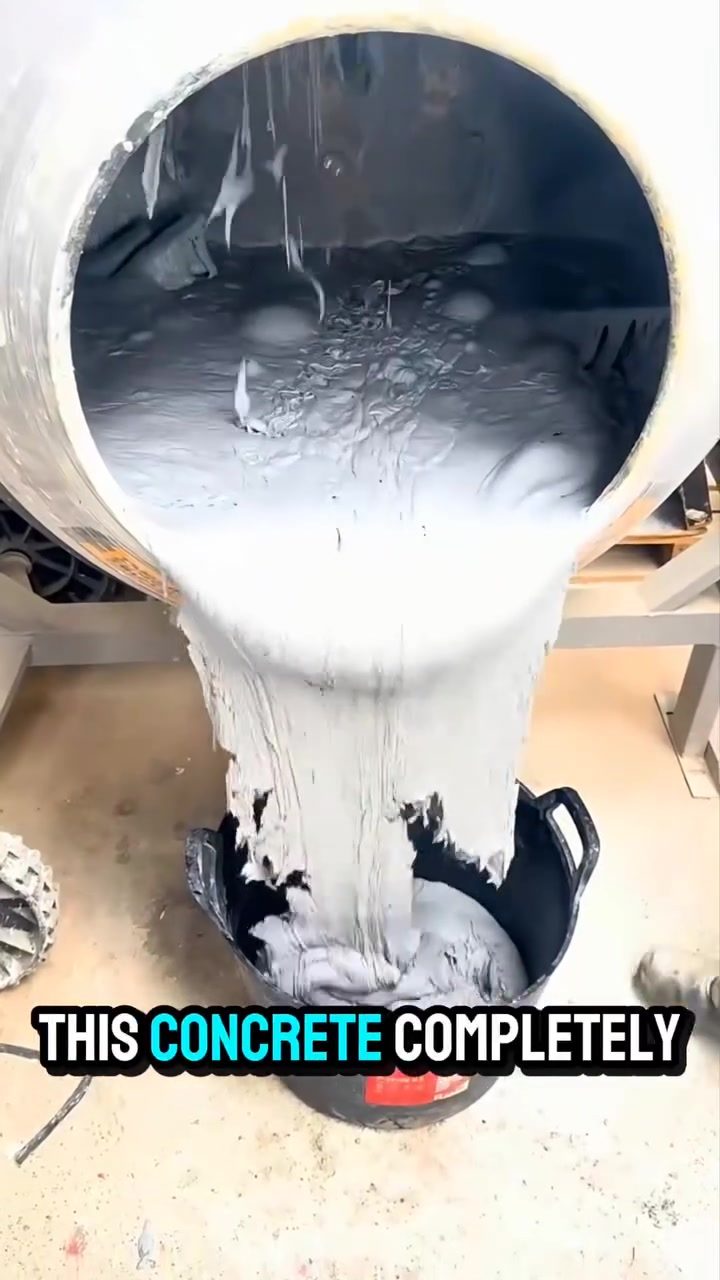
High-Ductility Concrete: A Revolution in Construction Materials
Concrete is a staple in construction, but high-ductility concrete (HDC) is transforming expectations of what this versatile material can achieve. This innovative form of concrete defies traditional notions with its unique properties and applications, particularly in demanding construction scenarios.
Why This Matters
High-ductility concrete is not your average construction material. It's designed to withstand significant force and still maintain its structural integrity, making it an invaluable asset in infrastructure projects. Understanding its properties and applications can unlock new possibilities in construction, from repairing bridges to building more resilient structures.
Properties of High-Ductility Concrete
Strength and Flexibility
High-ductility concrete is incredibly tough. Unlike traditional concrete, which can crack and break under stress, high-ductility concrete forms only tiny micro-cracks. These micro-cracks are held together by ultra-fine fibers embedded in the concrete, allowing it to bend without snapping. This unique property earns it the nickname "bendable concrete."
Unique Composition
High-ductility concrete differs from regular concrete in its composition. It contains no coarse stone; instead, it's made with fine mortar reinforced by thousands of ultra-fine fibers. This composition gives it a dual nature: it can be incredibly hard and resilient, yet it flows and levels itself automatically when poured.
Flow and Self-Leveling
One of the most fascinating properties of high-ductility concrete is its flowability. When poured, it can flow as smoothly as glue, making it easy to work with. This self-leveling property ensures that the concrete settles evenly, reducing the need for extensive manual leveling and smoothing. However, this doesn’t mean it’s weak; the concrete can withstand heavy hammer blows and other significant impacts without breaking.
Toughness and Flexibility
When you handle high-ductility concrete, it feels as hard as a rock. Yet, if you break it apart, it quickly slumps into a soft, mud-like mass. This dual nature allows it to be incredibly versatile in different construction scenarios, whether it needs to be hard and resilient or soft and malleable.
Applications of High-Ductility Concrete
Infrastructure Repair and Maintenance
High-ductility concrete is particularly useful in repairing bridges and other infrastructure. Its ability to form only tiny micro-cracks and its self-leveling properties make it ideal for sealing cracks and reinforcing weakened structures. This makes it an invaluable material for maintaining and extending the lifespan of critical infrastructure.
Construction Projects
Because of its unique properties, high-ductility concrete can be used in various construction projects. From building bridges to constructing buildings, its strength and flexibility provide enhanced durability and resilience against external forces.
Innovative Uses
High-ductility concrete's innovative properties make it suitable for other unique applications. For example, it can be used in earthquake-resistant structures, where its ability to bend without breaking can help absorb and dissipate seismic energy. Similarly, its self-leveling properties can be beneficial in creating smooth, uniform surfaces for floors and other horizontal structures.
Practical Tips for Working with High-Ductility Concrete
Mixing and Pouring
Mixing high-ductility concrete requires careful attention to the proportions of fine mortar and ultra-fine fibers. The mixture should be thoroughly blended to ensure even distribution of the fibers, which are crucial for its unique properties. When pouring, take advantage of its self-leveling nature by pouring it evenly and allowing it to settle naturally.
Handling and Application
Handling high-ductility concrete can be straightforward, given its dual properties. For tasks requiring a hard, resilient surface, allow the concrete to harden and cure properly. For applications needing a more malleable material, work with it while it is in its soft, mud-like state.
Important Takeaways
High-ductility concrete represents a significant advancement in construction materials. Its unique properties, including self-leveling, toughness, and flexibility, make it suitable for a wide range of applications. Whether you're repairing infrastructure, building new structures, or exploring innovative construction techniques, high-ductility concrete offers a versatile and resilient solution.
Conclusion
High-ductility concrete is more than just a construction material; it's a game-changer. Its ability to defy expectations and offer enhanced durability and flexibility makes it a valuable asset in the construction industry. As we continue to push the boundaries of what's possible in construction, high-ductility concrete will undoubtedly play a crucial role in shaping the future of infrastructure and building design.
Questions readers ask
What makes high-ductility concrete different from traditional concrete?
High-ductility concrete (HDC) differs from traditional concrete due to its unique composition. It lacks coarse stone and is reinforced with ultra-fine fibers, which gives it exceptional strength and flexibility, allowing it to maintain structural integrity under significant force.
How does high-ductility concrete benefit infrastructure projects?
HDC is particularly beneficial for infrastructure projects due to its ability to withstand immense force without compromising its structure. Its self-leveling properties and flexibility make it suitable for demanding applications, such as bridge repairs and the construction of resilient structures.
What are the key advantages of using high-ductility concrete in construction?
The key advantages include its exceptional strength, flexibility, and self-leveling capabilities. HDC can flow easily, making it ideal for complex construction tasks. Its high strength and ability to withstand significant force make it a superior choice for tough projects.
Can high-ductility concrete be used for both new construction and repairs?
Yes, HDC is versatile and can be used for both new construction and repairs. Its unique properties make it an excellent choice for reinforcing existing structures and building new ones, especially in scenarios where traditional concrete may fail.
How does the composition of high-ductility concrete contribute to its performance?
The composition of HDC, which excludes coarse stone and includes ultra-fine fibers, plays a crucial role in its performance. This composition allows HDC to flow and self-level, while the fibers provide the necessary reinforcement to maintain structural integrity under immense force.
What types of projects are ideal for high-ductility concrete?
Projects that involve significant force and require high structural integrity are ideal for HDC. This includes infrastructure projects like bridges, tunnels, and buildings in seismic zones where the material's flexibility and strength are particularly advantageous.
Are there any visual resources to learn more about high-ductility concrete?
Yes, there are high-ductility concrete videos available that provide visual demonstrations and explanations of its unique properties and applications. These videos can offer a deeper understanding of how HDC is used in various construction projects.
Related deep dives
Similar reads based on topic and creator.




Recent articles
Fresh deep dives from the latest Reels we unpacked.




Comments
Be the first to comment.