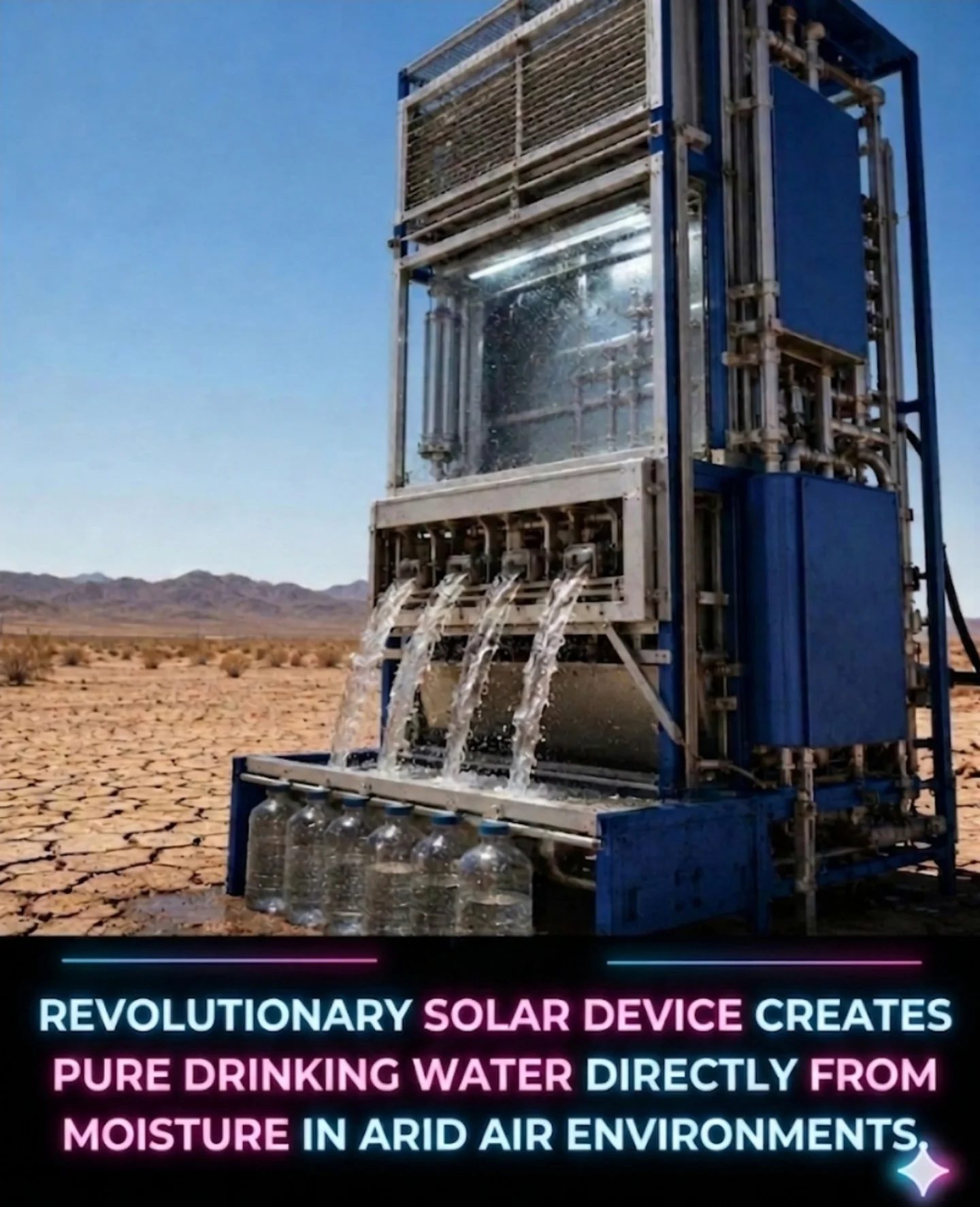
Solar Water Generators: Harnessing Air for Drinking Water
Shipping-container-sized water generators developed by Omar Yaghi are revolutionizing water security by extracting up to 1,000 liters of drinking water daily from desert air. This cutting-edge technology offers a sustainable and decentralized solution to water scarcity, particularly in arid regions where traditional water sources are limited or non-existent.
The Core Technology: Metal-Organic Frameworks (MOFs)
At the heart of these water generators are Metal-Organic Frameworks (MOFs)—engineered "molecular sponges" that capture water vapor at a microscopic level. Here's how they work:
- MOFs: These are highly porous materials composed of metal ions coordinated to organic ligands. Their large surface area and highly ordered structure make them ideal for capturing and releasing water vapor.
- Arid Performance: One of the standout features of these water generators is their ability to operate efficiently in environments with humidity as low as 20%. This makes them far more effective in arid regions where traditional water extraction methods fail.
- Purity: The MOF structure naturally filters out pollutants during the adsorption process. This ensures that the water collected is not only abundant but also pure and safe for drinking.
- Sustainable Power: The water generators use solar energy or waste heat, eliminating the need for high-voltage power grids. This makes them not only eco-friendly but also practical for use in remote or off-grid locations.
How It Works
The process begins with the MOFs absorbing water vapor from the air. Once the MOFs are saturated with water, they are heated to release the water, which is then condensed and collected in plastic bottles. This cycle can be repeated continuously, providing a steady supply of drinking water.
Strategic Impact
The introduction of these solar water generators marks a significant shift in water production, moving from a centralized utility model to a decentralized resource. This transition has several key benefits:
- Disaster Resilience: Rapid deployment in areas with destroyed infrastructure. These generators can be quickly set up and operational, providing a vital water source in emergency situations.
- Resource Independence: Allows remote regions to bypass the need for pipelines or desalination plants. This is particularly beneficial for regions where traditional water infrastructure is either unavailable or unsustainable.
- Climate Adaptation: Provides a consistent supply in areas facing severe groundwater depletion. As climate change exacerbates drought conditions, the ability to harvest water directly from the atmosphere becomes increasingly valuable.
Decentralized Water Production
Traditional water production often relies on centralized infrastructure, such as large-scale desalination plants or dams. However, these systems are expensive to build and maintain, and they require significant energy inputs. In contrast, decentralized water production enables localized water harvesting, reducing the need for extensive infrastructure and energy use.
Sustainable and Eco-Friendly
The use of solar power or waste heat makes these water generators an eco-friendly solution. By relying on renewable energy sources, these systems reduce their carbon footprint and contribute to sustainable development goals.
Practical Tips
- Solar Energy: Ensure the system is placed in an area with optimal sunlight exposure to maximize solar energy collection.
- Maintenance: Regularly clean and maintain the MOFs to ensure they remain effective at capturing water vapor.
- Monitoring: Use monitoring systems to track water production and usage, ensuring the system operates efficiently.
- Local Adaptation: Customize the system based on local climate and water needs to optimize performance.
Important Takeaways
Solar water generators utilizing MOFs offer a groundbreaking solution to water scarcity, particularly in arid regions. Their ability to operate in low-humidity environments, produce pure drinking water, and use sustainable power sources makes them a valuable addition to water security strategies. As climate change continues to impact water availability, this technology provides a scalable and decentralized approach to water production, ensuring a consistent supply in areas facing severe water stress.
Conclusion
The development of solar water generators marks a significant advancement in addressing global water scarcity. By harnessing the power of the sun and the unique properties of MOFs, these systems offer a sustainable, decentralized, and efficient means of producing drinking water. As we continue to face challenges related to water availability, this innovative technology provides a reliable and eco-friendly solution, ensuring a more water-secure future.
Questions readers ask
How does the solar water generator produce drinking water from desert air?
The solar water generator uses Metal-Organic Frameworks (MOFs) to capture water vapor from the air. These MOFs act like molecular sponges, absorbing water molecules even in the driest desert conditions. Once the MOFs are saturated, the captured water is then released and condensed into liquid form, providing pure drinking water.
What makes solar water generators suitable for arid regions?
Solar water generators are ideal for arid regions because they do not rely on traditional water sources like rivers or groundwater, which are often scarce or non-existent in deserts. Instead, they harness the power of the sun and the moisture present in the air, making them a sustainable and reliable solution for water production in these challenging environments.
How much water can a solar water generator produce in a day?
A standard solar water generator, like the ones developed by Omar Yaghi, can produce up to 1,000 liters of pure drinking water daily. This impressive output is achieved by leveraging the power of the sun and the unique properties of MOFs, ensuring a significant water supply even in the harshest desert conditions.
What are Metal-Organic Frameworks (MOFs) and how do they work in water generation?
Metal-Organic Frameworks (MOFs) are highly porous materials composed of metal ions and organic ligands. They have a large surface area and highly ordered structure, which allows them to absorb and capture water vapor from the air efficiently. In the context of solar water generators, MOFs act as molecular sponges, adsorbing water molecules during the night and releasing them as liquid water during the day when heated by the sun.
Can solar water generators operate without direct sunlight?
While solar water generators primarily rely on solar power for their operation, they can still function to some extent in conditions with limited direct sunlight. The MOFs used in these devices can capture water vapor from the air at night, and the stored water can be released and condensed during the day, even if sunlight is not at its peak. However, their efficiency is optimized with sufficient sunlight.
Are solar water generators a sustainable solution for water scarcity?
Yes, solar water generators offer a sustainable solution for water scarcity, especially in arid regions. By harnessing renewable solar energy and extracting water from the air, these devices provide a decentralized and environmentally friendly water source. They reduce the dependence on fossil fuels and minimize the environmental impact associated with traditional water extraction methods.
What is the process of solar water production in a desert environment?
The process of solar water production in a desert environment involves absorbing water vapor from the air using MOFs. During the night, the MOFs capture water molecules from the ambient air. When the sun rises, it heats the MOFs, causing them to release the captured water vapor, which is then condensed into pure drinking water. This cycle allows the device to continuously produce water, even in some of the driest regions on Earth.
Related deep dives
Similar reads based on topic and creator.




Recent articles
Fresh deep dives from the latest Reels we unpacked.




Comments
Be the first to comment.