Factory Automation
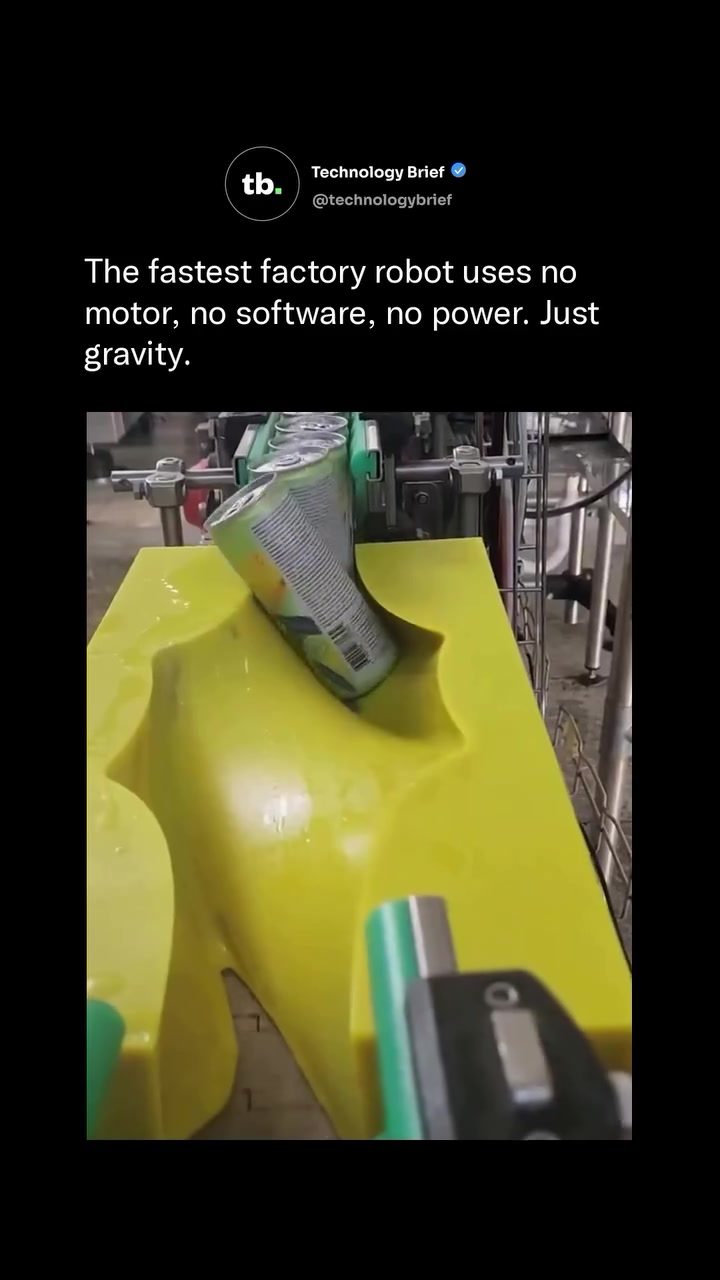
Passive orienters are a vital aspect of factory automation, particularly in beverage manufacturing. These devices move cans from an upright position to a horizontal one on high-speed production lines. In contrast to motorized alternatives, passive orienters use no motors, software, or additional electric power. Instead, they employ a fixed molded guide. This guide uses gravity and the momentum of the cans to achieve the reorientation.
Context / Why this matters
Passive orienters can be an efficient and reliable solution for handling cans in high-speed beverage production environments. Their adoption can reduce the complexity and maintenance requirements associated with more intricate automation systems. By leveraging gravity and momentum, they achieve quick and efficient reorientation of cans, aligning perfectly with the continuous process flow of modern manufacturing lines. Passive orienters have become increasingly important in the context of the global gravity conveyor market, which is projected to experience steady growth. In 2023, the market was valued at $460.6 million and is expected to rise to $804.4 million by 2034. This reflects a consistent demand for solutions that are both cost-effective and reliable, particularly as factories continue to invest significantly in robotics and AI. For many manufacturers, passive orienters offer the same performance as motorized alternatives.
Gravity-Oriented Guides
How Passive Orientation Works
Passive orienters use a fixed, molded guide designed to redirect cans using their own momentum and gravity. The process begins as cans descend from a height onto a moving conveyor belt. The guide, strategically shaped and positioned, interacts with each can as it moves along the belt. The can’s downward momentum, combined with gravity, flips it from a vertical to a horizontal position. This transition happens swiftly, ensuring that the can remains stable and aligned as it continues along the production line.
Advantages of Passive Orienters
Passive orienters offer several advantages in beverage manufacturing:
-
Reliability: Because passive orienters have no moving parts, they are less prone to mechanical failure compared to motorized alternatives. This means fewer breakdowns and less downtime, leading to smoother and more efficient production processes.
-
Simplicity: The absence of motors, software, and power requirements simplifies the system. This makes passive orienters easier to maintain, and there’s no need for complex calibration or programming.
-
Cost-Effectiveness: Passive orienters are generally less expensive than motorized solutions. As passive orienters are made from materials like steel or molded plastic, they have lower upfront costs and minimal operational costs, making them an economical choice for factories looking to optimize their production lines.
Applications in Manufacturing
Passive orienters are widely used in the food and beverage industry, particularly in the packaging and filling of cans. The reorientation of cans from vertical to horizontal is a crucial step in the packaging process. This ensures that the cans are correctly oriented for filling and sealing, thereby maintaining consistency and efficiency in production.
Continuous Improvement
The design of passive orienters continues to evolve to improve efficiency and versatility. Manufacturers are continuously working on optimizing the shape and material of the guides to handle different can sizes and shapes. Some are experimenting with adjustable guides that can accommodate various production speeds and can configurations.
Practical Tips
Integration into Existing Systems
Integrating a passive orienter into an existing production line is relatively straightforward. Here are some steps to ensure effective integration:
-
Select the Right Guide: Choose a guide designed to handle the specific size and weight of the cans you are working with. Ensure it is compatible with the speed of your production line.
-
Positioning: Place the guide at the correct height and angle to allow cans to move smoothly from vertical to horizontal. Adjust the position as needed to achieve optimal reorientation.
-
Testing and Adjustment: Conduct trials to ensure the guide works effectively with the current production setup. Make necessary adjustments to the guide’s position and the conveyor belt speed for optimal performance.
Maintenance Considerations
While passive orienters require minimal maintenance, regular checks and cleaning can help ensure continuous performance:
-
Cleaning: Periodically clean the guide to remove any debris or residue that could affect the movement of the cans.
-
Inspection: Inspect the guide for any signs of wear or damage. Address issues promptly to maintain the guide's effectiveness.
Important Takeaways
Efficiency and Reliability
Passive orienters offer a highly efficient and reliable solution for reorienting cans in high-speed beverage production. Their use of gravity and momentum ensures rapid and stable reorientation, making them an ideal choice for continuous production processes.
Cost Savings
The simplicity and lack of moving parts in passive orienters translate to significant cost savings. These savings come from reduced maintenance requirements, lower operational costs, and less downtime compared to motorized systems.
Industry Demand
The increasing demand for reliable, cost-effective solutions in manufacturing is driving growth in the gravity conveyor market. Passive orienters are a key component of this trend, offering a viable alternative to more complex, power-dependent systems.
Conclusion
Passive orienters are an essential tool in modern factory automation, particularly in the beverage industry. Their reliance on gravity and momentum provides an efficient, reliable, and cost-effective method for reorienting cans. As factories continue to seek out innovative solutions to enhance production efficiency, passive orienters remain a critical player. Their design simplicity, minimal maintenance requirements, and cost-effectiveness make them a valuable asset in high-speed production environments. By leveraging gravity and eliminating the need for motors, software, and power, passive orienters streamline the production process and contribute to overall operational excellence.
Questions readers ask
How do passive orienters utilize gravity in beverage manufacturing?
Passive orienters in beverage manufacturing use gravity and the momentum of moving cans to flip them from a vertical to a horizontal position. This is achieved through a fixed molded guide that requires no additional power or motors, making the process both efficient and low-maintenance.
What are the benefits of using passive orienters in high-speed production lines?
Passive orienters offer several benefits in high-speed production lines, including reduced complexity, lower maintenance requirements, and the ability to handle cans quickly and reliably. They are a cost-effective solution for beverage manufacturers looking to streamline their production processes.
Can passive orienters be integrated into existing beverage manufacturing systems?
Yes, passive orienters can be integrated into existing beverage manufacturing systems. They are designed to work seamlessly with high-speed production lines and can be installed as a replacement for more complex, motorized orienting systems.
How does gravity-powered automation impact the efficiency of beverage production?
Gravity-powered automation, as seen in passive orienters, significantly enhances the efficiency of beverage production. By relying on the natural force of gravity, these systems reduce the need for motorized parts, thereby minimizing downtime and maintenance, and ensuring a continuous, smooth flow of production.
Are there specific types of beverages that benefit most from gravity-powered can orienters?
Gravity-powered can orienters are versatile and can be used across various beverage types, including carbonated drinks, beer, and energy drinks. They are particularly beneficial in high-speed production environments where quick and reliable can handling is crucial.
What maintenance is required for gravity guides in beverage factory automation?
Gravity guides in beverage factory automation require minimal maintenance. They have no moving parts or electrical components to wear out. Regular cleaning and inspections are recommended to ensure optimal performance and to address any potential issues such as clogs or misalignments.
How do passive orienters compare to motorized orienting systems in beverage production?
Passive orienters differ from motorized orienting systems by relying solely on gravity and momentum, which eliminates the need for motors and software. This makes passive orienters a more straightforward, reliable, and low-maintenance solution for beverage production, particularly in high-speed environments.
Related deep dives
Similar reads based on topic and creator.




Recent articles
Fresh deep dives from the latest Reels we unpacked.




Comments
Be the first to comment.