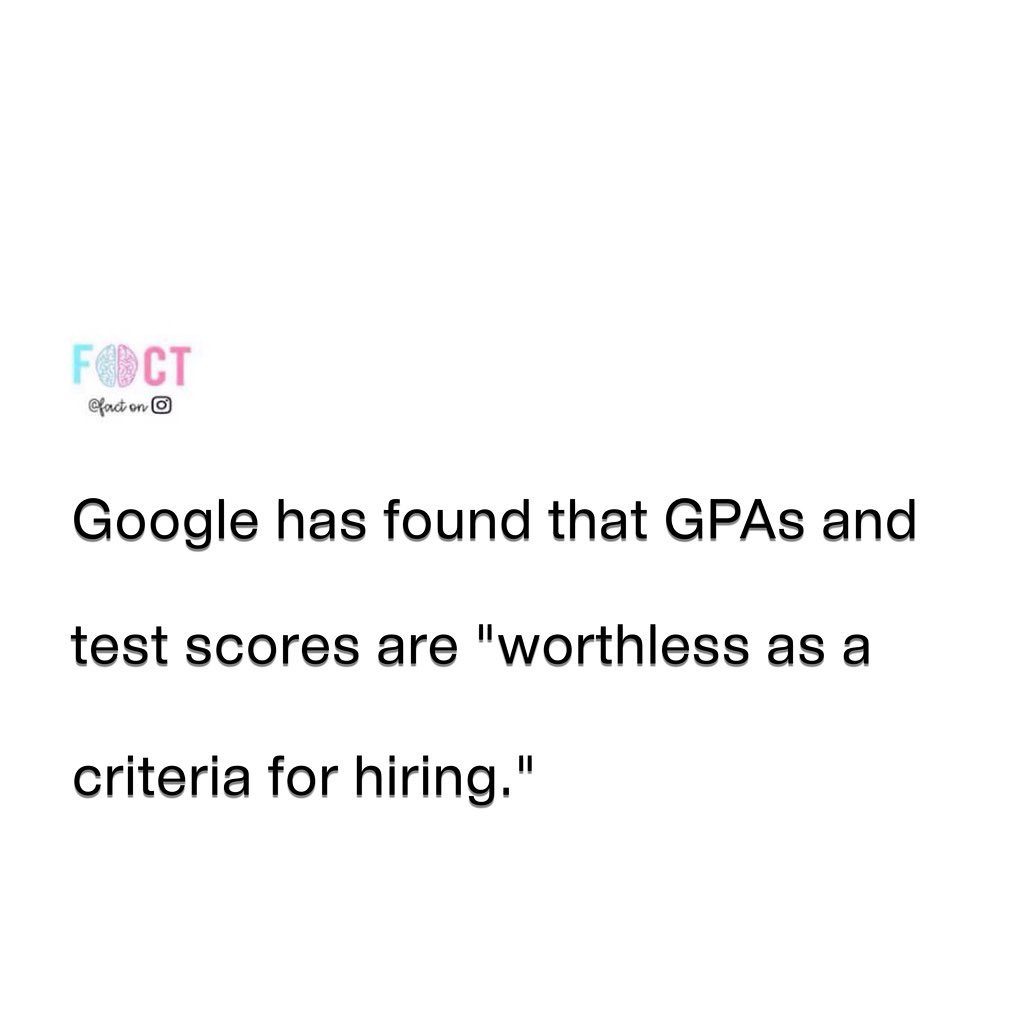
Why Google Doesn't Focus on GPAs and Test Scores for Hiring
The revelation that Google views GPAs and test scores as unimportant for hiring has sparked significant interest. This approach challenges traditional hiring practices and offers a fresh perspective on what truly matters in the recruitment process.
Why This Matters
In a competitive job market, understanding what employers value can give job seekers a strategic advantage. Google’s stance on GPAs and test scores sheds light on the evolving priorities in the hiring process, moving away from traditional academic metrics towards a more holistic evaluation of candidates.
What Google’s Stance Means
Traditional Metrics vs. Holistic Evaluation
The Shift in Focus
Google’s assertion that GPAs and test scores are "worthless as a criteria for hiring" signals a broader shift in the tech industry. Traditional academic metrics, once considered paramount, are now being overshadowed by a more comprehensive evaluation of a candidate’s skills, experiences, and cultural fit.
Why Academic Metrics Are Losing Ground
Academic metrics like GPAs and test scores have long been used as proxies for a candidate’s potential. However, they often fail to capture the complete picture of a person’s abilities and fit within a company. This is especially true in industries like tech, where practical skills and problem-solving abilities are critical.
The Importance of Practical Skills
Google’s approach highlights the importance of practical skills and real-world experience. This includes hands-on projects, internships, and relevant work experience. These experiences provide a more accurate reflection of a candidate’s capabilities and their ability to contribute to a team.
Key Skills and Competencies
Problem-Solving and Critical Thinking
Problem-solving and critical thinking are essential skills in the tech industry. Google’s hiring practices emphasize these competencies, recognizing that candidates who can think on their feet and solve complex problems are more valuable than those with high GPAs but limited real-world experience.
Adaptability and Learning Agility
The tech industry is constantly evolving. Therefore, adaptability and the ability to learn quickly are highly valued. Google looks for candidates who can stay current with the latest technologies and trends, demonstrating a continuous learning mindset.
Cultural Fit and Communication
Company culture is a significant factor in hiring decisions. Google places a high value on candidates who can communicate effectively, collaborate with teams, and contribute positively to the company culture. Soft skills like empathy, teamwork, and communication are often overlooked but are crucial for long-term success.
The Role of Interviews and Assessments
Behavioral Interviews
Behavioral interviews focus on a candidate’s past experiences and how they have handled various situations. This approach provides insights into a candidate’s problem-solving abilities, adaptability, and cultural fit, which are more predictive of future performance than academic metrics.
Technical Assessments
Technical assessments evaluate a candidate’s practical skills and knowledge. These assessments often include coding challenges, case studies, and problem-solving exercises that simulate real-world scenarios. This hands-on evaluation provides a more accurate measure of a candidate’s capabilities.
Practical Tips for Job Seekers
Focus on Real-World Experience
Seek Internships and Projects
Internships and hands-on projects offer valuable experience and can help you develop the practical skills that employers like Google value. Look for opportunities to work on real-world problems and collaborate with teams.
Build a Portfolio
A portfolio showcases your work and demonstrates your skills and competencies. Whether you’re in design, coding, or any other field, having a well-crafted portfolio can set you apart from other candidates.
Develop Key Competencies
Problem-Solving and Critical Thinking
Engage in activities that challenge your problem-solving abilities and critical thinking skills. This could include participating in hackathons, solving complex puzzles, or working on challenging projects.
Adaptability and Learning Agility
Stay current with industry trends and technologies. Continuous learning through online courses, workshops, and seminars can help you stay adaptable and agile in a rapidly changing field.
Communication and Teamwork
Effective communication and teamwork are critical for success in any role. Look for opportunities to work in teams, whether through group projects, team sports, or collaborative work environments.
Prepare for Behavioral Interviews
Reflect on Past Experiences
Think about your past experiences and how they demonstrate your problem-solving abilities, adaptability, and cultural fit. Use the STAR method (Situation, Task, Action, Result) to structure your responses to behavioral interview questions.
Practice Common Questions
Familiarize yourself with common behavioral interview questions and practice your responses. This will help you feel more confident and prepared during the interview process.
Important Takeaways
The Value of Holistic Evaluation
Google’s approach underscores the importance of a holistic evaluation of candidates. This includes not just academic metrics but also practical skills, real-world experience, and cultural fit. Understanding this shift can help job seekers focus on what truly matters in the hiring process.
The Need for Practical Skills
Practical skills and real-world experience are becoming more important than ever. Job seekers should focus on developing these competencies through internships, projects, and continuous learning.
The Importance of Soft Skills
Soft skills like communication, teamwork, and adaptability are crucial for long-term success. Employers like Google place a high value on these competencies, recognizing their role in contributing positively to the company culture and achieving success in the role.
Conclusion
Google’s decision to view GPAs and test scores as unimportant for hiring is a reflection of a broader shift in the job market. As the emphasis moves towards a more holistic evaluation of candidates, job seekers need to focus on developing practical skills, real-world experience, and soft skills. By understanding and adapting to this shift, you can position yourself for success in a competitive job market.
Questions readers ask
Why does Google disregard GPAs and test scores during its hiring process?
Google believes that GPAs and test scores do not accurately predict a candidate's ability to perform well in a professional environment. Therefore, they focus more on practical skills, problem-solving abilities, and real-world experience, which are more indicative of job performance.
What kind of skills does Google prioritize in its recruitment process?
Google prioritizes practical skills, problem-solving abilities, and hands-on experience. They also value candidates who can demonstrate strong problem-solving skills, leadership, and a good fit with the company's culture. These factors provide a more comprehensive view of a candidate's potential.
How does Google assess candidates without relying on traditional academic metrics?
Google uses a variety of methods to assess candidates, including interviews, skill assessments, and real-world problem-solving tasks. These approaches help them understand how a candidate thinks, solves problems and interacts with others, which are crucial for success in the workplace.
Why is cultural fit important in Google's hiring process?
Cultural fit is vital because it ensures that new hires align with Google's values, collaborate effectively with their teams, and contribute positively to the company's environment. A good cultural fit often leads to higher job satisfaction and better long-term performance.
How can job seekers prepare for Google's unconventional hiring methods?
Job seekers should focus on building a strong portfolio of their work, preparing for problem-solving tasks, and practicing interview questions that assess their problem-solving skills and cultural fit. Gaining practical experience through internships, personal projects, and other hands-on activities can also significantly boost their chances.
What does Google's approach to hiring reveal about the tech industry's trends?
Google's approach signals a broader trend in the tech industry where employers are moving away from relying solely on academic credentials. Instead, they are increasingly valuing practical skills, real-world experience, and the ability to adapt and innovate in dynamic environments.
How does Google’s focus on hands-on abilities benefit both the company and the candidates?
This focus ensures that Google hires individuals who are not only qualified but also capable of making immediate contributions. For candidates, it means they are evaluated based on their true potential and abilities, which can lead to more satisfying and rewarding career opportunities.
Related deep dives
Similar reads based on topic and creator.




Recent articles
Fresh deep dives from the latest Reels we unpacked.




Comments
Be the first to comment.