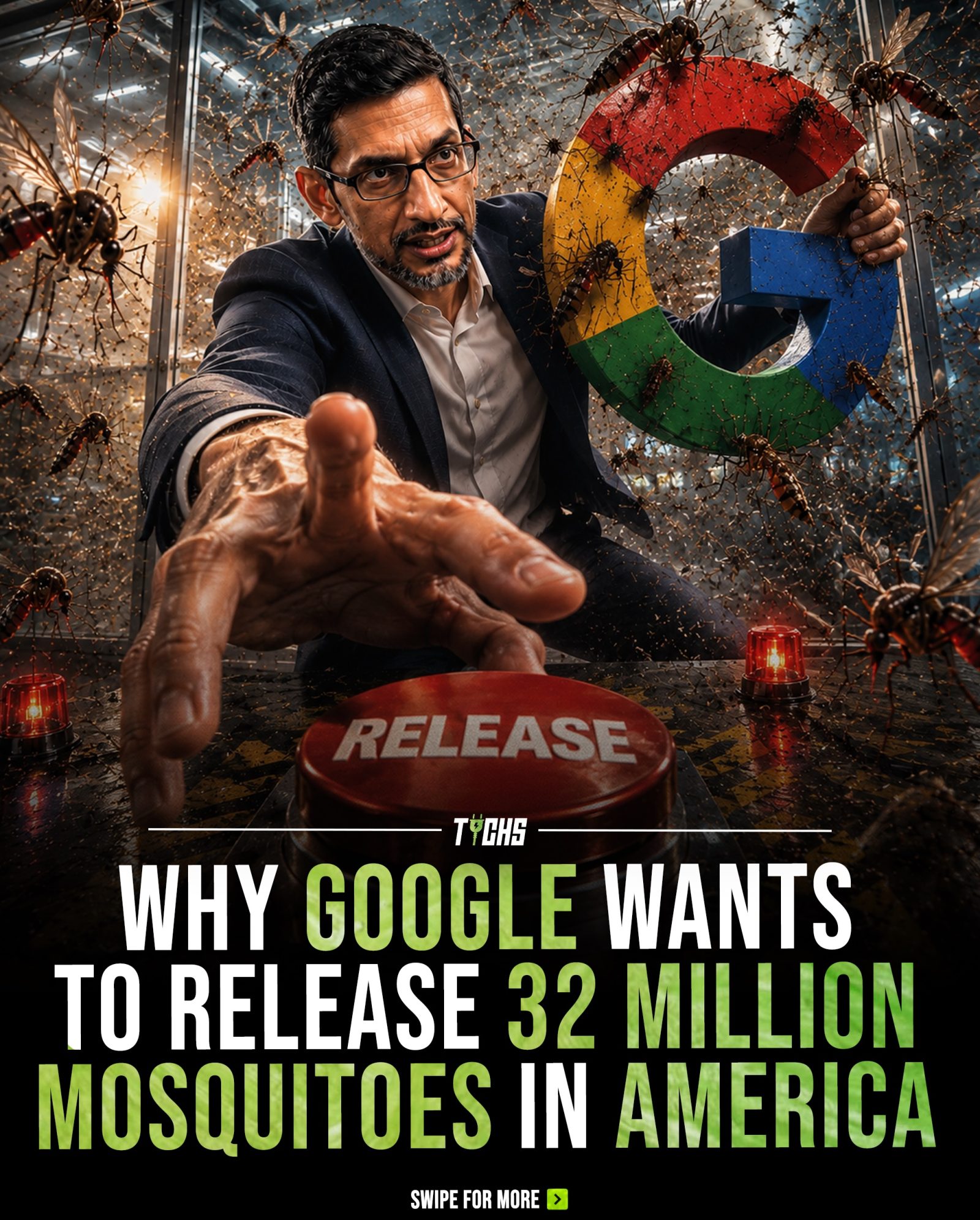
Google's Mosquito Release: A Novel Approach to Mosquito Control
Google has backed a project aimed at tackling mosquito populations through an innovative biological and technological approach. This project involves the release of millions of male mosquitoes carrying Wolbachia, a naturally occurring bacteria. This bacteria prevents successful reproduction when the released males mate with wild females, gradually reducing the populations of disease-carrying mosquitoes. The strategy marks a significant shift from traditional chemical spraying methods, leveraging AI and automation for insect sorting—and potentially becoming one of the largest real-world tests of next-generation disease control technology in the United States.
Why This Matters
Mosquitoes are a significant public health concern, as they are vectors for various diseases. Traditional methods of mosquito control, such as chemical insecticides, have been the primary approach for decades. These methods, however, can have environmental and health impacts. The use of Wolbachia-infected mosquitoes presents a promising alternative that could reduce the need for chemical sprays.
The Biological and Technological Backbone
Wolbachia Bacteria
Wolbachia is a naturally occurring bacteria found in many insect species. It has the unique ability to prevent the successful reproduction of mosquitoes when infected males mate with uninfected females. This makes Wolbachia an effective tool for controlling mosquito populations. The bacteria do not affect the male mosquitoes' ability to fly or breed but disrupt the egg development in females, leading to a decrease in the overall population.
AI and Automation
The project also relies heavily on AI systems to sort and manage the millions of male mosquitoes. These systems are crucial for ensuring that only the correct mosquitoes are released. The process involves using advanced algorithms to identify and separate male mosquitoes from females, ensuring that only the non-biting males are released into the environment.
Environmental and Health Benefits
One of the primary goals of this project is to reduce the reliance on chemical insecticides. Chemical sprays, while effective, can have unintended consequences for the environment and human health. By using Wolbachia-infected mosquitoes, the project aims to achieve significant reductions in mosquito populations without the need for harmful chemicals. This approach not only targets disease-carriers but also helps minimize the environmental footprint of mosquito control efforts.
Field Trials and Success Stories
Similar programs have already shown promising results in several countries. For instance, trials in Australia and Brazil have demonstrated a significant reduction in mosquito populations and a decrease in the incidence of mosquito-borne diseases. These success stories provide a foundation for the Google-backed project, suggesting that the approach could be effective in the United States as well.
Practical Tips for Implementation
Community Engagement
Community involvement is crucial for the success of such a project. Educating the public about the benefits and safety of releasing Wolbachia-infected mosquitoes can help alleviate concerns and gain support. Transparent communication about the process and its potential impacts can build trust and ensure that the community is on board.
Regulatory Compliance
Ensuring compliance with local regulations and obtaining necessary permits is essential. This includes working closely with health departments, environmental agencies, and other relevant authorities to navigate the legal landscape and address any concerns or objections.
Monitoring and Evaluation
Continuous monitoring and evaluation are necessary to assess the project's effectiveness and make any necessary adjustments. This involves tracking mosquito populations, disease incidence, and environmental impacts. Data collection and analysis will provide valuable insights into the project's success and help refine future approaches.
Important Takeaways
- Google’s project leverages biology and automation to control mosquito populations, reducing the reliance on chemical insecticides.
- The release of Wolbachia-infected male mosquitoes aims to disrupt mosquito reproduction and gradually reduce populations.
- AI systems play a critical role in sorting and managing the mosquitoes, ensuring that only the intended species are released.
- By targeting disease-carrying mosquitoes, the project could significantly reduce the incidence of mosquito-borne diseases.
- Community engagement and regulatory compliance are essential for the successful implementation of the project.
- Monitoring and evaluation will provide valuable insights into the project's effectiveness and help refine future approaches.
Conclusion
Google’s ambitious plan to release 32 million Wolbachia-infected male mosquitoes in America represents a groundbreaking approach to mosquito control. By combining biological solutions with advanced technology, the project aims to reduce mosquito populations and disease incidence without relying on harmful chemicals. This innovative strategy has the potential to revolutionize mosquito control efforts, setting a new standard for disease prevention and environmental stewardship.
Questions readers ask
What is Wolbachia and how does it help in mosquito control?
Wolbachia is a naturally occurring bacteria that lives inside insect cells and can affect their reproductive capabilities. When male mosquitoes carrying Wolbachia mate with wild female mosquitoes, the resulting eggs do not hatch, thereby reducing the overall mosquito population over time.
Why is Google involved in this mosquito control project?
Google is backing this project as part of a initiative to leverage technology and biology for public health benefits. The tech giant is using AI and automation to sort and release the male mosquitoes, making this one of the largest real-world tests of next-generation disease control technology in the U.S.
How does this method differ from traditional mosquito control?
Traditional mosquito control methods often rely on chemical sprays to kill mosquitoes. Google's approach, however, focuses on reducing mosquito populations through biological means by preventing reproduction. This method aims to minimize the use of chemicals in the environment.
What is the significance of releasing male mosquitoes?
Male mosquitoes are released because they are not known to bite humans or transmit diseases. They are specifically chosen as they can mate with wild female mosquitoes, thus preventing the females from producing offspring and consequently reducing the overall mosquito population.
Why is AI and automation important in this project?
AI and automation are crucial for sorting male mosquitoes from females efficiently and at a large scale. This ensures that only male mosquitoes, which do not bite or transmit diseases, are released into the environment, making the process more effective and safe.
What are the potential benefits of this mosquito control method?
This mosquito control method, backed by Google, has the potential to reduce the populations of disease-carrying mosquitoes, thereby minimizing the spread of mosquito-borne illnesses. Additionally, it provides an alternative to chemical spraying, which can have environmental and health impacts.
What are the next steps for Google's mosquito control project?
The project is in its early stages, with plans to release 32 million male mosquitoes carrying Wolbachia. Next, researchers will monitor the impact of this release on local mosquito populations and disease transmission rates. Future steps may involve expanding the project to other areas based on the initial results.
Related deep dives
Similar reads based on topic and creator.

Recent articles
Fresh deep dives from the latest Reels we unpacked.




Comments
Be the first to comment.