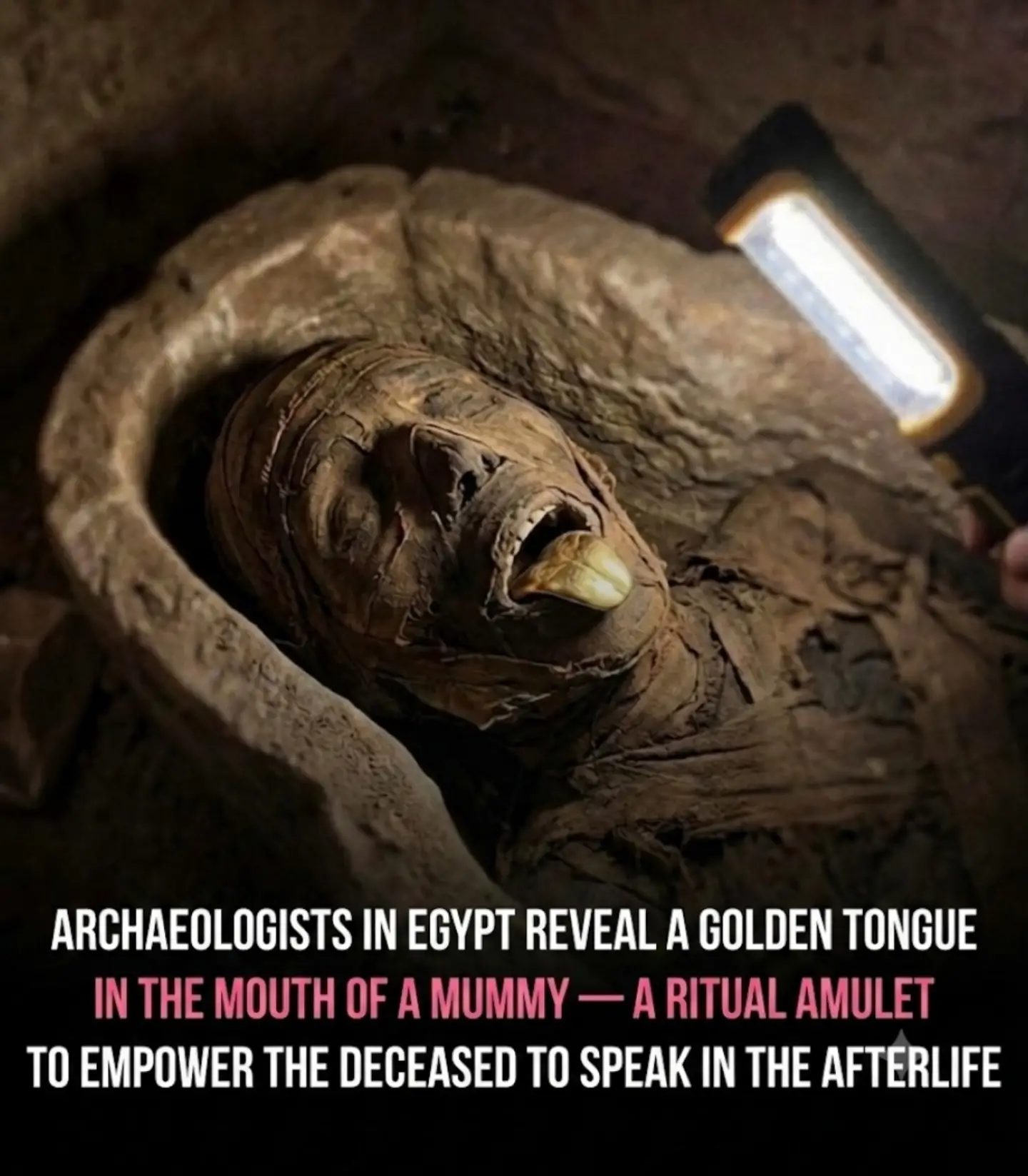
The Golden Tongue of the Mummy: A Remarkable Archaeological Discovery
At the Taposiris Magna temple complex near Alexandria, Egypt, a remarkable archaeological discovery has emerged. An Egyptian-Dominican mission unearthed remains that date back approximately 2,000 years to the Greco-Roman period. The remains feature a meticulously crafted gold foil amulet placed inside the mouth, precisely where the tongue once rested. This artifact provides intriguing insights into ancient Egyptian funerary traditions and beliefs.
Context / Why This Matters
The discovery marks a significant milestone in understanding the intricate rituals and beliefs surrounding death and the afterlife in ancient Egyptian culture. The golden tongue amulet, a ritual object placed in the deceased's mouth, highlights the cultural importance of speech in the afterlife. Ancient Egyptians believed that the deceased needed to navigate the complexities of the underworld and engage in rituals, requiring the ability to speak confidently.
Main Discussion
The Ritual and Its Significance
The gold foil amulet discovered in the mummy's mouth at the Taposiris Magna temple complex is more than just an artifact. It represents a critical element in ancient Egyptian funerary practices. The placement of the golden tongue was not arbitrary; it had a profound symbolic and practical significance.
The Symbolism of Gold
Gold has long been revered in Egyptian culture, symbolizing divinity and eternity. Placing a tongue made of gold in the mouth of the deceased was a sacred ritual meant to bestow the dead with the divine eloquence needed to speak confidently. This practice was believed to empower the deceased to defend their soul before the tribunal of Osiris, the lord of the underworld.
The Role of Speech in the Afterlife
Ancient Egyptians believed that speech was essential for navigating the afterlife. The deceased were expected to participate in rituals and communicate with divine entities. The golden tongue amulet was a ritual tool designed to magically restore the speech of the deceased, ensuring they could articulate their thoughts and defend their souls in the afterlife.
The Cultural and Historical Context
The Greco-Roman Period
The Taposiris Magna temple complex was active during the Greco-Roman period, a time when Egyptian culture was deeply intertwined with Greek and Roman influences. This period saw a blend of traditional Egyptian practices and new cultural elements introduced by the Greek and Roman conquerors. The discovery of the golden tongue amulet reflects this cultural fusion, showcasing how ancient practices continued while adapting to new influences.
Taposiris Magna Temple Complex
The Taposiris Magna temple complex, located near Alexandria, was dedicated to Osiris, the god of the underworld. This site was crucial for funerary rituals, including the use of amulets and other ritual artifacts. The temple complex's location in Alexandria, a cosmopolitan city, further emphasizes the cross-cultural interactions and influences that shaped religious practices during this period.
The Scientific Significance of the Discovery
The discovery of the golden tongue amulet adds to the growing body of knowledge about ancient Egyptian funerary practices. It provides concrete evidence of the intricate rituals and beliefs surrounding death and the afterlife, refined through meticulous archaeological research and analysis.
Archaeologists and historians are continuing to examine the mummy and the amulet, hoping to unearth more details about the individual who was buried and the specific rituals performed during their interment. This discovery underscores the importance of ongoing archaeological excavations in Egypt, which continue to reveal new insights into the rich cultural heritage of the Nile Valley.
Practical Tips
For Archaeologists
This discovery highlights the importance of meticulous excavation techniques and the careful examination of artifacts. Archaeologists should continue to document and analyze finds in detail, as even small objects like the golden tongue amulet can provide profound insights into ancient civilizations.
For Historians
Historians and scholars of ancient cultures should pay close attention to the evolving understanding of funerary practices in Egypt. The discovery of the golden tongue amulet emphasizes the intricate rituals and the evolving beliefs around death and the afterlife.
For Curators and Museums
Museum curators and educators should incorporate new discoveries like this one into their exhibits and educational programs. This discovery offers a unique opportunity to showcase the rich cultural heritage of Egypt and the importance of funerary rituals in ancient society.
Important Takeaways
The discovery of the golden tongue amulet in the mummy's mouth at the Taposiris Magna temple complex provides valuable insights into ancient Egyptian funerary practices. The placement of the golden tongue highlights the cultural importance of speech in the afterlife, and the symbolism of gold underscores the belief in the divine and eternal nature of the deceased. This discovery offers a unique glimpse into the intricate rituals and beliefs of ancient Egypt and underscores the ongoing importance of archaeological research in unearthing the rich history of the Nile Valley.
Conclusion
The discovery of the golden tongue amulet at the Taposiris Magna temple complex is a testament to the enduring significance of ancient Egyptian funerary practices. It underscores the importance of speech in the afterlife and the belief in the divine power of gold. This remarkable find not only adds to our understanding of ancient Egyptian culture but also highlights the ongoing relevance of archaeological research in preserving and interpreting the rich cultural heritage of Egypt.
Questions readers ask
What is the significance of the golden tongue amulet in ancient Egyptian burial practices?
The golden tongue amulet was carefully placed in the mouth of a mummy to symbolize divine speech. This amulet was believed to empower the deceased to communicate effectively in the afterlife, navigate the underworld, and interact with gods. The placement of the amulet emphasizes the importance of speech in ancient Egyptian funerary rituals.
Why was the golden tongue amulet discovered in the remains of a 2,000-year-old mummy?
The golden tongue amulet was found in the mouth of a 2,000-year-old mummy from the Greco-Roman period, providing a unique insight into the burial customs and beliefs of that era. The discovery was made at the Taposiris Magna temple complex near Alexandria, Egypt, by an Egyptian-Dominican mission.
What does the golden tongue amulet reveal about ancient Egyptian beliefs regarding the afterlife?
The golden tongue amulet underscores the ancient Egyptians' belief in the necessity of speech for the deceased to navigate the complexities of the afterlife. It reflects their conviction that the dead needed eloquence to communicate with deities and successfully traverse the underworld.
What materials were used to create the golden tongue amulet, and why was this material chosen?
The golden tongue amulet was crafted from finely beaten gold foil. Gold was chosen for its association with divinity and immortality. The precious metal symbolized the divine eloquence and power that the amulet was intended to impart to the deceased.
How does the discovery of the golden tongue amulet contribute to the study of ancient Egyptian artifacts and burial practices?
The discovery offers a tangible artifact that sheds light on the intricate rituals and beliefs surrounding death and the afterlife. It provides physical evidence of the significance of speech in ancient Egyptian funerary practices and enhances our understanding of how the ancients prepared for the journey beyond death.
Are there other examples of ancient Egyptian speech amulets similar to the golden tongue amulet?
Yes, while the golden tongue amulet is a notable example, there are other instances of speech amulets, such as the IQUTECHA amulet, which were used to ensure the deceased could speak in the afterlife. These amulets were often inscribed with spells or symbols meant to empower the deceased with speech and communication abilities.
What makes the discovery of the golden tongue amulet in the Greco-Roman period so important?
The discovery is significant because it highlights the blending of Egyptian and Greek funeral customs. The Greco-Roman period was a time of cultural exchange, and the presence of the golden tongue amulet in a mummy from this era underscores the enduring importance of ancient Egyptian beliefs and rituals in the face of cultural shifts.
Related deep dives
Similar reads based on topic and creator.



Recent articles
Fresh deep dives from the latest Reels we unpacked.




Comments
Be the first to comment.