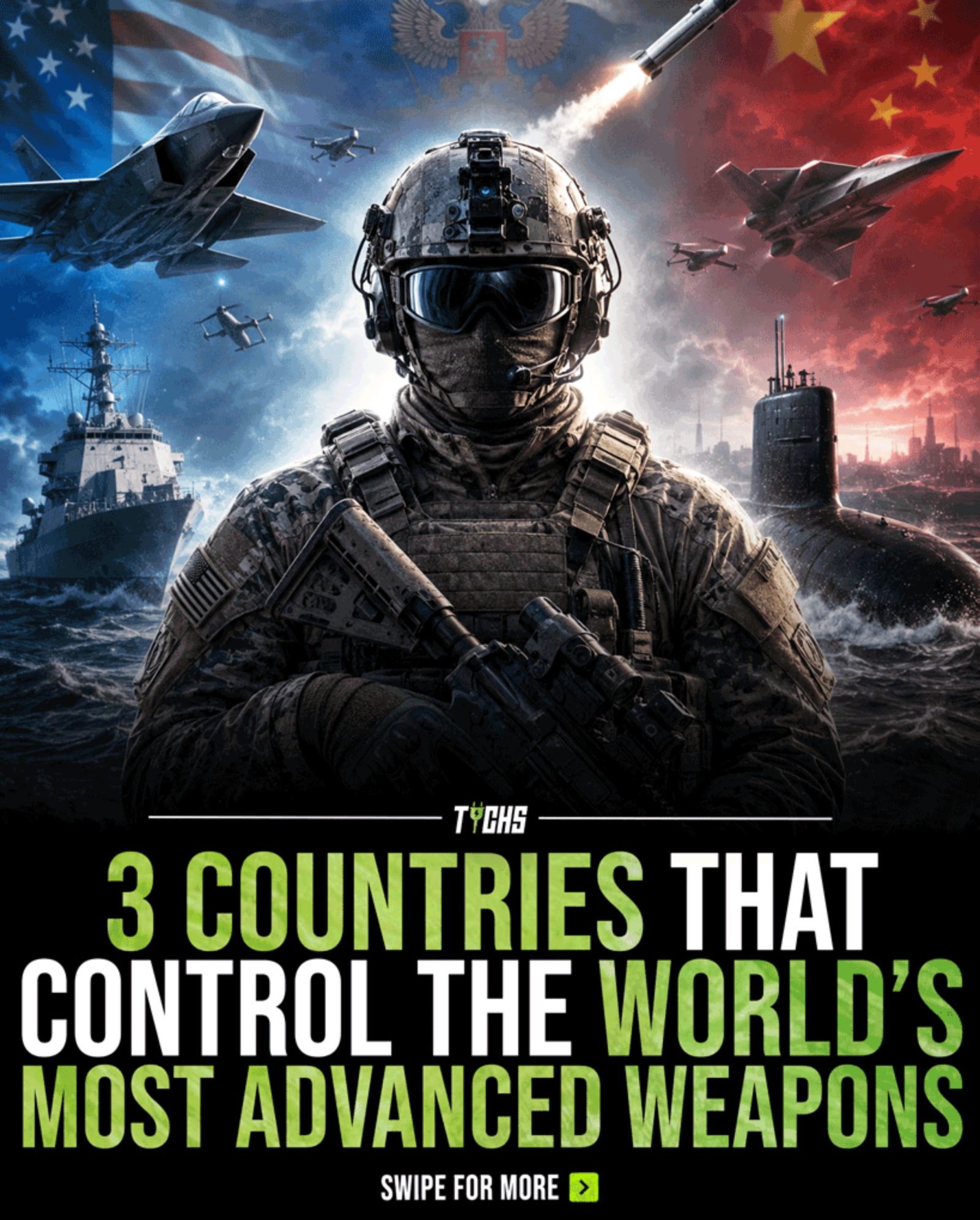
Global Military Power: United States, Russia, and China Lead the Race
Military technology is a critical factor in global geopolitics, and the United States, Russia, and China are the three countries leading the race for the world's most advanced weapons. These nations invest heavily in research, development, and deployment of cutting-edge military systems, each with unique strengths and areas of focus.
Context: Why Military Technology Matters
In the contemporary world, military technology isn't just about having the most advanced hardware but also about how effectively a country can integrate and scale these technologies. The ability to build at scale, continuously improve, and connect military innovations to a larger system is pivotal to maintaining a competitive edge.
The United States: A Longstanding Leader
The United States has long been recognized as a global leader in military technology. The country excels in several key areas:
Stealth Aircraft
Stealth aircraft are designed to avoid detection by radar and other sensors. The U.S. military has some of the most advanced stealth fighters in the world, including the F-22 Raptor and the F-35 Lightning II. These aircraft use advanced materials and designs to reduce their radar signature, making them nearly invisible to enemy radar systems.
Nuclear Submarines
Nuclear submarines, particularly those equipped with ballistic missile capabilities, are a cornerstone of the United States' nuclear deterrent. These submarines can remain submerged for extended periods and are virtually undetectable, providing a robust and stealthy platform for nuclear weapons.
Missile Defense Systems
Missile defense systems are crucial for protecting against incoming ballistic missile threats. The U.S. has developed advanced systems like the Terminal High Altitude Area Defense (THAAD) and the Aegis Ballistic Missile Defense System, which can intercept and destroy incoming missiles.
Global Military Reach
The United States' global military presence ensures that it can project power anywhere in the world. This includes a network of bases, alliances, and partnerships that enable rapid deployment and sustained operations in any region.
Russia: Nuclear Power and Air Defense
Russia remains a major force in military technology, particularly in nuclear systems and air defense.
Nuclear Weapons
Russia has one of the world's largest and most diverse nuclear arsenals. The country's strategic nuclear forces include intercontinental ballistic missiles (ICBMs), submarine-launched ballistic missiles (SLBMs), and heavy bombers equipped with nuclear weapons. Russia's investment in nuclear systems ensures that it remains a significant nuclear power.
Air Defense Systems
Russia's air defense systems are among the most advanced in the world. Systems like the S-400 and S-500 can intercept and destroy aircraft, cruise missiles, and even ballistic missiles at long ranges. These systems provide a robust shield against aerial threats, making Russia's airspace highly secure.
High-End Missile Technologies
Russia is also known for its high-end missile technologies, including hypersonic missiles. These missiles travel at speeds exceeding Mach 5 and can maneuver, making them extremely difficult to intercept with existing defense systems.
China: Rapid Advancements in Hypersonic Missiles and AI-Powered Warfare
China has been rapidly closing the gap with significant investments in advanced technologies.
Hypersonic Missiles
China has made substantial progress in developing hypersonic missiles, which can travel at speeds of Mach 5 and above. These missiles pose a significant threat to existing missile defense systems due to their high speed and maneuverability.
Drones
China is heavily investing in drone technology, which can be used for various military applications, including surveillance, reconnaissance, and even combat operations. Drones offer a cost-effective way to gather intelligence and conduct operations with minimal risk to human life.
Shipbuilding
China's shipbuilding industry is growing rapidly, enabling the country to build a modern and capable navy. China's aircraft carriers and advanced destroyers are testament to its naval ambitions and capabilities.
AI-Powered Warfare
China is also at the forefront of integrating artificial intelligence (AI) into military systems. AI can enhance situational awareness, decision-making, and autonomous operations, providing a significant advantage in modern warfare.
Practical Tips for Understanding Military Power
Understanding military power involves looking beyond just the hardware. Here are some practical tips for analyzing a country's military capabilities:
Assess the Integration of Technologies
It's not just about having the most advanced weapons; it's about how well these technologies are integrated into a cohesive system. Countries that can effectively integrate and coordinate their various military assets stand a better chance of success in modern conflicts.
Consider the Scale of Production
The ability to produce military hardware at scale is crucial. A country that can quickly and efficiently manufacture weapons and equipment has a significant advantage, especially in protracted conflicts.
Evaluate Continuous Improvement
Military technology is constantly evolving, and countries that invest in research and development are better positioned to stay ahead. Continuous improvement ensures that a country's military remains relevant and effective in the face of emerging threats.
Important Takeaways
The United States' Multi-Domain Superiority
The U.S. military excels in multiple domains, including air, sea, and nuclear capabilities. Its global military reach and advanced missile defense systems make it a formidable adversary.
Russia's Nuclear and Air Defense Strength
Russia's nuclear arsenal and advanced air defense systems position it as a significant military power. Its high-end missile technologies further enhance its military capabilities.
China's Rapid Advancements
China's rapid advancements in hypersonic missiles, drones, shipbuilding, and AI-powered warfare highlight its growing influence in military technology. China's investments in these areas are closing the gap with established powers.
Conclusion
The United States, Russia, and China are the leading countries in the race for the world's most advanced military technologies, each with unique strengths. The United States excels in stealth aircraft, nuclear submarines, and missile defense. Russia is renowned for its nuclear systems, air defense, and high-end missile technologies. China is rapidly advancing in hypersonic missiles, drones, shipbuilding, and AI-powered warfare. By understanding these strengths and how they integrate into larger military systems, it becomes clear that the real advantage lies in the ability to build, improve, and connect these technologies effectively. As these countries continue to invest in and develop their military capabilities, the global balance of power will undoubtedly shift, making military technology a critical factor in geopolitics.
Questions readers ask
Who are the top contenders in the global military technology race?
The United States, China, and Russia are the leading contenders in the global military technology race. These nations are at the forefront of developing and deploying the world's most advanced military systems, each with unique strengths and areas of focus.
What makes the United States a strong competitor in military advancements?
The United States excels in integration, and scaling of military technologies. Its most advanced military aircraft, such as the F-35, and its widespread use of drones are key factors in its competitive edge. Additionally, the U.S. maintains a strong focus on global defense systems and continuous innovation.
How does China's military technology compare to the United States?
China is rapidly advancing in the military technology race, with significant investments in advanced missile systems, stealth aircraft, and nuclear submarines. While the U.S. still holds a lead in many areas, China's rapid progress and unique innovations, such as hypersonic missiles, are narrowing the gap and making them a formidable competitor.
What are some of Russia's key military capabilities?
Russia is known for its advanced missile systems, including hypersonic missiles, and its formidable ground forces. It also has a strong focus on nuclear submarines, making it a significant player in the global military technology race. Russia's military capabilities are often highlighted in its advanced defense systems and innovative nuclear technologies.
Which country has the most advanced military aircraft?
The U.S. is currently ahead in the most advanced military aircraft category, with the F-35 and B-21 being among the most sophisticated fighters and stealth bombers in the world. China is rapidly catching up with aircraft like the J-20, while Russia also has notable advancements with the Su-57. Each country is pushing the boundaries of military aviation.
How do the nuclear submarine capabilities compare between the United States, Russia, and China?
The U.S., Russia, and China each have advanced nuclear submarine capabilities. The U.S. leads in the number of operational ballistic missile submarines, Russia has the largest fleet of nuclear-powered submarines, and China is rapidly expanding its capabilities with advanced, modern designs. Each country's submarine fleet plays a crucial role in global power dynamics.
What are some unique strengths that each country brings to the global military race?
The U.S. excels in integration and scaling of military technologies, making it a leading force in the race. China's unique strengths lie in rapid military innovation, particularly in areas like hypersonic missiles and AI integration. Russia's strengths include advanced missile systems, nuclear capabilities, and a formidable ground force, making it a significant player in the global military landscape.
Related deep dives
Similar reads based on topic and creator.




Recent articles
Fresh deep dives from the latest Reels we unpacked.




Comments
Be the first to comment.